Telehealth Interoperability 2026: Seamless Data Exchange in US Healthcare

The landscape of healthcare in the United States is undergoing a profound transformation, driven largely by the accelerated adoption of telehealth. While the convenience and accessibility offered by virtual care have become undeniable, the true potential of telehealth can only be fully realized through robust Telehealth Interoperability 2026. This isn’t merely about connecting two systems; it’s about creating a fluid, secure, and comprehensive ecosystem where patient data flows seamlessly between providers, platforms, and patients themselves. As we look towards 2026, the imperative for achieving seamless data exchange in US healthcare has never been more critical, shaping the future of patient care, operational efficiency, and clinical outcomes.
The COVID-19 pandemic acted as a powerful catalyst, propelling telehealth from a niche service to a mainstream component of healthcare delivery. However, this rapid expansion also exposed significant fragmentation and a lack of standardized data exchange protocols. Patients often find their health information siloed across different providers and systems, leading to redundant tests, delayed diagnoses, and less coordinated care. For healthcare providers, the inability to access a complete patient history across various telehealth and in-person encounters hinders their ability to make informed decisions and deliver personalized treatment plans. Addressing these challenges is paramount, and the journey towards achieving comprehensive Telehealth Interoperability 2026 is well underway, marked by significant regulatory pushes, technological innovations, and a growing understanding of its transformative power.
This article will delve into the current state of telehealth interoperability, explore the recent updates and legislative efforts driving its progress, and outline practical solutions for achieving seamless data exchange by 2026. We will examine the technological advancements, the crucial role of data standards, and the organizational strategies necessary to build a truly integrated digital health infrastructure. Our focus will remain on the US context, considering the unique regulatory and market dynamics that shape this critical evolution.
Understanding Telehealth Interoperability: The Foundation for Future Healthcare
At its core, Telehealth Interoperability 2026 refers to the ability of different telehealth platforms, electronic health records (EHRs), and other healthcare information systems to communicate, exchange, and readily use patient data in a secure and meaningful way. It’s about moving beyond mere data sharing to true data integration, where information from a virtual consultation, a remote monitoring device, or an in-person visit can be accessed, understood, and leveraged by any authorized healthcare stakeholder, regardless of the system they are using.
Without interoperability, the promise of telehealth remains largely unfulfilled. Imagine a patient consulting a specialist via telehealth, only for that specialist to lack access to their primary care physician’s notes, medication history, or recent lab results. This not only creates inefficiencies but can also compromise patient safety and the quality of care. Effective interoperability ensures that the right information is available to the right people at the right time, fostering a more holistic and patient-centric approach to healthcare delivery.
Key Pillars of Telehealth Interoperability
- Technical Interoperability: This involves the ability of systems to exchange data without errors. It focuses on the technical specifications and standards for data exchange, such as APIs (Application Programming Interfaces) and messaging protocols (e.g., HL7 FHIR).
- Semantic Interoperability: Beyond just exchanging data, semantic interoperability ensures that the data is understood and interpreted correctly by the receiving system. This requires standardized terminologies and coding systems (e.g., SNOMED CT, LOINC) to ensure that clinical concepts have the same meaning across different platforms.
- Organizational Interoperability: This addresses the non-technical aspects, including governance, policies, workflows, and legal frameworks that enable secure and efficient data exchange between organizations. It involves establishing trust agreements and clear data-sharing policies.
- Foundational Interoperability: This is the most basic level, allowing data to be exchanged from one information technology system to another, without the recipient system necessarily being able to interpret the data. While a starting point, it’s insufficient for comprehensive care.
Achieving all these levels is crucial for the vision of Telehealth Interoperability 2026. The goal is not just to transfer bytes of information, but to enable a shared understanding of a patient’s health journey, facilitated by technology.
Recent Updates and Regulatory Landscape Driving Interoperability
The push for Telehealth Interoperability 2026 in the US is heavily influenced by a dynamic regulatory environment. Federal initiatives and legislation have been instrumental in setting the stage for more integrated digital health ecosystems. Understanding these drivers is key to appreciating the current momentum and future direction.
The 21st Century Cures Act and Information Blocking
A cornerstone of the interoperability movement is the 21st Century Cures Act, signed into law in 2016. A critical component of this act is the information blocking rule, which prohibits healthcare providers, health IT developers, and health information exchanges (HIEs) from engaging in practices that are likely to interfere with the access, exchange, or use of electronic health information (EHI). This rule has been a game-changer, forcing stakeholders to adopt more open data-sharing practices and actively work towards interoperability.
The Office of the National Coordinator for Health Information Technology (ONC) has been at the forefront of implementing these regulations, providing guidance and enforcement. The goal is to empower patients with greater access to their health data and foster innovation by making EHI more readily available for care coordination and public health efforts. The penalties for information blocking are significant, underscoring the federal government’s commitment to this agenda.
TEFCA: The Trusted Exchange Framework and Common Agreement
Another monumental effort is the Trusted Exchange Framework and Common Agreement (TEFCA), also mandated by the Cures Act. TEFCA aims to create a universal floor for interoperability across the US by establishing a common set of principles, terms, and conditions for nationwide health information exchange. It operates through Qualified Health Information Networks (QHINs), which are organizations certified to facilitate the secure and standardized exchange of EHI.
TEFCA is designed to greatly simplify data sharing, reducing the need for individual agreements between countless healthcare organizations. By 2026, TEFCA is expected to be a primary conduit for health data exchange, including data generated through telehealth encounters. Its widespread adoption will be a critical factor in achieving the seamless data flow envisioned for Telehealth Interoperability 2026, ensuring that patient data can move effortlessly from one system to another, regardless of vendor or geographic location.
State-Level Initiatives and Public Health Data Exchange
Beyond federal mandates, many states are also implementing their own initiatives to promote health information exchange and telehealth integration. These often involve state-funded HIEs, grants for technology adoption, and specific regulations tailored to local healthcare needs. The pandemic also highlighted the urgent need for robust public health data exchange, leading to increased investment in systems that can aggregate and analyze telehealth data for disease surveillance and outbreak management.
The convergence of these federal and state efforts creates a powerful impetus for healthcare organizations to prioritize interoperability. The regulatory stick (information blocking penalties) combined with the carrot (TEFCA’s streamlined exchange capabilities) is accelerating the adoption of standards and technologies necessary for true Telehealth Interoperability 2026.
Technological Solutions for Seamless Data Exchange
Achieving robust Telehealth Interoperability 2026 is heavily reliant on the adoption and effective implementation of key technological solutions. These solutions address the technical and semantic challenges of data exchange, ensuring that information is not only transmitted but also understood and actionable across diverse systems.
FHIR: The Game Changer for Healthcare Data
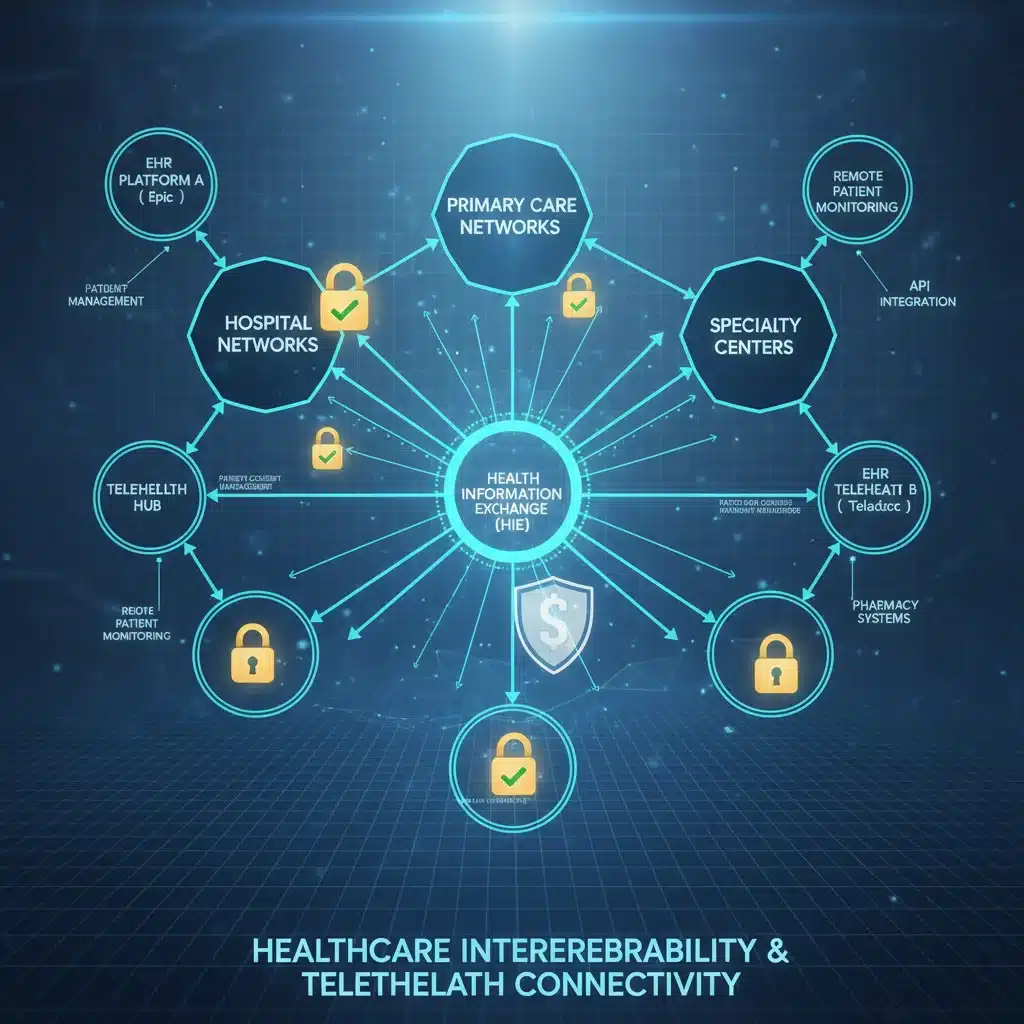
Fast Healthcare Interoperability Resources (FHIR, pronounced “fire”) stands out as the most significant technological development in healthcare interoperability. FHIR is a standard for exchanging healthcare information electronically, developed by HL7. Unlike older, more complex standards, FHIR leverages modern web technologies and APIs, making it easier for developers to build applications that can seamlessly connect and exchange data.
FHIR’s resource-based model allows for granular access to specific pieces of patient data (e.g., allergies, medications, lab results), rather than requiring the exchange of entire clinical documents. This flexibility is particularly beneficial for telehealth, where specific data points might be needed quickly during a virtual consultation. The widespread adoption of FHIR is a cornerstone for Telehealth Interoperability 2026, promising to unlock new possibilities for data-driven care and innovation.
APIs and Open Standards
Application Programming Interfaces (APIs) are the backbone of modern data exchange. In healthcare, APIs allow different software applications to communicate with each other, enabling the secure and controlled sharing of data. Open APIs, coupled with open standards like FHIR, are essential for fostering innovation and preventing vendor lock-in. They allow third-party developers to create new applications and services that can integrate with existing EHRs and telehealth platforms, expanding the functionality and reach of healthcare IT.
For Telehealth Interoperability 2026, robust APIs will facilitate the integration of remote patient monitoring devices, wearable sensors, patient portals, and various telehealth modalities into a unified view of the patient. This not only streamlines workflows for clinicians but also provides patients with a more comprehensive and accessible health record.
Cloud-Based Platforms and Data Aggregation
The shift towards cloud-based healthcare platforms is another critical enabler of interoperability. Cloud infrastructure offers scalability, security, and accessibility, making it easier to store, process, and exchange large volumes of health data. Cloud-native telehealth solutions often come with built-in interoperability features, simplifying integration with other systems.
Data aggregation platforms play a vital role in collecting and normalizing data from disparate sources. These platforms can ingest data from various EHRs, telehealth systems, and other health applications, creating a centralized repository of patient information. This aggregated data can then be used for analytics, population health management, and to provide a more complete picture of a patient’s health journey, crucial for achieving effective Telehealth Interoperability 2026.
Artificial Intelligence and Machine Learning for Data Understanding
While FHIR and APIs facilitate data exchange, Artificial Intelligence (AI) and Machine Learning (ML) are increasingly being leveraged to enhance semantic interoperability. AI algorithms can help in processing unstructured clinical notes, identifying key patient insights, and mapping different terminologies to a common standard. This makes the exchanged data more meaningful and actionable for clinicians.
For example, AI can analyze telehealth consultation notes to extract relevant symptoms, diagnoses, and treatment plans, and then integrate this information into the patient’s comprehensive health record. This capability will be instrumental in ensuring that the vast amounts of data generated through telehealth are not just exchanged but also intelligently utilized to improve patient care by 2026.
Practical Solutions and Strategies for Healthcare Providers
While regulatory mandates and technological advancements lay the groundwork, healthcare providers and organizations must adopt practical strategies to achieve Telehealth Interoperability 2026. This involves a combination of strategic planning, technological investment, and cultural shifts within organizations.
Adopting a Comprehensive Interoperability Strategy
The first step for any healthcare organization is to develop a clear and comprehensive interoperability strategy. This strategy should outline specific goals, identify key stakeholders, and define the necessary technological and process changes. It should consider both inbound (receiving data) and outbound (sending data) interoperability needs, encompassing all aspects of patient care, from scheduling and virtual visits to billing and follow-up.
This strategy should also include an assessment of current systems, identifying gaps in interoperability and prioritizing integrations. For many organizations, this will involve upgrading existing EHRs to FHIR-enabled versions and selecting telehealth platforms that prioritize open APIs and adherence to industry standards.
Leveraging Health Information Exchanges (HIEs) and QHINs
Participating in Health Information Exchanges (HIEs) and, as they become more prevalent, Qualified Health Information Networks (QHINs) under TEFCA, is a crucial strategy for achieving widespread data exchange. HIEs provide a secure and standardized mechanism for sharing patient information across different healthcare organizations within a region or state. By connecting to an HIE or QHIN, providers can gain access to a broader spectrum of patient data, improving care coordination and reducing redundant efforts.
For telehealth providers, connecting to these networks ensures that virtual consultations are not isolated events but are integrated into the patient’s ongoing care continuum. This seamless flow of information is vital for the success of Telehealth Interoperability 2026.
Prioritizing Data Governance and Security
With increased data exchange comes an even greater responsibility for data governance and security. Healthcare organizations must implement robust policies and procedures to ensure the privacy and security of electronic health information. This includes adhering to HIPAA regulations, implementing strong encryption protocols, and conducting regular security audits.
Patient consent for data sharing is also a critical aspect of data governance. Organizations must have clear processes for obtaining and managing patient consent, ensuring transparency and trust. Building a secure and trustworthy data exchange environment is foundational to the success of Telehealth Interoperability 2026 and maintaining public confidence in digital health.
Vendor Collaboration and Open Ecosystems
Healthcare organizations should actively seek out technology vendors that prioritize interoperability and offer open APIs. The era of closed, proprietary systems is coming to an end. Vendors that are committed to open standards and collaborative ecosystems will be critical partners in building the integrated digital health infrastructure required for Telehealth Interoperability 2026.
This involves engaging in discussions with EHR vendors, telehealth platform providers, and other health IT companies to ensure that their products are designed for seamless integration. Encouraging vendor collaboration can lead to more innovative solutions and a more connected healthcare landscape.
The Impact of Telehealth Interoperability by 2026
The successful achievement of comprehensive Telehealth Interoperability 2026 will have a transformative impact on various aspects of US healthcare, benefiting patients, providers, and the healthcare system as a whole.
Enhanced Patient Care and Outcomes
Perhaps the most significant impact will be on patient care. With seamless data exchange, clinicians will have immediate access to a complete and up-to-date view of a patient’s health history, regardless of where or how that care was delivered. This leads to more informed decision-making, better coordinated care, reduced medical errors, and ultimately, improved patient outcomes. Telehealth will become an even more integral and effective tool when backed by comprehensive patient data.
Patients will also benefit from greater agency over their health information, with easier access to their own records and the ability to share them with providers of their choice. This empowers patients to be more active participants in their healthcare journey.
Improved Operational Efficiency and Cost Reduction
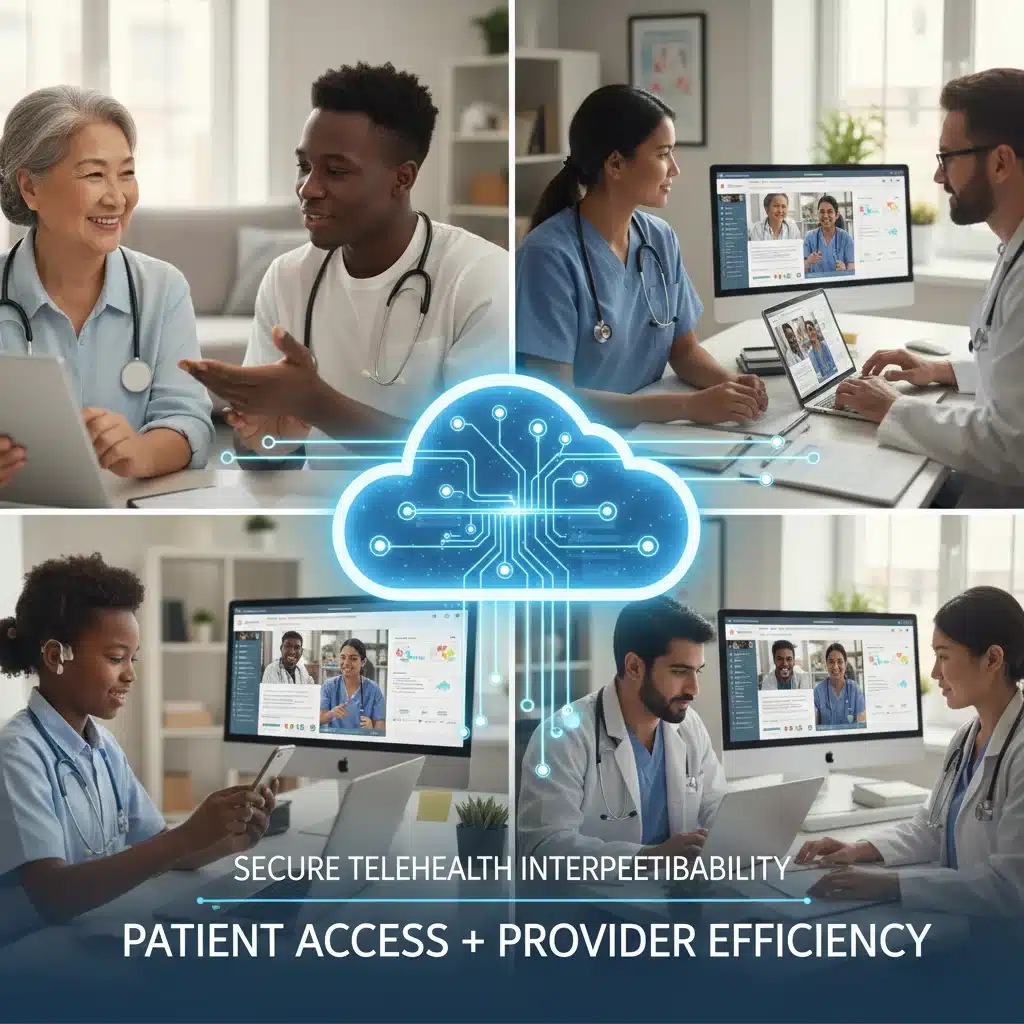
For healthcare providers, interoperability means significant improvements in operational efficiency. The reduction of manual data entry, elimination of redundant tests, and streamlined workflows will free up valuable time for clinicians and administrative staff. This efficiency can lead to cost savings and allow providers to focus more on direct patient care.
Furthermore, better data flow supports more efficient referrals and transitions of care, reducing administrative burdens and ensuring patients receive timely follow-up. This synergy between telehealth and interoperability will optimize resource utilization across the healthcare system.
Advancements in Population Health Management
With integrated data from various sources, including telehealth encounters, healthcare organizations can gain unprecedented insights into population health trends. This aggregated data can be used to identify at-risk populations, monitor chronic disease prevalence, and design targeted public health interventions. The ability to analyze real-time data from telehealth interactions will significantly enhance the effectiveness of population health management strategies by 2026.
Innovation and Research Opportunities
A truly interoperable healthcare ecosystem will also fuel innovation. Researchers will have access to richer, more comprehensive datasets, accelerating the development of new treatments, diagnostic tools, and AI-driven healthcare solutions. Digital health companies will be able to build more sophisticated and integrated applications, further advancing the capabilities of telehealth and personalized medicine.
The open exchange of data, facilitated by standards like FHIR, creates a fertile ground for a new generation of healthcare innovation, pushing the boundaries of what is possible in digital health. This will be a defining characteristic of Telehealth Interoperability 2026.
Challenges and Future Outlook
While the momentum towards Telehealth Interoperability 2026 is strong, several challenges remain. Overcoming these will be crucial for realizing the full potential of seamless data exchange.
Overcoming Legacy System Hurdles
Many healthcare organizations still rely on legacy IT systems that were not designed for modern interoperability. Upgrading or replacing these systems can be a significant financial and operational undertaking. The transition requires careful planning, substantial investment, and a phased approach to minimize disruption.
Addressing Data Governance and Security
Despite regulatory mandates, trust remains a critical factor. Organizations must establish clear data-sharing agreements, robust security protocols, and transparent policies to ensure the privacy and security of electronic health information. This includes adhering to HIPAA regulations, implementing strong encryption protocols, and conducting regular security audits.
Patient consent for data sharing is also a critical aspect of data governance. Organizations must have clear processes for obtaining and managing patient consent, ensuring transparency and trust. Building a secure and trustworthy data exchange environment is foundational to the success of Telehealth Interoperability 2026 and maintaining public confidence in digital health.
Ensuring Equity and Accessibility
As telehealth and interoperability advance, it’s vital to ensure that these benefits are accessible to all populations, including underserved communities and those with limited digital literacy or internet access. Efforts must be made to bridge the digital divide and design interoperable solutions that are inclusive and user-friendly for everyone.
The Evolving Role of Standards
While FHIR is gaining widespread adoption, the landscape of healthcare IT standards is continuously evolving. Staying abreast of these developments and ensuring ongoing compliance will be a perpetual challenge. Continuous education and adaptation will be necessary for healthcare organizations and IT professionals.
Looking ahead to 2026, the trajectory for Telehealth Interoperability 2026 is overwhelmingly positive. The foundational pieces are in place, driven by strong regulatory support and technological innovation. The focus will shift from simply enabling data exchange to optimizing its utility, ensuring that every piece of information contributes to better care decisions and a more efficient healthcare system. The vision is a healthcare ecosystem where telehealth is not an isolated service but an integrated, data-rich component of a patient’s overall health journey, truly transforming care delivery in the US.
Conclusion
The journey towards comprehensive Telehealth Interoperability 2026 in the US is a complex yet exciting endeavor. Fuelled by the lessons of the pandemic, propelled by legislative mandates like the 21st Century Cures Act and TEFCA, and empowered by technological advancements such as FHIR, the healthcare industry is on the cusp of a truly integrated digital future. Seamless data exchange is no longer a distant aspiration but an achievable reality, promising to revolutionize patient care, enhance operational efficiencies, and foster unprecedented innovation.
For healthcare providers, strategically embracing interoperability means investing in modern IT infrastructure, participating in health information networks, prioritizing data governance, and fostering strong vendor partnerships. For patients, it signifies a future where their health journey is truly connected, empowering them with better access to their information and more coordinated, personalized care. As we approach 2026, the continued commitment to breaking down data silos and building a truly interconnected healthcare ecosystem will define the next era of digital health in the United States.