Top 5 Telehealth Platforms for Secure Data Exchange in 2026: A US Provider’s Guide
The landscape of healthcare is undergoing a profound transformation, with telehealth emerging as a cornerstone of modern medical practice. As we look towards 2026, the adoption of telehealth platforms continues to accelerate, driven by technological advancements, evolving patient expectations, and the persistent need for accessible and efficient care. However, with this rapid expansion comes an amplified focus on one critical aspect: data security. For US healthcare providers, ensuring the secure exchange of Protected Health Information (PHI) is not just a best practice; it’s a legal and ethical imperative, primarily governed by the Health Insurance Portability and Accountability Act (HIPAA).
Choosing the right secure telehealth platforms is paramount for safeguarding patient privacy, maintaining trust, and avoiding severe penalties associated with data breaches. The market is flooded with options, each promising robust features and ironclad security. But how do providers navigate this complex environment to identify platforms that truly meet the stringent demands of healthcare data protection in 2026? This comprehensive guide aims to cut through the noise, providing a detailed comparison of the top 5 secure telehealth platforms for US providers, focusing on their data exchange capabilities, security protocols, and compliance frameworks.
The Imperative of Secure Data Exchange in Telehealth
Before diving into specific platforms, it’s crucial to understand why secure data exchange is non-negotiable in telehealth. When a patient consults with a provider virtually, sensitive information, including medical history, diagnoses, treatment plans, and billing details, is transmitted, stored, and accessed digitally. Any vulnerability in this process can lead to devastating consequences, from identity theft and financial fraud to compromised patient care and irreparable damage to a provider’s reputation. HIPAA mandates strict rules for the handling of electronic PHI (ePHI), requiring covered entities and their business associates to implement administrative, physical, and technical safeguards to ensure the confidentiality, integrity, and availability of this data.
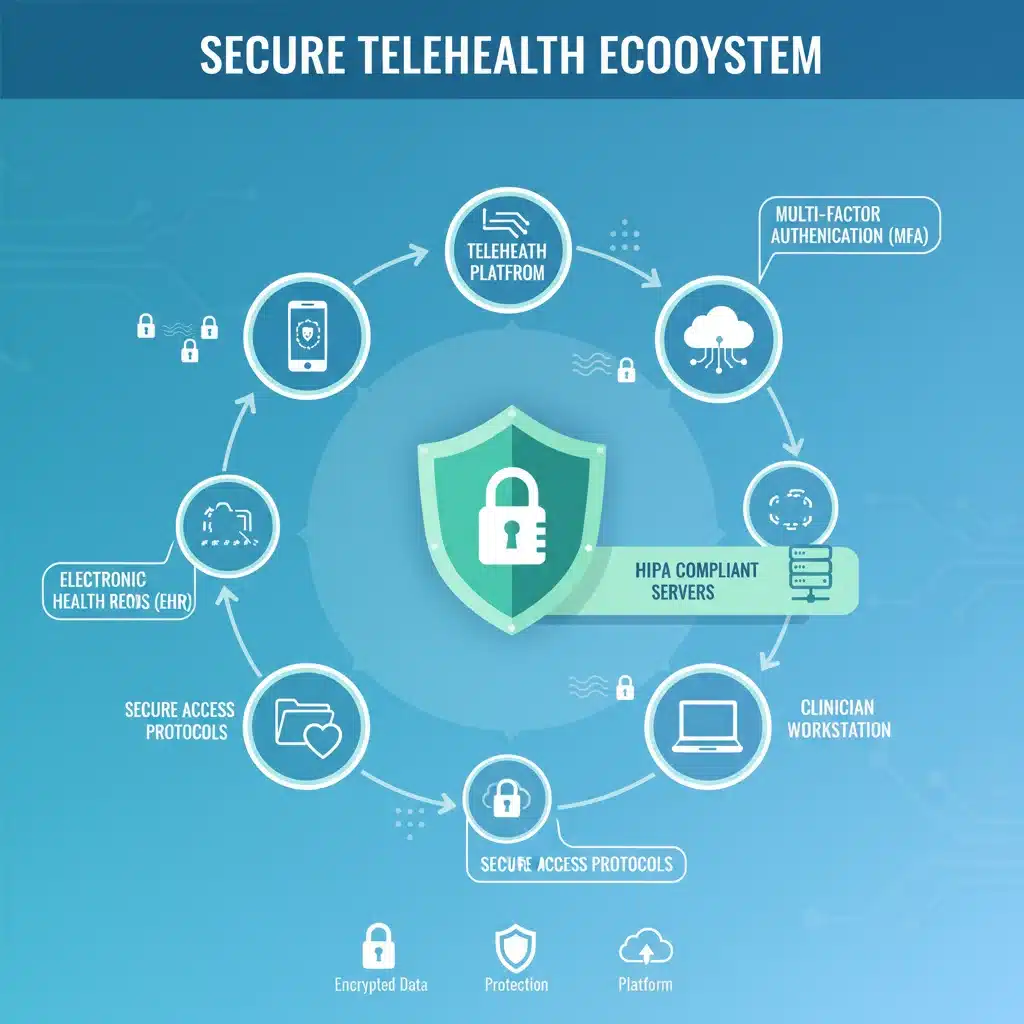
In 2026, the sophistication of cyber threats is expected to continue its upward trajectory. Ransomware attacks targeting healthcare organizations are becoming more frequent and severe, and phishing attempts are constantly evolving. Therefore, secure telehealth platforms must not only adhere to current regulatory standards but also demonstrate a proactive approach to cybersecurity, employing advanced encryption, multi-factor authentication, regular security audits, and robust incident response plans. The ability to seamlessly and securely exchange data with other healthcare systems, pharmacies, and laboratories is also a key differentiator, facilitating coordinated care and improving patient outcomes without sacrificing security.
Key Criteria for Evaluating Secure Telehealth Platforms
When assessing secure telehealth platforms, US providers should consider several critical criteria beyond just basic video conferencing capabilities. These factors directly impact data security, compliance, and operational efficiency:
- HIPAA Compliance and Business Associate Agreements (BAA): A platform must be demonstrably HIPAA compliant, and the vendor must be willing to sign a BAA, outlining their responsibilities in protecting ePHI.
- Encryption Standards: Look for platforms that utilize end-to-end encryption (E2EE) for all data in transit (e.g., TLS 1.2 or higher) and at rest (e.g., AES-256).
- Authentication and Access Controls: Strong authentication methods (e.g., multi-factor authentication – MFA) and granular access controls ensure only authorized personnel can access sensitive data.
- Data Storage and Hosting: Understand where data is stored (US-based servers are often preferred for HIPAA) and the security measures in place at data centers.
- Audit Trails and Logging: Comprehensive audit trails track all access and modifications to ePHI, crucial for compliance and forensic analysis in case of a breach.
- Data Backup and Disaster Recovery: Robust backup procedures and a clear disaster recovery plan are essential to prevent data loss and ensure business continuity.
- Interoperability and API Security: The ability to securely integrate with Electronic Health Records (EHR) systems, practice management software, and other healthcare applications is vital. Secure APIs and adherence to interoperability standards (e.g., FHIR) are key.
- Regular Security Audits and Penetration Testing: Vendors should regularly conduct independent security audits and penetration tests to identify and address vulnerabilities.
- User Training and Support: Comprehensive training for staff on security protocols and responsive technical support are crucial for effective security implementation.
- Scalability and Reliability: The platform should be able to handle varying patient loads and offer high uptime to ensure continuous service.
- Patient Privacy Features: Features like virtual waiting rooms, secure chat, and patient consent management enhance privacy.
Top 5 Secure Telehealth Platforms for US Providers in 2026
Based on the critical criteria above, here are five leading secure telehealth platforms that US providers should consider for 2026:
1. Doxy.me
Doxy.me has carved a niche for itself as a remarkably user-friendly and accessible telehealth solution, often praised for its simplicity and affordability, particularly for smaller practices. In 2026, it continues to be a strong contender due to its unwavering commitment to security and compliance.
- Security & Compliance: Doxy.me is fully HIPAA, HITECH, GDPR, and PHIPA compliant. They offer end-to-end encryption for all video calls and data in transit, ensuring patient data remains private. They readily provide Business Associate Agreements (BAAs) to all paid users. Data at rest is also encrypted.
- Data Exchange Capabilities: While Doxy.me shines in its core telehealth functionality, its direct EHR integration capabilities are more limited compared to some enterprise-level solutions. However, it offers secure file sharing during sessions and can be used in conjunction with other systems for data exchange, often through manual input or third-party integration tools. Its focus is on secure, direct patient-provider interaction.
- Key Features: Virtual waiting room, screen sharing, secure chat, patient queue management, customizable branding, and basic analytics. Its “no download” for patients makes it incredibly easy to use.
- Pros: Extremely easy to use for both providers and patients, strong security and compliance, affordable pricing, good for practices prioritizing simplicity and direct patient interaction.
- Cons: More limited native EHR integration compared to some competitors, which might require additional workflows or third-party solutions for comprehensive data exchange in larger practices.
2. Amwell (American Well)
Amwell stands out as an enterprise-grade telehealth platform, widely adopted by large health systems, hospitals, and health plans. Its robust infrastructure and comprehensive suite of services make it a powerful choice for organizations with complex needs and a high volume of patients. In 2026, Amwell continues to innovate in secure data exchange and clinical workflows.
- Security & Compliance: Amwell is built with stringent security measures, including HIPAA compliance, HITRUST certification, and adherence to various other global privacy standards. They employ multi-layered security protocols, including advanced encryption for all data, secure data centers, and rigorous access controls. BAAs are standard.
- Data Exchange Capabilities: This is where Amwell truly excels. It offers deep and secure integration capabilities with a wide range of EHR/EMR systems (e.g., Epic, Cerner), allowing for seamless bidirectional data exchange. This includes sharing patient demographics, clinical notes, prescriptions, lab results, and billing information directly within the platform. Their open API allows for custom integrations, facilitating complex data flows across large healthcare ecosystems.
- Key Features: Extensive clinical modules (urgent care, chronic care, behavioral health), remote patient monitoring, provider network management, patient engagement tools, and robust analytics.
- Pros: Highly scalable, comprehensive clinical solutions, excellent EHR integration and data exchange, strong security and compliance certifications, suitable for large organizations.
- Cons: Can be more complex and expensive for smaller practices due to its enterprise focus.
3. Teladoc Health
Teladoc Health is a global leader in virtual care, offering a broad spectrum of telehealth services from general medicine to specialized care and chronic condition management. In 2026, its integrated approach to whole-person care and emphasis on secure data flow across its diverse offerings remain key.
- Security & Compliance: Teladoc Health prioritizes security and is fully HIPAA compliant, adhering to numerous other data protection regulations worldwide. They utilize robust encryption, secure cloud infrastructure, multi-factor authentication, and continuous security monitoring to protect ePHI across all their services. BAAs are an integral part of their service agreements.
- Data Exchange Capabilities: As a comprehensive virtual care provider, Teladoc Health has developed sophisticated data exchange mechanisms. They integrate securely with various EHRs and health plan systems, enabling the flow of patient data for continuity of care. Their platform supports the secure sharing of clinical summaries, prescription information, and diagnostic results. The acquisition of Livongo further enhanced their ability to securely integrate data from remote patient monitoring devices for chronic care management.
- Key Features: Wide range of clinical specialties, chronic care management, mental health services, expert medical opinions, AI-powered insights, and a global reach.
- Pros: Extensive service offerings, strong focus on integrated care, robust security framework, good for organizations looking for a comprehensive virtual care partner.
- Cons: Pricing structure might be more suited for larger organizations or health systems due to the breadth of services.
4. Zoom for Healthcare (Zoom Care)
While Zoom is widely known for general video conferencing, Zoom for Healthcare offers a specialized, HIPAA-compliant version tailored for medical use. Its familiarity and ease of use, combined with enhanced security features, make it a popular choice for many providers in 2026.
- Security & Compliance: Zoom for Healthcare is specifically designed to be HIPAA compliant, offering a signed BAA. It utilizes AES 256-bit GCM encryption for meeting data in transit and at rest, and features like waiting rooms, password protection, and meeting lock help secure sessions. They also support advanced security features like automatic data deletion and enhanced cloud recording security.
- Data Exchange Capabilities: Zoom for Healthcare’s primary strength lies in its secure video communication. For data exchange with EHRs, it often relies on integrations with third-party partners or APIs. While it can securely share screens and files during a call, direct, automated bidirectional data flow with EHRs typically requires additional integration layers or specific configurations provided by partners.
- Key Features: HD video and audio, screen sharing, secure chat, virtual waiting rooms, recording capabilities (with appropriate consent), and integrations with popular scheduling and EHR systems through partners.
- Pros: Widespread familiarity and ease of use, strong security features for clinical communication, scalable for various practice sizes, competitive pricing.
- Cons: Core offering is communication; comprehensive EHR data exchange often requires third-party integrations or add-ons, which can add complexity.
5. Updox
Updox positions itself as a comprehensive healthcare communication and collaboration platform, offering more than just telehealth. Its suite of tools, including secure messaging, patient engagement, and document management, makes it a strong contender for practices seeking an all-in-one solution that integrates secure telehealth platforms with other essential workflows.
- Security & Compliance: Updox is fully HIPAA compliant, providing a BAA, and adheres to industry best practices for data security. They employ robust encryption for data in transit and at rest, secure cloud hosting, multi-factor authentication, and comprehensive audit trails across all their services.
- Data Exchange Capabilities: Updox excels in facilitating secure data exchange due to its integrated nature. It offers strong integration with over 100 EHR systems, allowing for seamless transfer of patient information, clinical documents, lab results, and e-prescriptions. Its secure direct messaging and fax capabilities further enhance secure communication with other providers and pharmacies, making it a powerful hub for health information exchange.
- Key Features: Telehealth, secure messaging, patient portal, e-fax, e-prescribing, document management, appointment reminders, and reputation management.
- Pros: All-in-one platform for various communication needs, excellent EHR integration, strong focus on secure data exchange beyond just telehealth visits, good for practices looking to streamline multiple workflows.
- Cons: The breadth of features might be overwhelming for practices only seeking basic telehealth.
Emerging Trends and Future Considerations for Secure Telehealth
As we move further into 2026 and beyond, several trends will continue to shape the landscape of secure telehealth platforms:
- AI and Machine Learning for Security: AI will increasingly be used to detect anomalies, predict cyber threats, and automate security responses, enhancing the proactive protection of ePHI.
- Decentralized Identity and Blockchain: While still nascent in mainstream telehealth, these technologies hold promise for enhancing patient control over their health data and creating immutable, secure records of data exchange.
- Enhanced Interoperability Standards: The drive for seamless data exchange across the healthcare ecosystem will lead to more robust and standardized APIs (like FHIR) and protocols, making it easier and more secure for platforms to communicate.
- Zero Trust Architecture: More platforms will adopt a zero-trust security model, where no user or device is trusted by default, regardless of whether they are inside or outside the network.
- Global Telehealth Regulations: As telehealth expands internationally, platforms will need to navigate a complex web of global data privacy regulations beyond just HIPAA, requiring adaptable compliance frameworks.
- Focus on Patient Education: Empowering patients with knowledge about telehealth security and best practices will become increasingly important to create a more secure ecosystem.

Implementing Your Chosen Secure Telehealth Platform: Best Practices
Selecting the right secure telehealth platforms is only the first step. Effective implementation and ongoing management are crucial for maximizing security and efficiency. Providers should consider the following best practices:
- Thorough Due Diligence: Always request and review the vendor’s security documentation, including their SOC 2 reports, penetration test results, and incident response plans. Don’t just take their word for it.
- Negotiate a Strong BAA: Ensure the Business Associate Agreement clearly outlines the responsibilities of both parties regarding ePHI protection, breach notification, and liability.
- Comprehensive Staff Training: Regularly train all staff members on the proper use of the telehealth platform, security protocols, and HIPAA compliance. Human error remains a significant vulnerability.
- Regular Software Updates: Ensure the platform and any integrated software are always kept up-to-date with the latest security patches.
- Strong Password Policies and MFA: Enforce the use of strong, unique passwords and mandatory multi-factor authentication for all users accessing the platform.
- Endpoint Security: Ensure that all devices used for telehealth (computers, tablets, smartphones) are adequately secured with antivirus software, firewalls, and encryption.
- Secure Network Environment: Conduct telehealth sessions over secure, private networks whenever possible. Avoid public Wi-Fi for sensitive patient interactions.
- Patient Consent and Education: Obtain informed consent from patients for telehealth services and educate them on how to ensure their own privacy during virtual visits.
- Audit and Monitor: Regularly review audit logs for unusual activity and monitor system performance and security alerts.
- Incident Response Plan: Have a clear, well-rehearsed incident response plan in place for potential data breaches or security incidents.
The Future of Healthcare is Secure and Connected
The evolution of telehealth is inextricably linked to the advancement of data security. For US healthcare providers navigating the complexities of patient care in 2026, choosing secure telehealth platforms that not only offer robust features but also prioritize the highest standards of data protection and seamless, secure data exchange is no longer a luxury—it is a fundamental requirement. The platforms highlighted in this guide—Doxy.me, Amwell, Teladoc Health, Zoom for Healthcare, and Updox—represent some of the best options available, each with unique strengths catering to different practice sizes and needs.
By carefully evaluating these solutions against critical security and compliance criteria, and by implementing strong internal best practices, providers can leverage the immense benefits of telehealth to deliver high-quality, accessible care while upholding their unwavering commitment to patient privacy and data integrity. The future of healthcare is secure, connected, and increasingly virtual, and the right platform will empower providers to lead the way.