Healthcare Workforce Policy 2026: Federal Initiatives & Funding

Healthcare Workforce Policy in 2026: Addressing the National Shortage with New Federal Initiatives and Funding
The healthcare landscape in the United States has been grappling with a persistent and escalating workforce shortage for years. This critical issue, exacerbated by an aging population, increasing chronic disease prevalence, and the lasting impacts of global health crises, threatens the very fabric of patient care and public health. As we look towards 2026, the federal government is poised to enact significant changes through comprehensive Healthcare Workforce Policy. These new initiatives and substantial funding aim to not only mitigate the current crisis but also to build a more resilient and sustainable healthcare system for the future. Understanding these forthcoming policies is paramount for healthcare providers, educators, policymakers, and the general public alike.
The urgency behind these policy shifts cannot be overstated. From primary care physicians to specialized nurses, mental health professionals, and allied health workers, nearly every sector of healthcare faces shortages. These gaps lead to longer wait times, reduced access to care, increased burnout among existing staff, and ultimately, poorer health outcomes for communities. The federal response in 2026 is designed to be multi-faceted, addressing recruitment, retention, training, and equitable distribution of healthcare professionals across all regions, particularly in underserved rural and urban areas.
The Genesis of the 2026 Healthcare Workforce Policy
The development of the 2026 Healthcare Workforce Policy is not an overnight phenomenon but rather the culmination of extensive research, expert recommendations, and legislative efforts spanning several years. Congressional committees, federal agencies like the Health Resources and Services Administration (HRSA), and various professional organizations have collaborated to identify key areas of concern and formulate actionable solutions. The overarching goal is to create a robust pipeline of healthcare talent, ensure adequate support for existing professionals, and leverage technology to enhance efficiency and reach.
Several factors have driven this intensified focus. Demographic shifts, including the retirement of a significant portion of the baby boomer generation from the healthcare workforce, coupled with an increased demand for healthcare services from this same demographic, have created a perfect storm. Furthermore, the COVID-19 pandemic exposed critical vulnerabilities in the healthcare system, highlighting the need for surge capacity and better support for frontline workers. Mental health challenges among healthcare providers, burnout, and moral injury have also become undeniable issues requiring systemic solutions. The 2026 policy aims to tackle these intertwined problems head-on, offering a strategic framework for national improvement.
Key legislative proposals and discussions have centered on expanding educational opportunities, incentivizing practice in high-need areas, streamlining licensing and credentialing processes, and investing in technological advancements like telehealth. The policy also recognizes the importance of diversity and inclusion, striving to build a healthcare workforce that mirrors the diversity of the communities it serves, which has been shown to improve patient outcomes and trust. This holistic approach signals a comprehensive commitment to addressing the workforce crisis from multiple angles.
Key Federal Initiatives Under the New Policy
The 2026 Healthcare Workforce Policy is characterized by several groundbreaking federal initiatives, each designed to tackle specific facets of the workforce shortage. These initiatives represent a significant investment in the future of American healthcare and are expected to have a profound impact on the availability and quality of care.
1. Expansion of Training and Education Programs
A cornerstone of the new policy is the substantial expansion of federal funding for healthcare education and training programs. This includes increased grants for nursing schools, medical residencies, and allied health programs. The aim is to boost enrollment capacity, particularly in specialties facing the most severe shortages, such as primary care, mental health, and geriatrics. Furthermore, there will be a focus on innovative training models, including interprofessional education and simulation-based learning, to better prepare future professionals for complex healthcare environments.
Specific attention will be given to programs that promote diversity in healthcare. Scholarships and loan repayment programs will be expanded for students from underrepresented minority groups and disadvantaged backgrounds, encouraging them to pursue healthcare careers. This not only addresses equity but also enriches the workforce with diverse perspectives and experiences, leading to more culturally competent care.
2. Incentives for Rural and Underserved Areas
One of the most persistent challenges in healthcare is the uneven distribution of professionals, with rural and low-income urban areas often experiencing severe shortages. The 2026 Healthcare Workforce Policy introduces enhanced incentives to attract and retain healthcare workers in these critical locations. This includes significantly increased loan forgiveness programs for practitioners who commit to serving in Health Professional Shortage Areas (HPSAs).
Additionally, new grant programs will support the establishment and expansion of community health centers and rural health clinics, ensuring they have the necessary infrastructure and staffing to provide comprehensive care. Telehealth expansion, discussed in more detail below, will also play a crucial role in bridging geographical gaps and supporting practitioners in remote settings. The policy aims to make practicing in these areas not only financially viable but also professionally rewarding.
3. Mental Health and Burnout Prevention
Recognizing the unprecedented levels of burnout and mental health challenges among healthcare professionals, the 2026 policy includes dedicated initiatives to support their well-being. This involves funding for mental health services for healthcare workers, peer support programs, and resilience training. Hospitals and healthcare systems will be encouraged, and in some cases mandated, to implement strategies that promote a healthier work-life balance and reduce administrative burdens.
The policy also calls for research into the root causes of burnout and the development of evidence-based interventions. The goal is to create a culture within healthcare that prioritizes the mental and emotional health of its workforce, understanding that a healthy workforce is essential for delivering quality patient care. This proactive approach to well-being is a critical component of long-term workforce retention.
4. Leveraging Technology and Telehealth
The rapid advancements in technology, particularly telehealth, have demonstrated immense potential in expanding access to care and optimizing workforce utilization. The 2026 Healthcare Workforce Policy will solidify federal support for telehealth infrastructure, reimbursement parity, and interstate licensing compacts to facilitate cross-state practice. This will allow providers to serve patients in remote areas more effectively and efficiently, reducing the burden on physical facilities and geographically limited workforces.
Beyond telehealth, the policy encourages the adoption of artificial intelligence (AI) and other digital tools to streamline administrative tasks, assist with diagnostics, and enhance clinical decision-making. By automating routine processes, healthcare professionals can focus more on direct patient care, thereby increasing their capacity and reducing burnout. Investment in digital literacy training for the existing workforce is also a key component, ensuring that all professionals can effectively utilize these new technologies.
The Role of Federal Funding in Addressing the Shortage
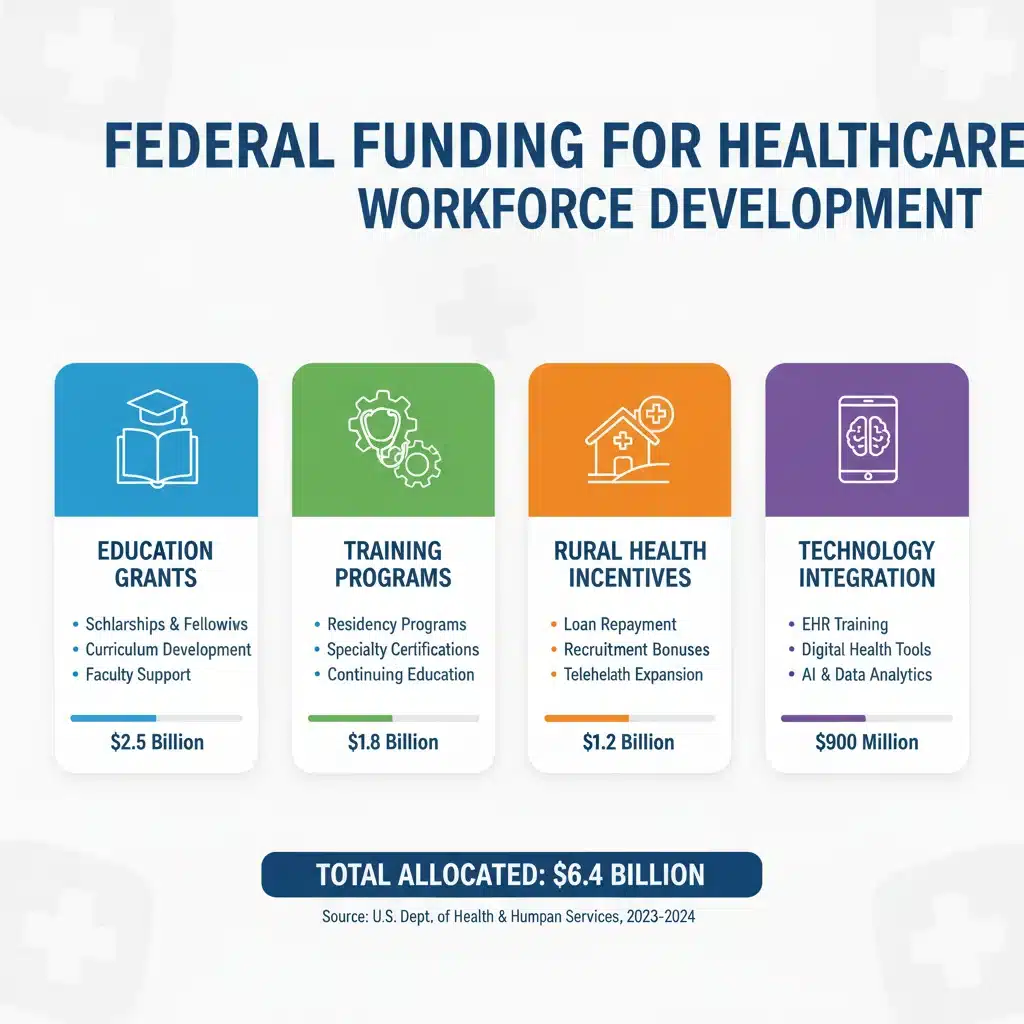
The success of the 2026 Healthcare Workforce Policy hinges significantly on the allocation of substantial federal funding. Congress is expected to authorize unprecedented levels of investment across various programs, recognizing that a well-funded strategy is essential to overcome the deeply entrenched challenges of the workforce shortage. This funding will be channeled through existing agencies like HRSA, the National Institutes of Health (NIH), and the Centers for Medicare & Medicaid Services (CMS), as well as potentially new grant mechanisms.
Increased Grants and Scholarships
A major portion of the funding will be dedicated to expanding grants and scholarships for students pursuing healthcare degrees. This includes direct financial aid, tuition subsidies, and stipends for individuals committing to serve in high-need specialties or underserved areas. The goal is to reduce the financial barrier to entry into healthcare professions, making these careers more accessible to a broader range of individuals and alleviating student debt burdens that can deter potential candidates.
Support for Graduate Medical Education (GME)
Federal funding for Graduate Medical Education (GME) will see a significant boost. GME slots, particularly residencies and fellowships, are critical bottlenecks in the physician supply chain. The 2026 policy aims to increase the number of federally supported GME positions, with a strong emphasis on primary care, psychiatry, and other specialties facing critical shortages. This expansion is crucial for ensuring that medical school graduates have the opportunity to complete their training and enter the workforce.
Infrastructure and Technology Investment
Beyond direct workforce support, federal funds will be allocated to improve healthcare infrastructure, particularly in rural and underserved areas. This includes grants for upgrading facilities, investing in new medical equipment, and enhancing broadband connectivity to support telehealth services. The policy recognizes that a modern, well-equipped healthcare environment is essential for attracting and retaining skilled professionals.
Research and Data Collection
A portion of the federal funding will also be directed towards research and data collection efforts. This includes funding for workforce modeling, trend analysis, and evaluations of policy effectiveness. By investing in robust data, policymakers can make more informed decisions, track progress, and adapt strategies as needed to ensure the Healthcare Workforce Policy remains responsive to evolving needs.
Anticipated Impact and Future Outlook
The implementation of the 2026 Healthcare Workforce Policy is expected to yield significant positive impacts across the healthcare ecosystem. While systemic changes take time, the comprehensive nature of these initiatives suggests a promising future for addressing the national healthcare workforce shortage.
Improved Access to Care
Perhaps the most immediate and tangible impact will be improved access to care, especially in historically underserved communities. With more healthcare professionals entering the workforce and incentives drawing them to rural and urban shortage areas, patients can expect shorter wait times, more readily available appointments, and a greater choice of providers. The expansion of telehealth, supported by federal policy, will further democratize access, allowing individuals to receive care regardless of their geographical location or mobility limitations.
Enhanced Quality of Care
A well-staffed and supported healthcare workforce is directly correlated with higher quality patient care. By reducing burnout and providing resources for professional development, the new policies aim to create an environment where healthcare professionals can thrive, leading to fewer errors, more personalized care, and better patient outcomes. The focus on diversity and cultural competence will also ensure that care is more appropriate and effective for all populations.
Economic Benefits
Investing in the healthcare workforce also brings substantial economic benefits. The creation of new training programs, expansion of healthcare facilities, and increased employment opportunities will stimulate local economies. A healthier population, with better access to preventive and acute care, is also a more productive population, contributing to overall economic growth and reducing the burden of preventable chronic diseases.
Challenges and Considerations
Despite the ambitious scope of the 2026 Healthcare Workforce Policy, challenges remain. The sheer scale of the shortage means that sustained effort and continued investment will be necessary beyond 2026. Political will, economic fluctuations, and unforeseen global health events could all impact the long-term effectiveness of these policies. Furthermore, ensuring equitable implementation and preventing unintended consequences will require careful monitoring and adaptive governance.
Another critical consideration is the integration of new technologies. While telehealth and AI offer immense potential, their effective adoption requires significant investment in infrastructure, training, and robust cybersecurity measures. Addressing digital divides and ensuring that all segments of the population can benefit from technological advancements will be crucial.

The Role of Stakeholders and Public Engagement
The success of the 2026 Healthcare Workforce Policy will not solely rest on federal initiatives and funding but also on the active participation and collaboration of various stakeholders. Healthcare systems, academic institutions, professional organizations, state and local governments, and even individual citizens all have a vital role to play in supporting these efforts.
Healthcare Systems and Providers
Hospitals, clinics, and other healthcare organizations will be on the front lines of implementing many of these policies. This includes creating supportive work environments, investing in staff development, adopting new technologies, and actively participating in federal programs. Providers themselves will need to embrace new models of care, engage in continuous learning, and advocate for their needs and the needs of their patients.
Academic Institutions
Universities, colleges, and vocational schools are crucial for training the next generation of healthcare professionals. They will need to adapt their curricula to meet evolving workforce needs, expand enrollment capacity, and collaborate with healthcare providers to offer practical training experiences. Their role in research and innovation will also be paramount in developing new solutions to workforce challenges.
State and Local Governments
While the 2026 policy is federally driven, state and local governments will play a critical role in its implementation. This includes aligning state-level licensing and regulatory frameworks with federal guidelines, supporting local health initiatives, and developing regional strategies to address specific workforce shortages. Collaboration between federal, state, and local entities will be key to creating a cohesive national strategy.
Public Engagement and Advocacy
Public awareness and engagement are also vital. Understanding the challenges facing the healthcare workforce and supporting policies designed to address them can create a more informed and proactive citizenry. Advocacy groups, patient organizations, and community leaders can contribute by highlighting local needs, promoting healthcare careers, and ensuring that policy implementation remains patient-centered.
Conclusion
The 2026 Healthcare Workforce Policy represents a pivotal moment in the ongoing effort to address the national healthcare workforce shortage. Through a combination of expanded training, targeted incentives, mental health support, and technological integration, the federal government is laying the groundwork for a more resilient, equitable, and effective healthcare system. While the path ahead will undoubtedly have its challenges, the comprehensive nature of these initiatives, coupled with significant federal funding, offers a strong foundation for optimism.
The success of this policy will ultimately depend on sustained commitment, adaptive strategies, and collaborative efforts from all stakeholders. By working together, we can ensure that the United States has a robust and diverse healthcare workforce capable of meeting the evolving health needs of its population for generations to come. The future of healthcare hinges on these crucial investments and policy decisions, and 2026 marks a significant step forward in securing that future.