Telehealth Technologies Beyond Video Calls: Mid-2025 Adoption Insights
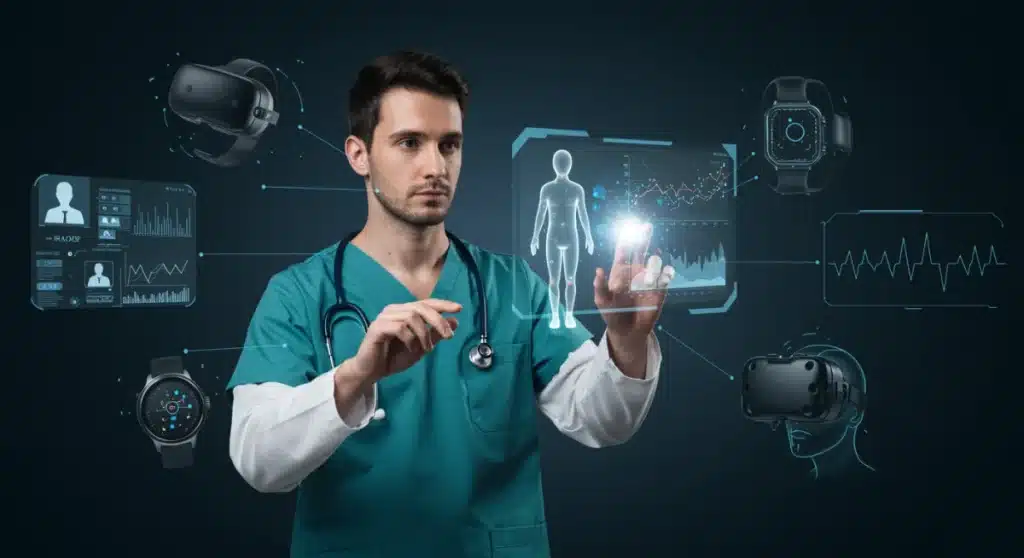
By mid-2025, telehealth will transcend simple video consultations, integrating advanced technologies like AI-powered diagnostics, remote monitoring, and immersive virtual reality to redefine patient care delivery and accessibility.
The landscape of healthcare is undergoing a profound transformation, moving beyond video calls: emerging telehealth technologies are poised for widespread adoption by mid-2025, promising to revolutionize patient care. This evolution signifies a pivotal shift from reactive treatment to proactive, personalized health management, driven by innovation and a growing demand for accessible, efficient medical services.
the evolution of telehealth: from video calls to comprehensive virtual care
Telehealth, once largely synonymous with video consultations, is rapidly expanding its horizons. The pandemic accelerated its adoption, but the next wave of innovation focuses on integrating more sophisticated tools to provide truly comprehensive virtual care experiences. This expansion isn’t just about convenience; it’s about enhancing diagnostic accuracy, treatment efficacy, and overall patient engagement.
Providers are increasingly seeking solutions that offer more than just a face-to-face interaction. They need tools that can collect objective data, facilitate complex diagnoses, and support ongoing patient management remotely. This demand is fueling the development and deployment of technologies that were once considered futuristic, making them a reality in clinical settings.
AI-powered diagnostics and predictive analytics
Artificial intelligence (AI) is at the forefront of this evolution, moving beyond simple data processing to sophisticated diagnostic capabilities. AI algorithms can analyze vast amounts of medical data, from imaging scans to electronic health records, identifying patterns and anomalies that might be missed by the human eye.
- Early Disease Detection: AI can flag potential health issues at their earliest stages, often before symptoms manifest.
- Personalized Treatment Plans: By analyzing patient data, AI helps tailor treatment protocols to individual needs, improving outcomes.
- Reduced Diagnostic Errors: AI acts as a powerful second opinion, minimizing the risk of misdiagnosis.
The integration of AI into telehealth platforms allows for real-time analysis during virtual consultations, providing clinicians with immediate insights to guide their decisions. This not only streamlines the diagnostic process but also empowers patients with more informed care plans.
remote patient monitoring (RPM) advancements
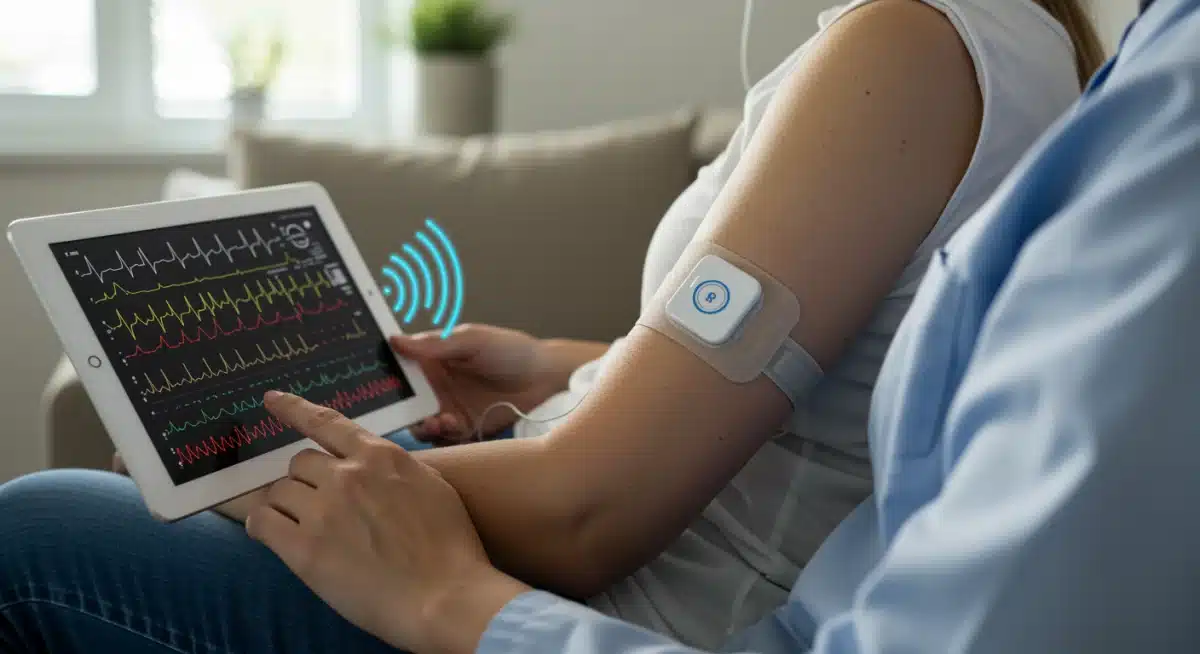
Remote Patient Monitoring (RPM) is perhaps one of the most impactful advancements in telehealth, extending care beyond the clinic walls. While basic RPM has existed for some time, the next generation of devices offers unparalleled precision, ease of use, and integration capabilities, making continuous health tracking a seamless part of daily life.
These sophisticated RPM systems are designed to collect a wide array of physiological data, from vital signs to glucose levels, and transmit it securely to healthcare providers. This continuous data stream allows for proactive interventions, preventing acute episodes and managing chronic conditions more effectively. The focus is shifting towards non-invasive, wearable, and even implantable devices that blend into a patient’s routine without requiring significant behavioral changes.
integrated wearable sensors and smart devices
The market for wearable health technology is exploding, with devices becoming more advanced and integrated into comprehensive RPM platforms. These aren’t just fitness trackers; they are medical-grade sensors capable of capturing nuanced health data.
- Continuous Glucose Monitoring (CGM): Non-invasive or minimally invasive sensors provide real-time glucose readings for diabetes management.
- Smart Patches and E-textiles: These discreet devices can monitor heart rate, respiratory rate, temperature, and even detect falls, offering continuous oversight.
- Connected Inhalers and Insulin Pens: Devices that track medication adherence and dosage, providing valuable insights for chronic disease management.
The true power of these advancements lies in their ability to provide a holistic view of a patient’s health status between appointments, enabling timely adjustments to treatment plans and reducing the need for costly emergency room visits.
immersive technologies: vr, ar, and the metaverse in healthcare
Beyond traditional screens, immersive technologies like Virtual Reality (VR) and Augmented Reality (AR) are set to transform telehealth by creating more engaging and effective patient and provider experiences. These technologies offer new avenues for everything from surgical training to pain management, moving beyond simple information exchange to experiential learning and therapy.
The concept of a ‘medical metaverse’ is also gaining traction, envisioning a persistent, shared virtual space where patients, clinicians, and educators can interact in highly realistic and collaborative environments. This could facilitate global consultations, virtual operating rooms for training, and even support groups in a more engaging format.
virtual reality for therapy and rehabilitation
VR is proving to be a powerful tool for various therapeutic applications, offering controlled and customizable environments for patients.
- Pain Management: VR distractions can significantly reduce the perception of pain in chronic conditions or during medical procedures.
- Physical Rehabilitation: Immersive VR games and exercises can make physical therapy more engaging and effective for recovery.
- Mental Health Support: VR exposure therapy can help treat phobias, PTSD, and anxiety in a safe, controlled setting.
These applications enhance patient adherence to therapy and provide clinicians with new tools to deliver specialized care remotely, overcoming geographical barriers and improving access to critical services.
digital therapeutics (DTx) and personalized medicine
Digital therapeutics (DTx) represent a new category of medical interventions delivered through software programs, often in conjunction with traditional treatments. These evidence-based programs are designed to prevent, manage, or treat a wide range of physical and mental health conditions, offering a highly personalized approach to care that can be delivered remotely.
The strength of DTx lies in its ability to provide structured, engaging, and data-driven interventions that can be tailored to individual patient needs and progress. Unlike general health apps, DTx products are rigorously tested, clinically validated, and often prescribed by healthcare professionals, marking them as a legitimate medical tool within the telehealth ecosystem.
ai-driven personalized treatment pathways
The integration of AI further enhances DTx by creating highly personalized treatment pathways. AI algorithms can analyze patient data, including genetic information, lifestyle factors, and treatment responses, to recommend the most effective digital interventions.
- Behavioral Health: DTx programs for conditions like insomnia, ADHD, and substance abuse provide structured cognitive behavioral therapy (CBT) exercises.
- Chronic Disease Management: Programs assist with medication adherence, diet, and exercise for conditions such as diabetes and hypertension.
- Preventive Care: Personalized digital coaching and interventions to mitigate risk factors for various diseases.
This personalization ensures that patients receive the most relevant and effective interventions, maximizing the therapeutic impact and improving long-term health outcomes.
blockchain for secure health data management
As telehealth expands and more sensitive patient data is collected and transmitted, the need for robust security and privacy solutions becomes paramount. Blockchain technology, known for its decentralized and immutable ledger capabilities, offers a promising solution for secure health data management and interoperability.
Blockchain can create a secure, transparent, and auditable record of patient interactions, data exchanges, and consent forms, addressing some of the most critical challenges in digital health. It provides a framework for patients to have greater control over their health data, deciding who can access it and for what purpose, thereby enhancing trust in telehealth systems.
enhancing data security and patient privacy
The inherent cryptographic security of blockchain makes it an ideal candidate for protecting sensitive medical information.
- Immutable Health Records: Each patient record is encrypted and linked in a chain, making it virtually impossible to alter without detection.
- Secure Data Sharing: Patients can grant and revoke access to their medical data with specific providers or researchers, ensuring privacy.
- Interoperability: Blockchain can facilitate seamless and secure sharing of health information across different healthcare systems, improving care coordination.
By leveraging blockchain, telehealth platforms can build a foundation of trust and security, encouraging greater adoption and enabling more sophisticated data-driven healthcare solutions.
regulatory landscape and adoption challenges by mid-2025
While the technological advancements are impressive, the widespread adoption of these emerging telehealth technologies by mid-2025 hinges significantly on the evolving regulatory landscape and overcoming inherent implementation challenges. Policy makers in the United States are actively working to establish clear guidelines that balance innovation with patient safety and data privacy.
Reimbursement policies, licensing requirements across state lines, and data security regulations (like HIPAA) are critical factors that influence how quickly and effectively these technologies can be integrated into mainstream healthcare. The industry also faces the challenge of ensuring equitable access to these advanced tools, bridging the digital divide, and addressing potential disparities in care.
navigating reimbursement and policy changes
For telehealth to truly flourish, consistent and comprehensive reimbursement policies are essential. Currently, policies can vary, creating uncertainty for providers.
- Standardized Reimbursement Codes: Clear codes for new telehealth services and technologies will incentivize adoption.
- Cross-State Licensing: Streamlining licensing for providers to practice across state lines will expand access to specialized care.
- Data Privacy and Security Compliance: Strict adherence to HIPAA and other data protection laws is non-negotiable for building patient trust.
Addressing these regulatory hurdles will be crucial for accelerating the integration of these transformative telehealth solutions and ensuring that their benefits reach a broad spectrum of the population.
| Key Technology | Brief Description |
|---|---|
| AI-Powered Diagnostics | Advanced algorithms for early disease detection and personalized treatment plans in telehealth. |
| Remote Patient Monitoring (RPM) | Continuous tracking of vital signs and health metrics using smart wearables and sensors. |
| Immersive VR/AR Therapy | Virtual and augmented reality for pain management, rehabilitation, and mental health treatments. |
| Digital Therapeutics (DTx) | Clinically validated software programs for disease prevention, management, and treatment. |
Frequently Asked Questions About Emerging Telehealth Technologies
Key emerging telehealth technologies include AI-powered diagnostics, advanced remote patient monitoring (RPM) with smart wearables, immersive VR/AR for therapy, and digital therapeutics (DTx). These innovations offer more comprehensive, data-driven, and engaging virtual care experiences.
By mid-2025, AI will significantly enhance telehealth through predictive analytics for early disease detection, personalized treatment recommendations, and improved diagnostic accuracy. It will empower clinicians with real-time insights during virtual consultations, streamlining care delivery.
RPM is crucial for continuous health tracking, enabling proactive interventions and better management of chronic conditions. Advanced RPM devices, such as smart patches and connected inhalers, provide real-time data, reducing hospital visits and improving patient outcomes significantly.
Yes, VR and AR are increasingly used for therapeutic applications like pain management, physical rehabilitation, and mental health support. They offer engaging and controlled environments for patients, enhancing adherence and providing new avenues for specialized remote care.
Widespread adoption requires overcoming regulatory hurdles, including standardized reimbursement policies, cross-state licensing for providers, and stringent data security compliance. Ensuring equitable access and bridging the digital divide are also critical for integrating these technologies effectively.
conclusion
The journey of telehealth beyond simple video calls toward a sophisticated ecosystem of emerging telehealth technologies is not just an incremental step but a transformative leap. By mid-2025, we anticipate a healthcare landscape where AI-driven diagnostics, advanced remote patient monitoring, immersive therapies, and clinically validated digital therapeutics are integral components of patient care. While regulatory frameworks and equitable access remain crucial considerations, the undeniable potential of these innovations to enhance efficiency, personalize treatments, and democratize healthcare access signals a future where quality care is more accessible and effective than ever before. MedTechGrowths remains committed to tracking these vital developments, offering insights into how these cutting-edge solutions are shaping the future of medicine.