No Surprises Act 2026: Billing Compliance & Practical Solutions

The healthcare landscape is continuously evolving, and one of the most significant pieces of legislation impacting providers and patients alike in recent years is the No Surprises Act (NSA). While parts of the act have been in effect since January 1, 2022, the full scope of its implementation, including certain nuanced provisions and enforcement mechanisms, is steadily progressing towards a comprehensive operationalization by 2026. Understanding the No Surprises Act 2026 implementation is not merely about avoiding penalties; it’s about fostering trust with patients and ensuring the financial stability of healthcare organizations.
For too long, patients have been blindsided by unexpected medical bills, often from out-of-network providers they had no choice in seeing during an emergency or scheduled procedure at an in-network facility. The NSA aims to eliminate these ‘surprise’ bills, offering greater financial protection to consumers. However, this seismic shift places a substantial burden on healthcare providers and insurers to adapt their billing practices, internal processes, and communication strategies. This comprehensive guide will delve into the critical aspects of the No Surprises Act 2026, offering practical solutions and actionable insights to help your organization navigate these complex regulations successfully.
The Genesis and Evolution of the No Surprises Act
Before diving into the specifics of the No Surprises Act 2026, it’s crucial to understand its origins and the problems it sought to address. Enacted as part of the Consolidated Appropriations Act of 2021, the NSA was a bipartisan effort to protect consumers from balance billing. Balance billing occurs when a patient receives care from an out-of-network provider or facility, and that provider bills the patient for the difference between their billed charges and the amount the insurer paid.
This often happened in emergency situations where patients couldn’t choose their providers, or in non-emergency situations where an out-of-network provider (e.g., an anesthesiologist or radiologist) was involved in a procedure at an in-network facility. The financial burden placed on patients by these unexpected bills was significant, leading to medical debt and deterring individuals from seeking necessary care.
The NSA’s initial implementation in 2022 focused on banning most unexpected medical bills from out-of-network providers for emergency services, non-emergency services provided by out-of-network providers at in-network facilities, and air ambulance services. It also established an Independent Dispute Resolution (IDR) process to resolve payment disputes between providers and insurers. The journey to No Surprises Act 2026 involves refining these processes and ensuring robust compliance across the entire healthcare ecosystem.
Key Provisions and Their Impact on Billing Compliance for 2026
As we approach 2026, healthcare organizations must be acutely aware of the specific provisions of the No Surprises Act 2026 that will profoundly impact their billing and operational workflows. These provisions are designed to shift the financial responsibility away from the patient and onto a negotiation process between providers and payers.
1. Prohibition on Balance Billing
The cornerstone of the NSA is the prohibition on balance billing for:
- Emergency services: Regardless of where they are provided, emergency services must be billed at the in-network rate, even if the facility or provider is out-of-network.
- Non-emergency services at in-network facilities: If a patient receives non-emergency services at an in-network hospital or ambulatory surgical center, and an out-of-network provider (e.g., an ancillary provider like a radiologist, anesthesiologist, or pathologist) is involved, the patient cannot be balance billed.
- Air ambulance services: All air ambulance services are treated as in-network for billing purposes.
For providers, this means a fundamental re-evaluation of how charges are processed for these scenarios. The burden of identifying in-network vs. out-of-network status shifts, and the practice of directly billing patients for the difference becomes illegal. Preparing for the No Surprises Act 2026 requires robust systems to identify these situations and reroute billing appropriately.
2. Good Faith Estimates (GFE)
A critical component of the No Surprises Act 2026 is the requirement for providers to issue Good Faith Estimates (GFEs) to uninsured or self-pay patients. This provision ensures that these patients receive an estimate of the expected charges for scheduled services or upon request. The GFE must include itemized lists of services and items, diagnostic codes, and expected charges for each. This transparency empowers patients to make informed decisions and prevents them from being surprised by the cost of care.
While initially focused on uninsured/self-pay patients, the long-term vision and potential expansion of GFE requirements could impact all patients. Healthcare organizations need to establish streamlined processes for generating accurate and timely GFEs. This involves integrating pricing information, service codes, and potentially even payer-specific rates into a single, accessible system. The penalty for failing to provide a GFE or providing an inaccurate one can be substantial, making this a key area for No Surprises Act 2026 compliance.
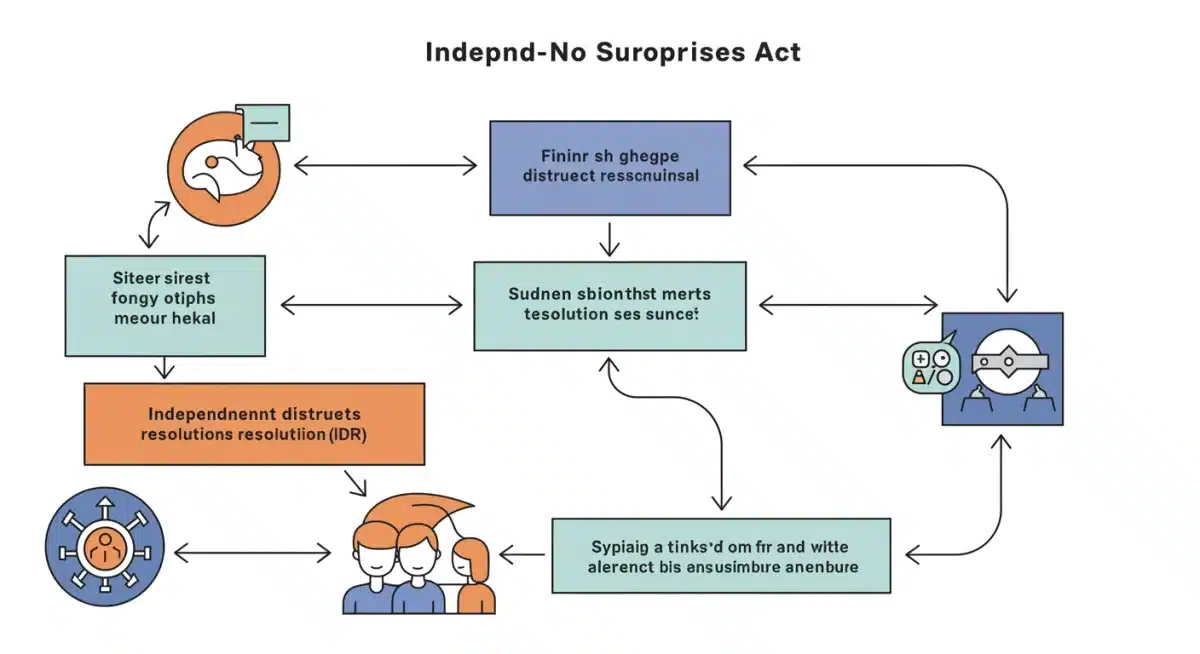
3. Independent Dispute Resolution (IDR) Process
When an out-of-network provider or facility and a health plan cannot agree on the payment amount for a service covered by the NSA, they must enter into an Independent Dispute Resolution (IDR) process. This process is designed to be binding and aims to resolve payment disputes without involving the patient.
The IDR process involves both parties submitting their preferred payment amount and supporting documentation to a certified IDR entity. The entity then selects one of the offers as the final payment amount, considering factors such as the Qualifying Payment Amount (QPA), provider’s training and experience, market share, complexity of the service, and teaching status. Understanding the nuances of the IDR process, including documentation requirements and negotiation strategies, is paramount for providers under the No Surprises Act 2026. Efficiently managing IDR cases can significantly impact revenue cycles and prevent prolonged payment delays.
4. Patient Rights and Disclosure Requirements
The NSA mandates that healthcare providers and facilities provide patients with clear and understandable information about their rights regarding surprise medical bills. This includes posting notices in prominent locations and on their websites, as well as providing a written notice to patients. These disclosures must explain the balance billing protections and how patients can report violations.
Ensuring these disclosure requirements are met consistently and effectively is crucial for No Surprises Act 2026 compliance. It not only fulfills a legal obligation but also builds patient trust by demonstrating a commitment to transparency and fairness.
Practical Solutions for 2026 Billing Compliance
Navigating the complexities of the No Surprises Act 2026 requires a proactive and strategic approach. Healthcare organizations must implement robust systems and foster a culture of compliance. Here are practical solutions to help your organization prepare:
1. Enhance Network Management and Contracting
One of the most effective ways to mitigate the impact of the NSA is to strengthen your network management. For providers, this means actively working to expand in-network agreements with payers, especially for ancillary services that are often provided by out-of-network groups at in-network facilities. For payers, it means ensuring adequate network coverage to avoid triggering NSA protections.
- Review existing contracts: Scrutinize current payer contracts to understand payment terms for out-of-network services that fall under NSA protections.
- Negotiate new agreements: Proactively engage with payers to negotiate fair reimbursement rates for services that are now subject to the IDR process.
- Ancillary provider alignment: Hospitals and facilities should work closely with their contracted ancillary providers (e.g., anesthesiologists, radiologists, pathologists) to ensure they are also in-network with major payers, or have clear processes for NSA compliance.
2. Revamp Revenue Cycle Management (RCM) Processes
The No Surprises Act 2026 necessitates significant adjustments to RCM workflows. Traditional balance billing practices are no longer permissible for protected services, requiring new processes for claims submission, payment posting, and dispute resolution.
- Automate identification of NSA-protected services: Implement technology that can automatically identify claims that fall under NSA protections, preventing erroneous balance billing.
- Dedicated IDR workflow: Develop a streamlined internal workflow for managing IDR cases, including clear protocols for gathering documentation, submitting offers, and tracking outcomes.
- Adjust patient financial counseling: Train financial counselors to explain NSA protections to patients and address questions about potential out-of-pocket costs accurately.
3. Implement Robust Good Faith Estimate (GFE) Systems
The GFE requirement is a significant operational challenge for many providers. Meeting this mandate for the No Surprises Act 2026 demands accurate and efficient systems.
- Integrate pricing data: Ensure your electronic health record (EHR) and billing systems are integrated with up-to-date pricing information for all services.
- Develop GFE templates: Create standardized, clear, and comprehensive GFE templates that meet all regulatory requirements.
- Automate GFE generation: Invest in or develop tools that can automate the generation of GFEs based on scheduled services, reducing manual errors and improving turnaround time.
- Training for staff: Provide comprehensive training to front-desk staff, schedulers, and financial counselors on how to generate, deliver, and explain GFEs to patients.
4. Enhance Transparency and Patient Communication
Effective communication is vital for compliance and patient satisfaction under the No Surprises Act 2026. Patients need to understand their rights and how the new rules protect them.
- Clear disclosure notices: Ensure all required disclosure notices are prominently displayed in facilities, on websites, and provided to patients in an easily understandable format.
- Patient education materials: Develop patient-friendly materials (brochures, FAQs) explaining the NSA and how it impacts their billing.
- Train patient-facing staff: Equip receptionists, nurses, and other patient-facing staff with the knowledge to answer basic questions about the NSA and direct patients to appropriate resources.
5. Invest in Technology and Data Analytics
Technology plays a pivotal role in achieving and maintaining No Surprises Act 2026 compliance. Data analytics can provide valuable insights into billing patterns, IDR outcomes, and areas of potential non-compliance.
- Compliance software solutions: Explore third-party software solutions designed to assist with NSA compliance, including GFE generation, IDR management, and regulatory tracking.
- Data analysis for IDR strategy: Utilize data to analyze IDR outcomes, identify trends in QPA determinations, and refine your negotiation strategy for future disputes.
- Audit trails: Ensure all billing and compliance activities are thoroughly documented and auditable to demonstrate adherence to regulations.
Challenges and Considerations for 2026
While the NSA offers significant patient protections, its implementation is not without challenges for providers and payers. The journey to full No Surprises Act 2026 compliance involves navigating several complex areas.
1. The Evolving IDR Process
The IDR process has faced its share of legal challenges and operational hurdles since its inception. The qualified payment amount (QPA), which is the median contracted rate for a service, has been a contentious point. Courts have weighed in on how IDR entities should consider the QPA and other factors. As these legal interpretations evolve, providers and payers must stay abreast of the latest guidance to effectively participate in the IDR process. The efficiency and fairness of the IDR system are critical for both financial stability and regulatory compliance by No Surprises Act 2026.
2. Data Exchange and Interoperability
Accurate and timely data exchange between providers, facilities, and payers is essential for NSA compliance. This includes sharing information about patient insurance status, network participation, and cost estimates. The lack of seamless interoperability across disparate systems can create bottlenecks and increase the risk of errors, particularly when generating GFEs or engaging in IDR. Addressing these data exchange challenges is a key consideration for 2026 Data Interoperability Mandates readiness.
3. Administrative Burden and Resource Allocation
Complying with the No Surprises Act 2026 adds significant administrative burden to healthcare organizations. Generating GFEs, managing IDR cases, and ensuring all disclosure requirements are met demand considerable staff time and resources. Smaller practices, in particular, may struggle to allocate the necessary personnel and technological investments. Organizations need to assess their current capabilities and strategically allocate resources or seek external support to manage these new demands.
4. State vs. Federal Laws
The NSA does not preempt state laws that offer greater patient protections against surprise billing. This means providers and payers must comply with both federal and applicable state laws, which can add another layer of complexity. Organizations operating in multiple states must have a clear understanding of the varying regulatory landscapes to ensure full compliance by No Surprises Act 2026.
The Role of Compliance Officers and Training
A robust compliance program, led by a dedicated compliance officer, is indispensable for navigating the No Surprises Act 2026. This individual or team will be responsible for:
- Monitoring regulatory updates: Keeping abreast of new rules, interpretations, and guidance from federal and state agencies.
- Conducting risk assessments: Identifying areas of potential non-compliance and implementing corrective actions.
- Developing policies and procedures: Creating clear, actionable policies and procedures for GFE generation, IDR management, and patient disclosures.
- Providing ongoing training: Ensuring all relevant staff members receive comprehensive and recurring training on NSA requirements and internal processes.
- Internal auditing: Regularly auditing billing practices and patient communications to ensure adherence to the Act.
Training is paramount, extending beyond just billing staff to include front-desk personnel, schedulers, clinicians, and financial counselors. Everyone who interacts with patients or billing processes needs to understand their role in ensuring No Surprises Act 2026 compliance.

Looking Ahead: The Future of Surprise Billing
The No Surprises Act 2026 marks a significant milestone in healthcare consumer protection. Its full implementation will undoubtedly transform how healthcare services are priced, billed, and paid for. While the immediate focus is on compliance, the long-term implications are broader.
The Act encourages greater transparency in healthcare pricing, potentially leading to more informed patient choices and increased competition among providers and payers. It also pushes for more robust network adequacy, as payers will have a stronger incentive to contract with a wider range of providers to avoid the IDR process.
As healthcare organizations adapt to the No Surprises Act 2026, they must view it not just as a regulatory burden but as an opportunity to enhance patient trust, streamline operations, and ultimately contribute to a more transparent and equitable healthcare system. Proactive planning, technological investment, and continuous staff education will be the hallmarks of successful compliance in this new era.
Conclusion
The journey towards full implementation of the No Surprises Act 2026 is a complex but necessary one. It represents a monumental shift in how healthcare providers and payers interact with patients regarding billing, aiming to eliminate the stressful and often devastating impact of unexpected medical bills. For healthcare organizations, the time to act is now. By understanding the key provisions, implementing practical solutions, and addressing potential challenges proactively, you can ensure your organization is not only compliant but also thrives in this evolving regulatory environment.
Embracing transparency, investing in robust technology, and fostering a culture of compliance will not only protect your organization from penalties but also strengthen your relationship with patients, building a foundation of trust that is invaluable in today’s healthcare landscape. The No Surprises Act 2026 is more than just a law; it’s a call for a more equitable and understandable healthcare billing system for everyone.