HIPAA Compliance Telehealth 2025: Secure Virtual Care Checklist

Ensuring robust HIPAA telehealth compliance in 2025 is paramount for secure virtual care, demanding healthcare providers adapt to evolving regulations and implement advanced data protection strategies to safeguard patient information.
As virtual care continues its rapid expansion, understanding HIPAA telehealth compliance 2025 is not just a regulatory obligation but a cornerstone of patient trust and operational integrity. This article provides a comprehensive checklist to navigate the evolving landscape of secure virtual care.
Understanding the Evolving Landscape of Telehealth Regulations
The telehealth industry has experienced unprecedented growth, particularly accelerated by recent global events. This expansion, while offering immense benefits in terms of accessibility and convenience, has simultaneously amplified the complexities surrounding data privacy and security. Healthcare providers must remain vigilant and proactive in adhering to the Health Insurance Portability and Accountability Act (HIPAA) as regulations continue to adapt to technological advancements and new care delivery models.
The regulatory environment is dynamic, with federal and state agencies frequently issuing updated guidance. Staying informed about these changes is crucial for any organization involved in virtual care. Non-compliance can lead to severe penalties, including substantial fines and reputational damage, underscoring the importance of a robust compliance strategy.
Key Regulatory Updates in 2025
Several significant updates are anticipated or have already been implemented by 2025, impacting how telehealth services are delivered and secured. These changes often reflect lessons learned from previous years, aiming to close potential loopholes and strengthen patient protections.
- Enhanced audit protocols for remote access and data storage.
- Clarification on business associate agreements (BAAs) for emerging AI in healthcare tools.
- Stricter guidelines for patient consent in data sharing for research.
- Focus on interoperability while maintaining security standards.
These updates require a thorough review of existing policies and procedures to ensure they align with the current legal framework. Providers should prioritize continuous education and training for their staff to effectively implement these new requirements.
Ultimately, a deep understanding of these evolving regulations is the first step towards building a resilient and compliant telehealth practice. It ensures that innovative care delivery does not come at the expense of patient privacy or data security.
Establishing a Robust Security Infrastructure for Virtual Care
The foundation of HIPAA compliance in telehealth lies in a strong security infrastructure. This involves not only technological solutions but also comprehensive policies and practices that govern data handling. Protecting electronic protected health information (ePHI) from unauthorized access, use, or disclosure is paramount in the virtual care setting.
Implementing multi-layered security measures helps create a formidable defense against potential breaches. This proactive approach minimizes risks and builds trust with patients, who rely on their providers to safeguard their sensitive health information.
Essential Technological Safeguards
Technology plays a critical role in securing telehealth platforms. Encryption, secure communication channels, and robust access controls are non-negotiable components of any compliant system. These safeguards prevent data interception and ensure that only authorized personnel can access patient records.
- End-to-end encryption for all telehealth communications (video, audio, chat).
- Secure, HIPAA-compliant cloud storage solutions for ePHI.
- Multi-factor authentication (MFA) for all user access points.
- Intrusion detection and prevention systems to monitor network activity.
Beyond these, regular security audits and penetration testing are essential to identify and address vulnerabilities before they can be exploited. Staying updated with the latest cybersecurity threats and defense mechanisms is an ongoing responsibility.
However, technology alone is insufficient. It must be complemented by clear policies and rigorous training. Even the most advanced security systems can be compromised by human error or negligence. Therefore, a holistic approach that integrates technology, policy, and education is vital for truly secure virtual care.
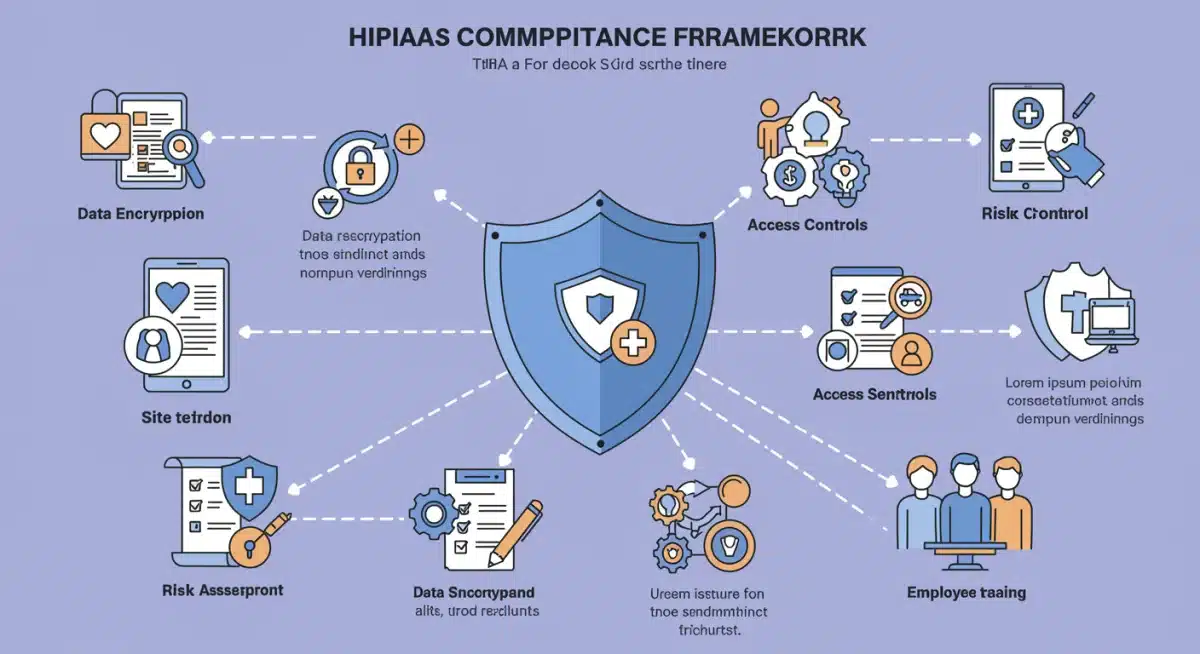
The continuous evaluation and upgrade of security infrastructure are not one-time tasks but ongoing processes. As new threats emerge and technology evolves, so too must the security measures employed by telehealth providers. This commitment to continuous improvement ensures long-term compliance and patient data protection.
Implementing Comprehensive Risk Assessments and Management
A cornerstone of effective HIPAA compliance is the regular execution of thorough risk assessments and the subsequent implementation of robust risk management strategies. Identifying potential vulnerabilities and threats to ePHI is the first step in mitigating them. These assessments should be ongoing, not merely a one-time event, reflecting the dynamic nature of cybersecurity threats and technological environments.
Organizations must systematically evaluate the likelihood and impact of potential risks, from technical weaknesses to human error. This process allows for the prioritization of resources and the development of targeted mitigation strategies, ensuring that the most critical vulnerabilities are addressed promptly and effectively.
Conducting Regular Security Risk Analyses
A comprehensive security risk analysis goes beyond a simple checklist; it involves a deep dive into all aspects of an organization’s operations where ePHI is created, received, maintained, or transmitted. This includes evaluating physical, administrative, and technical safeguards.
- Identify all systems and processes handling ePHI.
- Analyze potential threats and vulnerabilities to these systems.
- Assess the current security measures in place.
- Determine the likelihood and impact of potential breaches.
The findings from these analyses should inform the development of a detailed risk management plan. This plan outlines specific actions, responsible parties, and timelines for addressing identified risks. Regular reviews of this plan are necessary to ensure its continued relevance and effectiveness.
Furthermore, it is crucial to document every step of the risk assessment and management process. This documentation serves as proof of due diligence in the event of an audit or breach, demonstrating a commitment to patient data protection. Neglecting this crucial aspect can leave an organization exposed to both regulatory penalties and legal liabilities.
Ensuring Business Associate Agreement (BAA) Compliance
In the complex ecosystem of telehealth, healthcare providers often rely on third-party vendors for various services, ranging from electronic health record (EHR) systems to billing and cloud storage. Each of these vendors, if they access, create, receive, or transmit ePHI on behalf of the provider, is considered a Business Associate (BA) under HIPAA. Establishing and maintaining compliant Business Associate Agreements (BAAs) is therefore a critical component of a comprehensive compliance strategy.
A BAA is a legally binding contract that outlines the responsibilities of the business associate in safeguarding ePHI, ensuring they adhere to the same HIPAA standards as the covered entity. Without a proper BAA in place, a provider can be held liable for a business associate’s breach, regardless of their own internal compliance efforts.
Key BAA Requirements for 2025
As technology evolves and new services emerge, the scope and specifics of BAAs must also adapt. By 2025, particular attention should be paid to certain aspects to ensure robust protection.
- Clearly define permissible uses and disclosures of ePHI by the BA.
- Mandate the BA to implement appropriate administrative, physical, and technical safeguards.
- Require the BA to report any security incidents or breaches to the covered entity.
- Ensure the BA will cooperate with breach investigations and mitigation efforts.
- Address data destruction or return upon termination of the agreement.
It is not enough to simply have a BAA; providers must also actively monitor their business associates’ compliance. This includes periodic reviews of their security practices and ensuring that their subcontractors also have BAAs in place. Diligence in this area can prevent significant compliance headaches down the line.
The complexity of modern telehealth operations means that providers might have numerous business associates. Managing these relationships, ensuring each BAA is current, and verifying ongoing compliance requires dedicated resources and a systematic approach. This vigilance is essential for maintaining a secure and HIPAA-compliant virtual care environment.
Developing and Maintaining Robust Employee Training Programs
No matter how sophisticated the technology or comprehensive the policies, human error remains a leading cause of data breaches. Therefore, a critical element of HIPAA telehealth compliance is the development and ongoing maintenance of robust employee training programs. Staff members, from front-desk personnel to clinicians, must understand their roles and responsibilities in protecting ePHI.
Effective training goes beyond a one-time onboarding session. It requires continuous education, regular refreshers, and updates that reflect changes in regulations, technology, and organizational policies. An informed workforce is the first line of defense against security incidents.
Designing Effective Training Modules
Training programs should be tailored to different roles within the organization, focusing on the specific HIPAA requirements relevant to each employee’s daily tasks. This ensures the information is relevant and actionable, leading to better retention and application.
- Regular sessions on HIPAA Privacy and Security Rules.
- Specific modules on telehealth security protocols and platform usage.
- Training on identifying and reporting phishing attempts and other cyber threats.
- Simulated breach scenarios and incident response procedures.
Interactive training methods, such as quizzes, case studies, and practical exercises, can significantly enhance engagement and understanding. It is also vital to track completion rates and periodically assess staff knowledge to identify areas requiring further attention.
Furthermore, fostering a culture of security awareness is paramount. Employees should feel empowered to ask questions, report concerns, and understand the critical role they play in protecting patient data. This proactive approach helps prevent incidents before they occur and strengthens the overall security posture of the organization.
Incident Response Planning and Breach Notification Procedures
Despite the most stringent security measures, data breaches can still occur. A critical component of HIPAA telehealth compliance is having a well-defined and regularly tested incident response plan (IRP) and clear breach notification procedures. Being prepared for a breach minimizes its impact and ensures compliance with legal notification requirements.
An effective IRP outlines the steps an organization will take from the moment a potential security incident is detected through its resolution. This includes identification, containment, eradication, recovery, and post-incident analysis. Time is often of the essence in a breach scenario, making a pre-established plan invaluable.
Key Elements of an Incident Response Plan
A comprehensive IRP should detail various aspects, ensuring that all stakeholders know their roles and responsibilities during a crisis. Regular drills and simulations are essential to test the plan’s effectiveness and identify any weaknesses.
- Clear definition of what constitutes a security incident or breach.
- Designation of an incident response team and their contact information.
- Steps for immediate containment and investigation of the incident.
- Protocols for data recovery and system restoration.
- Detailed communication plan for affected individuals and regulatory bodies.
Crucially, the plan must include specific instructions for breach notification, adhering to HIPAA’s strict timelines and content requirements. This means notifying affected individuals, and in certain cases, the Department of Health and Human Services (HHS), within specified timeframes.
Beyond the immediate response, a thorough post-incident review is vital. This involves analyzing what went wrong, identifying root causes, and implementing corrective actions to prevent similar incidents in the future. Continuous improvement of the IRP based on lessons learned is a hallmark of robust compliance.
Maintaining Documentation and Audit Readiness
The final, yet equally critical, pillar of HIPAA telehealth compliance is meticulous documentation and perpetual audit readiness. Compliance is not just about implementing safeguards but also about proving that these safeguards are in place and effective. Regulatory bodies, such as the Office for Civil Rights (OCR), can request documentation at any time to verify adherence to HIPAA rules.
Comprehensive and organized documentation serves as tangible evidence of an organization’s commitment to protecting ePHI. It demonstrates due diligence and can significantly influence the outcome of an audit or investigation, potentially mitigating penalties in the event of a compliance issue.
Essential Documentation for 2025
Maintaining a centralized repository for all compliance-related documents is highly recommended. This ensures easy access and consistency, making the audit process smoother and less disruptive. Regularly reviewing and updating these documents is also crucial.
- Records of all risk assessments and management plans.
- Copies of all Business Associate Agreements (BAAs).
- Employee training materials, attendance records, and competency assessments.
- Incident response plans and breach notification logs.
- System security policies, procedures, and audit trails.
Furthermore, being audit-ready means not just having the documents, but understanding them and being able to explain the rationale behind particular policies and procedures. Key personnel should be familiar with the documentation and capable of answering questions from auditors.
Regular internal audits and mock audits can help identify gaps in documentation or compliance practices before an official audit. This proactive approach allows organizations to rectify issues and strengthen their overall compliance posture, ensuring they are always prepared to demonstrate their adherence to HIPAA regulations.
| Key Compliance Area | Brief Description |
|---|---|
| Regulatory Updates | Stay current with 2025 HIPAA changes and state-specific telehealth laws. |
| Security Infrastructure | Implement encryption, MFA, and secure platforms for ePHI protection. |
| Risk Assessments | Conduct regular analyses to identify and mitigate vulnerabilities. |
| Employee Training | Provide ongoing HIPAA and security awareness training to all staff. |
Frequently Asked Questions About Telehealth HIPAA Compliance
Significant changes for 2025 often involve stricter enforcement of existing rules, enhanced audit protocols for remote access, and clearer guidelines for emerging technologies like AI in healthcare, particularly concerning data sharing and patient consent. Providers must review updated federal and state guidance.
MFA adds an extra layer of security by requiring users to provide two or more verification factors to gain access to an application or system. This significantly reduces the risk of unauthorized access to ePHI, even if a password is compromised, making it vital for telehealth platforms.
BAAs are critical because telehealth providers often use third-party services that handle ePHI. These agreements legally bind business associates to comply with HIPAA’s security and privacy rules, protecting the covered entity from liability if a breach occurs due to the associate’s negligence.
An effective incident response plan should include steps for identifying, containing, eradicating, and recovering from security incidents. It must also detail breach notification procedures, assign roles and responsibilities, and outline communication strategies for affected parties and regulatory bodies.
Telehealth staff should receive HIPAA compliance training annually, at a minimum, and whenever there are significant changes to regulations, policies, or technology. Regular refreshers and specialized training for new roles ensure ongoing awareness and adherence to best practices for data protection.
Conclusion
Achieving and maintaining HIPAA telehealth compliance 2025 is a continuous journey that demands vigilance, proactive planning, and a deep understanding of both regulatory requirements and technological advancements. By focusing on robust security infrastructure, regular risk assessments, stringent BAA management, comprehensive employee training, and a well-defined incident response plan, healthcare providers can ensure the secure delivery of virtual care. This commitment not only protects patient data but also strengthens trust and fosters the responsible growth of telehealth services.