Top 5 AI-Powered MedTech Startups Redefining Diagnostics in 2025
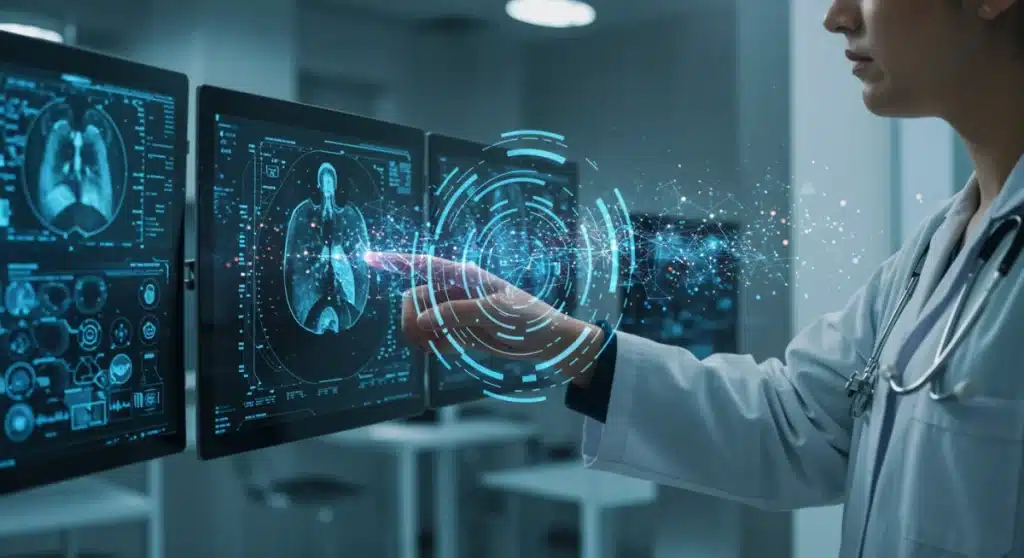
The healthcare landscape is rapidly evolving with AI, as top MedTech startups leverage artificial intelligence to revolutionize patient diagnostics, offering unprecedented accuracy and efficiency in 2025.
The convergence of artificial intelligence (AI) and medical technology (MedTech) is ushering in a new era for healthcare, particularly in patient diagnostics. In 2025, a select group of innovative startups is leading this charge, fundamentally transforming how diseases are detected and understood. This article delves into the top 5 AI-powered MedTech startups disrupting patient diagnostics in 2025, offering a comprehensive look at their groundbreaking technologies and the profound impact they are poised to have on clinical practice.
The AI revolution in diagnostic imaging
The field of diagnostic imaging has long been a cornerstone of modern medicine, providing critical insights into patient health. However, the sheer volume and complexity of medical images often pose significant challenges for human interpretation. This is where AI excels, offering a powerful tool to enhance accuracy, speed, and efficiency in analyzing X-rays, MRIs, CT scans, and more.
AI algorithms can detect subtle patterns and anomalies that might escape the human eye, leading to earlier and more precise diagnoses. This capability not only improves patient outcomes but also reduces the burden on radiologists and other specialists, allowing them to focus on more complex cases and patient care.
Automated image analysis and anomaly detection
Many leading AI MedTech startups are focusing on developing sophisticated platforms for automated image analysis. These systems are trained on vast datasets of medical images, learning to identify specific conditions and flag potential issues for further review. The goal is not to replace human experts but to augment their capabilities, providing an intelligent second opinion.
- Enhanced accuracy: AI can reduce diagnostic errors by identifying minute details.
- Faster turnaround times: Automated analysis accelerates the diagnostic process.
- Improved consistency: AI provides standardized interpretations, minimizing variability.
- Early disease detection: Algorithms can spot early signs of conditions like cancer.
The integration of AI into diagnostic imaging represents a significant leap forward, moving beyond mere image viewing to intelligent analysis. This shift promises a future where diagnostics are not only more accurate but also more accessible and efficient, ultimately benefiting a broader patient population.
Genomic insights and personalized medicine
Beyond imaging, AI is making profound inroads into genomics, transforming our understanding of individual predispositions to disease and enabling highly personalized treatment strategies. The ability to rapidly process and interpret vast amounts of genomic data is a game-changer for diagnostics, moving healthcare towards a more predictive and preventive model.
Startups in this space are developing AI tools that can analyze genetic sequences, identify biomarkers, and predict disease risk with unprecedented precision. This allows for tailored interventions, drug selection, and even lifestyle recommendations based on an individual’s unique genetic makeup.
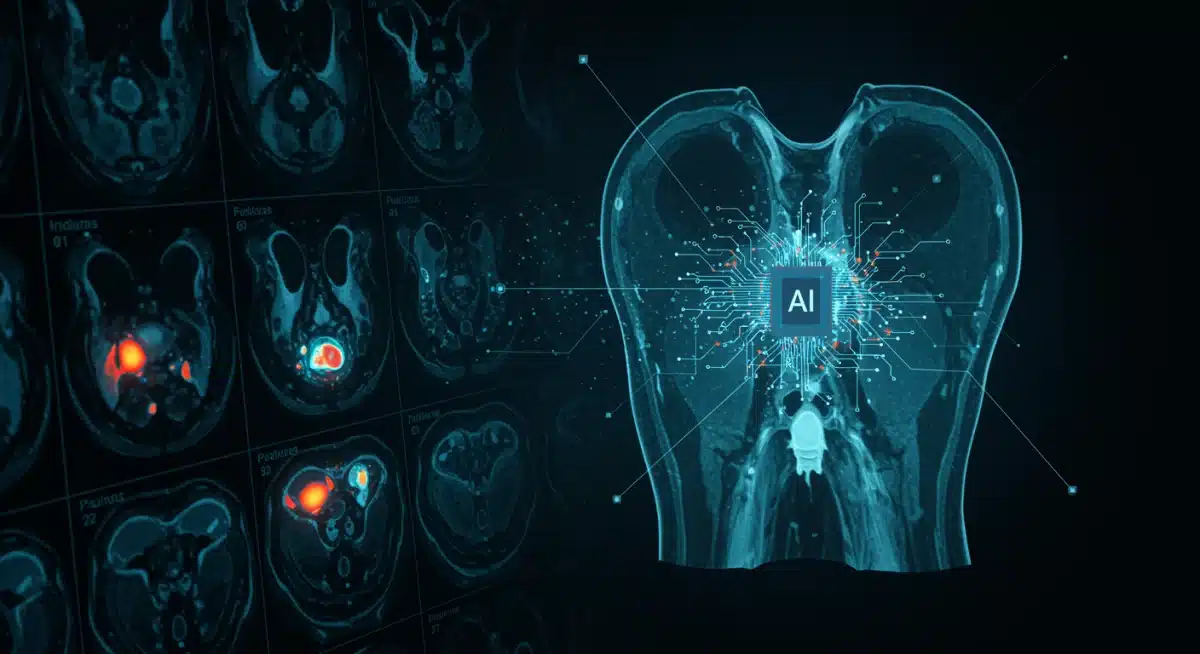
The promise of personalized medicine, long a theoretical goal, is now becoming a reality thanks to AI’s ability to unlock the secrets held within our DNA. This analytical power is crucial for identifying rare diseases and optimizing treatments for common conditions.
AI-driven genomic sequencing and biomarker discovery
AI platforms are streamlining the entire genomic sequencing process, from raw data analysis to clinical interpretation. They can sift through billions of data points to pinpoint genetic variations associated with specific diseases or drug responses. This capability is vital for both diagnostic purposes and for accelerating drug discovery.
The discovery of novel biomarkers through AI is also paving the way for non-invasive diagnostic tests that can detect diseases earlier and more effectively. These biomarkers can be anything from specific proteins to circulating tumor DNA, all identified and analyzed by intelligent algorithms.
In essence, AI is making genomic diagnostics more comprehensive and actionable. It’s helping clinicians understand not just what disease a patient has, but also the most effective way to treat it, ushering in an era of truly personalized healthcare.
Revolutionizing pathology and digital histopathology
Pathology, the study of disease through the examination of tissues, has traditionally relied on manual microscopic analysis. However, the advent of digital pathology and AI is transforming this critical diagnostic area. Digital histopathology involves scanning glass slides to create high-resolution digital images, which can then be analyzed by AI algorithms.
AI in digital pathology offers several advantages, including increased efficiency, enhanced accuracy, and improved collaboration among pathologists. These systems can quickly scan entire slides, identify areas of interest, and even quantify disease markers, providing objective and consistent results.
The transition to digital pathology, powered by AI, is not just about digitizing slides; it’s about intelligent analysis that uncovers more insights from tissue samples than ever before. This includes precise tumor grading, identification of subtle cellular changes, and prediction of treatment response.
AI for enhanced tumor detection and grading
AI algorithms are being developed to assist pathologists in detecting and classifying various types of cancer. By analyzing digital images of tissue biopsies, AI can identify cancerous cells, measure their characteristics, and provide objective grading, which is crucial for determining prognosis and treatment plans. This automation reduces inter-observer variability, a common challenge in traditional pathology.
- Improved diagnostic consistency: AI provides standardized assessments across cases.
- Reduced workload: Automates routine tasks, freeing up pathologists for complex cases.
- Quantitative analysis: Offers precise measurements of disease features.
- Better prognostication: Aids in predicting disease progression and treatment efficacy.
The integration of AI into digital pathology is making diagnostic processes more robust and reliable. It ensures that every tissue sample is analyzed with the highest level of detail and consistency, leading to more confident diagnoses and better patient management.
AI in remote monitoring and telehealth diagnostics
The rise of telehealth has accelerated the need for effective remote diagnostic tools, and AI is at the forefront of this evolution. AI-powered remote monitoring devices and platforms are enabling continuous, real-time collection and analysis of patient data from outside traditional clinical settings. This capability is particularly vital for managing chronic diseases and providing early detection of acute conditions.
These systems can monitor vital signs, activity levels, sleep patterns, and even subtle physiological changes, using AI to identify deviations from normal baselines. Such early detection can trigger timely interventions, preventing hospitalizations and improving overall patient well-being.
Telehealth diagnostics, augmented by AI, are extending the reach of healthcare, making it more accessible to underserved populations and those in remote areas. It also empowers patients to take a more active role in managing their own health, with intelligent systems providing personalized feedback and alerts.
Proactive health management through AI-driven wearables
Wearable devices, equipped with AI capabilities, are transforming personal health monitoring. These devices can collect a wealth of physiological data, which AI then analyzes to detect early signs of illness, track treatment effectiveness, and provide personalized health recommendations. This proactive approach to health management is shifting the focus from reactive treatment to preventive care.
For example, AI can analyze heart rate variability, sleep quality, and activity levels to predict the onset of conditions like atrial fibrillation or even stress-related health issues. The insights gained from these devices can be shared with healthcare providers, facilitating more informed clinical decisions.
Ultimately, AI in remote monitoring and telehealth diagnostics is creating a more connected and responsive healthcare system. It ensures that patients receive continuous care and that potential health issues are identified and addressed before they escalate, fostering a healthier population.
Ethical considerations and regulatory landscape
As AI continues to reshape MedTech diagnostics, it brings with it a complex array of ethical considerations and regulatory challenges. Ensuring patient safety, data privacy, and algorithmic fairness are paramount as these technologies become more integrated into clinical practice. The development and deployment of AI in healthcare must be guided by strong ethical principles and clear regulatory frameworks.
Regulators, such as the FDA in the United States, are actively working to establish guidelines for the approval and oversight of AI-powered medical devices. These frameworks aim to balance innovation with the need to protect patients and ensure the reliability of AI diagnostic tools.
Addressing these challenges is critical for building public trust and ensuring the responsible adoption of AI in healthcare. It requires a collaborative effort involving technology developers, healthcare providers, policymakers, and patient advocacy groups to navigate this evolving landscape.
Ensuring fairness, transparency, and data security in AI diagnostics
One of the key ethical concerns revolves around algorithmic bias. If AI models are trained on biased datasets, they can perpetuate or even amplify existing health disparities. Therefore, ensuring fairness and representativeness in training data is essential. Transparency in how AI algorithms make decisions is also crucial, allowing clinicians to understand and trust the diagnostic outputs.
Data security and patient privacy are also major considerations. AI diagnostic systems often process highly sensitive patient information, necessitating robust cybersecurity measures and strict adherence to privacy regulations like HIPAA. Protecting this data from breaches and misuse is fundamental to maintaining patient confidence.
The regulatory landscape for AI in MedTech is still maturing, but it is moving towards a framework that promotes safe and effective innovation. This includes rigorous testing, real-world evidence generation, and post-market surveillance to ensure that AI diagnostic tools consistently deliver on their promise while upholding the highest ethical standards.
Emerging trends and future outlook
The trajectory of AI in MedTech diagnostics is one of continuous innovation and expansion. Beyond the current applications, several emerging trends are poised to further revolutionize the field in the coming years. These include multimodal AI, which integrates data from various sources (imaging, genomics, electronic health records) for a more holistic diagnostic picture, and explainable AI (XAI), which aims to make AI decisions more transparent and understandable to clinicians.
Another significant trend is the development of AI for ultra-early disease detection, even before symptoms manifest. This proactive approach could fundamentally change how we manage diseases, shifting from treatment to prevention. Furthermore, the increasing sophistication of AI models will enable them to perform more complex reasoning and adapt to new clinical data.
The future outlook for AI-powered MedTech diagnostics is incredibly promising, with the potential to create a healthcare system that is more precise, personalized, and preventive. These advancements will not only improve individual patient outcomes but also contribute to more efficient and sustainable healthcare delivery globally.
The convergence of AI, IoT, and big data in diagnostics
The synergistic combination of AI, the Internet of Things (IoT), and big data analytics is creating powerful new diagnostic capabilities. IoT devices collect vast amounts of real-world health data, which AI then processes and analyzes, while big data infrastructure provides the necessary storage and computational power. This convergence allows for continuous monitoring, predictive analytics, and personalized interventions on an unprecedented scale.
- Comprehensive data integration: Combines diverse data types for richer insights.
- Predictive analytics: Identifies disease risks and progression patterns.
- Real-time insights: Provides immediate feedback for timely clinical action.
- Scalable solutions: Enables widespread adoption and impact across healthcare.
This integrated approach is driving the development of smart diagnostic ecosystems that learn and adapt over time, continuously improving their accuracy and utility. The future of diagnostics will be characterized by these interconnected systems, offering a level of insight and precision that was once unimaginable.
| Key Diagnostic Area | AI’s Impact |
|---|---|
| Diagnostic Imaging | Enhanced accuracy and speed in analyzing X-rays, MRIs, and CT scans. |
| Genomic Insights | Personalized medicine through rapid interpretation of genetic data and biomarker discovery. |
| Digital Pathology | Automated tumor detection, precise grading, and consistent tissue analysis. |
| Remote Monitoring | Proactive health management via AI-driven wearables and continuous data analysis. |
Frequently asked questions about AI in MedTech diagnostics
AI improves diagnostic accuracy by analyzing vast datasets of medical images and patient information, identifying subtle patterns and anomalies that might be missed by human interpretation. This leads to earlier detection and more precise diagnoses across various medical fields, augmenting the capabilities of human experts rather than replacing them entirely.
AI in genomic diagnostics enables rapid processing and interpretation of complex genetic data, leading to personalized medicine. It helps identify disease biomarkers, predict individual disease risks, and optimize treatment strategies based on a patient’s unique genetic profile, moving healthcare towards more predictive and preventive models.
No, AI is not replacing human pathologists or radiologists. Instead, it serves as a powerful tool to augment their capabilities. AI systems handle routine tasks, identify areas of concern, and provide intelligent second opinions, allowing human experts to focus on more complex cases, critical thinking, and patient interaction, ultimately enhancing overall efficiency and accuracy.
AI in MedTech diagnostics faces several ethical challenges, including ensuring algorithmic fairness to avoid perpetuating health disparities, maintaining transparency in decision-making processes, and rigorously protecting patient data privacy and security. Addressing these concerns requires robust regulatory frameworks and collaborative efforts among stakeholders to build public trust.
AI will significantly enhance remote patient monitoring by enabling real-time, continuous collection and analysis of physiological data from wearables and other devices. This will facilitate proactive health management, early detection of health issues, and timely interventions, making healthcare more accessible and personalized, especially for chronic disease management and preventive care.
Conclusion
The rapid advancements in AI-powered MedTech are fundamentally reshaping patient diagnostics, moving us towards a future of more precise, personalized, and proactive healthcare. The startups highlighted in this analysis are at the vanguard of this transformation, demonstrating the immense potential of AI to revolutionize how diseases are detected, understood, and managed. While ethical and regulatory considerations remain crucial, the trajectory indicates a future where AI will be an indispensable component of diagnostic medicine, significantly improving patient outcomes and overall healthcare efficiency across the United States and beyond.