AI Revolutionizing MedTech: Accelerating Clinical Trials by 20% by 2026

The landscape of medical innovation is undergoing a profound transformation, driven by the relentless march of technology. At the heart of this revolution lies Artificial Intelligence (AI), a force poised to redefine the pace and efficacy of clinical trials, particularly within the dynamic realm of MedTech. The ambitious goal? A staggering 20% faster time-to-market for groundbreaking medical devices and therapies by 2026. This isn’t just a hopeful projection; it’s a strategic imperative for MedTech startups vying for a competitive edge and, more importantly, for patients awaiting life-changing solutions. The traditional clinical trial process, often criticized for its protracted timelines, exorbitant costs, and high failure rates, is ripe for disruption. Enter AI, offering a suite of sophisticated tools capable of streamlining every stage, from initial design to post-market surveillance. For MedTech startups, embracing AI is no longer optional; it’s a cornerstone of survival and success in an increasingly demanding and regulated industry.
The Impetus for Acceleration: Why 20% Faster Matters
The demand for faster clinical trials is multifaceted. Firstly, the sheer volume of medical advancements and the rapid evolution of diseases necessitate a quicker response. Patients cannot afford to wait decades for treatments that could alleviate suffering or save lives today. Secondly, for MedTech startups, time is literally money. Prolonged trials drain resources, delay revenue generation, and can lead to investor fatigue. A 20% reduction in time-to-market translates directly into significant cost savings, enhanced profitability, and a stronger competitive position. Moreover, it allows for more frequent iterations and improvements of devices and therapies, responding more agilely to market feedback and emerging clinical needs. The regulatory environment, while stringent, is also adapting, recognizing the potential of AI to enhance trial quality and safety, provided proper validation and oversight are in place. This convergence of patient need, economic pressure, and technological capability creates the perfect storm for AI to revolutionize the clinical trial paradigm.
The current state of clinical trials is often characterized by bottlenecks at various stages. Patient recruitment, for instance, remains a significant hurdle, with many trials failing to meet enrollment targets within stipulated timelines. Data collection and analysis, especially for complex MedTech devices generating vast amounts of real-world data, can be cumbersome and prone to human error. Furthermore, identifying the most effective trial design, predicting potential challenges, and ensuring optimal resource allocation all contribute to the lengthy duration. AI addresses these pain points directly, offering predictive analytics, automated processes, and enhanced data management capabilities that were previously unimaginable. By leveraging AI, MedTech startups can move beyond reactive problem-solving to proactive optimization, anticipating challenges before they arise and making data-driven decisions that propel their innovations forward.
AI’s Transformative Role Across the Clinical Trial Lifecycle
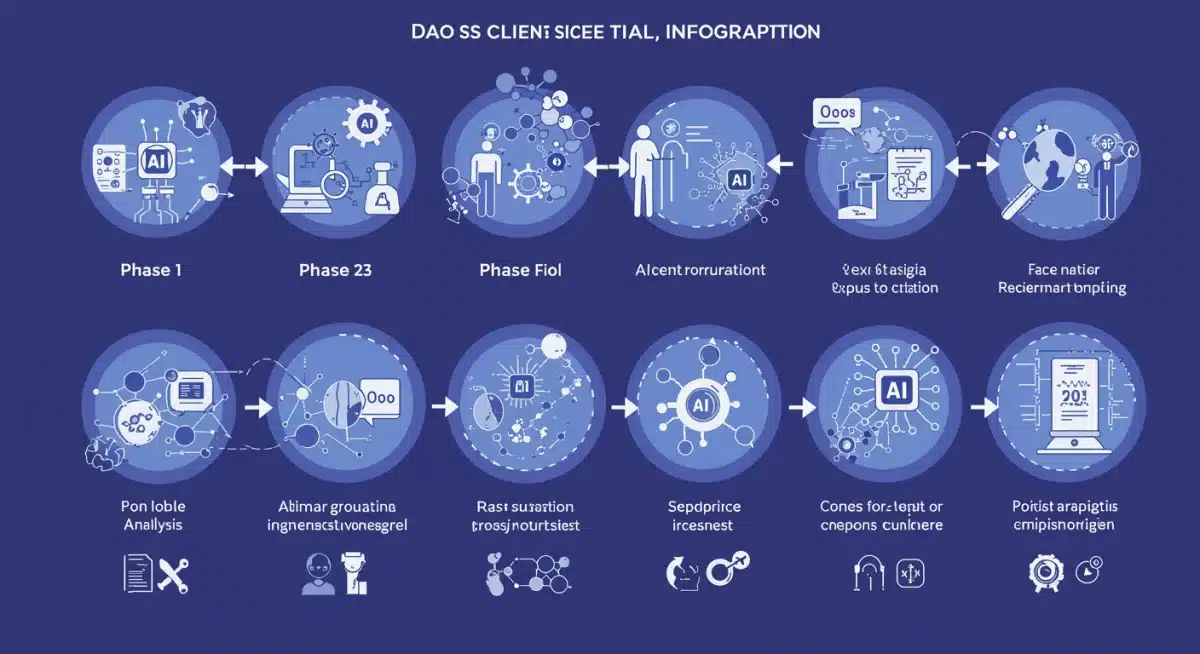
The application of AI in clinical trials is not confined to a single stage; rather, it permeates the entire lifecycle, offering distinct advantages at each step. From the initial conceptualization of a trial to the final submission of regulatory documents, AI algorithms are providing unprecedented insights and efficiencies. Understanding these applications is crucial for any MedTech startup looking to harness the full potential of this technology.
1. Enhanced Trial Design and Protocol Optimization
One of the earliest and most impactful applications of AI is in the design phase. Traditional trial design is often an iterative, expert-driven process that can be time-consuming and may not always yield the most efficient or robust protocol. AI, particularly machine learning algorithms, can analyze vast datasets of past clinical trials, scientific literature, and real-world evidence to identify optimal trial parameters. This includes determining appropriate endpoints, sample sizes, inclusion/exclusion criteria, and even potential biases. Predictive modeling can simulate various trial scenarios, helping researchers anticipate outcomes and refine protocols before a single patient is enrolled. This not only saves time and resources but also increases the likelihood of trial success by designing more effective and targeted studies. For MedTech devices, AI can help in designing trials that effectively capture the performance characteristics and safety profiles relevant to regulatory bodies.
2. Intelligent Patient Recruitment and Selection
Patient recruitment is notoriously one of the biggest bottlenecks in clinical trials. AI offers a powerful solution by moving beyond traditional, often inefficient, methods. Machine learning can analyze electronic health records (EHRs), claims data, genomics data, and even social determinants of health to identify eligible patients who are most likely to benefit from a particular intervention and adhere to the trial protocol. This intelligent matching ensures a more diverse and representative patient population, leading to more generalizable results. Furthermore, natural language processing (NLP) can extract relevant information from unstructured clinical notes, accelerating the identification of suitable candidates. AI-powered tools can also optimize patient outreach strategies, personalizing communication and improving engagement, thus significantly reducing recruitment timelines and costs. For MedTech trials, identifying patients with specific device-related conditions or those who have previously used similar devices can be critical, and AI excels at this nuanced identification.
3. Real-time Data Collection and Monitoring
MedTech devices often generate continuous streams of complex data, from physiological measurements to imaging data. Managing and making sense of this deluge of information manually is almost impossible. AI, particularly deep learning, can automate data collection from wearables, sensors, and other connected devices, ensuring accuracy and completeness. Furthermore, AI algorithms can perform real-time monitoring of patient safety and efficacy, flagging anomalies or adverse events that require immediate attention. This proactive approach allows for early intervention, improving patient safety and potentially preventing trial delays or even halts. Predictive analytics can also identify trends in data that might indicate a need for protocol adjustments or a deeper dive into specific patient subgroups. This real-time oversight significantly enhances the quality and integrity of the data, which is paramount for regulatory submissions.
4. Advanced Data Analysis and Insight Generation
Once data is collected, the next challenge is to extract meaningful insights. AI excels at processing and analyzing vast, complex datasets far more efficiently and accurately than human analysts alone. Machine learning models can identify subtle patterns, correlations, and predictive markers that might be missed by traditional statistical methods. This is particularly valuable in MedTech, where data can be high-dimensional and non-linear. AI can accelerate the interpretation of imaging results, analyze biometric data for efficacy signals, and even detect early signs of device malfunction or adverse reactions. This advanced analytical capability not only expedites the data analysis phase but also leads to a deeper understanding of the device’s performance, patient response, and potential applications, ultimately strengthening the evidence base for regulatory approval and market adoption.
5. Streamlining Regulatory Submissions and Compliance
The regulatory pathway for MedTech devices is notoriously complex and time-consuming. Preparing comprehensive regulatory submissions requires meticulous documentation, data aggregation, and adherence to evolving guidelines. AI can significantly streamline this process. Natural Language Processing (NLP) can assist in drafting regulatory documents, ensuring consistency and compliance with specific terminology and formatting requirements. AI tools can also audit trial data for completeness and accuracy, identifying potential discrepancies or missing information before submission. Furthermore, predictive AI can help assess the likelihood of regulatory approval based on historical data and current guidelines, allowing startups to proactively address potential concerns. By reducing the manual effort and potential for error in regulatory affairs, AI helps accelerate the final crucial step to market entry.
Practical Solutions for MedTech Startups: Implementing AI Strategically
For MedTech startups, the journey to integrate AI into clinical trials requires a strategic approach. It’s not merely about adopting technology but about fundamentally rethinking processes and fostering a data-driven culture. Here are practical steps and considerations:
1. Start Small, Scale Smart
Instead of attempting a complete overhaul, startups should identify specific pain points within their clinical trial process where AI can offer immediate and tangible benefits. This could be patient recruitment for a particular device, data quality checks, or adverse event monitoring. Piloting AI solutions in these targeted areas allows for learning, adaptation, and demonstration of ROI before scaling up. This iterative approach minimizes risk and builds internal confidence in AI’s capabilities. For example, a startup could initially use AI for identifying suitable sites for a specific device trial based on patient demographics and healthcare infrastructure, rather than a full-scale AI integration across all trial aspects.
2. Leverage Cloud-Based AI Platforms
Building an in-house AI infrastructure from scratch can be prohibitively expensive and resource-intensive for startups. Cloud-based AI platforms and Software-as-a-Service (SaaS) solutions offer a more accessible and scalable alternative. These platforms provide pre-built AI models, data storage, and analytical tools, allowing startups to quickly deploy AI solutions without significant upfront investment. Many specialized platforms cater specifically to clinical research, offering functionalities tailored to regulatory compliance and medical data handling. Partnering with established AI vendors or specialized CROs (Contract Research Organizations) that offer AI-powered services can further accelerate adoption.
3. Prioritize Data Infrastructure and Governance
AI’s effectiveness is directly proportional to the quality and accessibility of the data it processes. MedTech startups must invest in robust data infrastructure that can handle large volumes of diverse data types (e.g., sensor data, imaging, EHRs). This includes establishing clear data governance policies, ensuring data privacy (HIPAA, GDPR compliance), security, and interoperability across different systems. Clean, well-structured, and standardized data is the fuel for powerful AI. Without a solid data foundation, AI initiatives are likely to falter. This involves standardizing data collection protocols and ensuring secure data storage solutions.
4. Build a Multidisciplinary AI Team
Successful AI integration requires a blend of expertise. Startups need to build or acquire teams that combine clinical research knowledge, data science skills, and regulatory understanding. Data scientists can build and train AI models, clinical experts can validate the insights, and regulatory specialists can ensure compliance. Fostering collaboration between these disciplines is crucial for developing AI solutions that are both technically sound and clinically relevant. This might involve hiring new talent or upskilling existing employees through training programs.

5. Focus on Explainable AI (XAI)
In healthcare, particularly for regulatory approval, understanding why an AI model makes a certain prediction or recommendation is critical. Black-box AI models that offer little transparency are unlikely to gain trust from regulators, clinicians, or patients. MedTech startups should prioritize the use of Explainable AI (XAI) techniques that provide insights into the AI’s decision-making process. This transparency is vital for validating AI outputs, identifying potential biases, and building confidence in the technology. XAI can help demonstrate to regulatory bodies that the AI system is reliable and safe for its intended purpose.
6. Embrace a "Human-in-the-Loop" Approach
While AI offers immense automation capabilities, it should be viewed as an augmentation tool rather than a complete replacement for human expertise. A "human-in-the-loop" approach, where AI provides insights and recommendations that are then reviewed and validated by human experts, is often the most effective strategy. This not only leverages the strengths of both AI and human intelligence but also acts as a safeguard against potential AI errors or biases. Clinicians and researchers can provide invaluable context and clinical judgment that AI models currently lack, ensuring that AI solutions are applied responsibly and effectively.
Navigating the Challenges: Regulatory, Ethical, and Implementation Hurdles
While the promise of AI in accelerating clinical trials is immense, MedTech startups must also be prepared to navigate a complex landscape of challenges. These include stringent regulatory requirements, ethical considerations, and the practicalities of implementation.
Regulatory Scrutiny and Validation
Regulatory bodies like the FDA in the US and the EMA in Europe are actively developing frameworks for AI/ML-enabled medical devices and software. Startups must stay abreast of these evolving guidelines. The key challenge lies in validating AI algorithms, especially those that adapt and learn over time (adaptive AI). Regulators demand robust evidence of an AI’s safety, efficacy, and reliability, including comprehensive data on its performance, potential biases, and how it handles real-world variability. This often requires novel validation methodologies and a transparent approach to AI development and deployment. Startups need to consider AI validation as an integral part of their overall regulatory strategy from day one.
Ethical Considerations and Bias Mitigation
The use of AI in healthcare raises significant ethical questions. Bias in AI algorithms, often stemming from biased training data (e.g., underrepresentation of certain demographic groups), can lead to inequitable outcomes. For MedTech, this could mean a device or therapy that works better for one population group than another, exacerbating health disparities. Startups must proactively address bias by ensuring diverse and representative datasets for AI training, implementing fairness metrics, and continuously monitoring AI performance across different subgroups. Transparency, accountability, and patient privacy are also paramount. Secure handling of sensitive patient data, informed consent for data use, and clear communication about how AI is being used in trials are non-negotiable.
Interoperability and Integration
Healthcare data exists in disparate systems, often in varied formats. Integrating AI solutions with existing EHRs, laboratory information systems, and other clinical trial management platforms can be a significant technical hurdle. Lack of interoperability can hinder data flow, create silos, and limit the effectiveness of AI applications. MedTech startups need to prioritize solutions that offer robust APIs and adhere to industry standards for data exchange, ensuring seamless integration and data accessibility. Collaboration with hospitals and clinics that have advanced digital infrastructures can also significantly ease this challenge.
Talent Gap and Skill Development
The demand for skilled AI professionals with healthcare domain expertise far outstrips supply. MedTech startups often struggle to attract and retain top talent in data science, machine learning engineering, and clinical informatics. Addressing this talent gap requires strategic investment in training and development programs, fostering a culture of continuous learning, and potentially partnering with academic institutions. Upskilling existing clinical research staff in AI literacy can also bridge the knowledge divide and facilitate smoother AI adoption.
The Future is Now: AI as a Catalyst for MedTech Innovation
The target of a 20% faster time-to-market by 2026 for MedTech innovations is ambitious but entirely achievable with the strategic application of AI. This acceleration is not just about speed; it’s about enhancing the quality, safety, and efficiency of clinical trials, ultimately bringing better medical solutions to patients sooner. MedTech startups are uniquely positioned to lead this charge, unencumbered by legacy systems and traditional mindsets that can slow larger pharmaceutical companies. Their agility, innovative spirit, and focus on niche problems make them ideal candidates for pioneering AI-driven clinical trial methodologies.
As AI technology continues to mature, we can expect even more sophisticated applications, such as fully autonomous trial management systems, hyper-personalized treatment protocols based on individual patient data, and advanced predictive models for long-term device performance. The convergence of AI with other emerging technologies like blockchain for data security and integrity, and virtual reality for remote patient monitoring, will further amplify its impact. The journey will undoubtedly have its challenges, but the potential rewards – a healthier, more productive world – are well worth the effort.
For MedTech startups, the time to act is now. Proactive engagement with AI, strategic partnerships, and a commitment to ethical and responsible AI development will be the hallmarks of success. By embracing AI not as a mere tool, but as a fundamental shift in how clinical research is conducted, these innovative companies can not only achieve the 20% acceleration target but also fundamentally reshape the future of healthcare, delivering on the promise of true medical innovation.