MedTech Startup Funding Trends 2025: VC Investment Insights

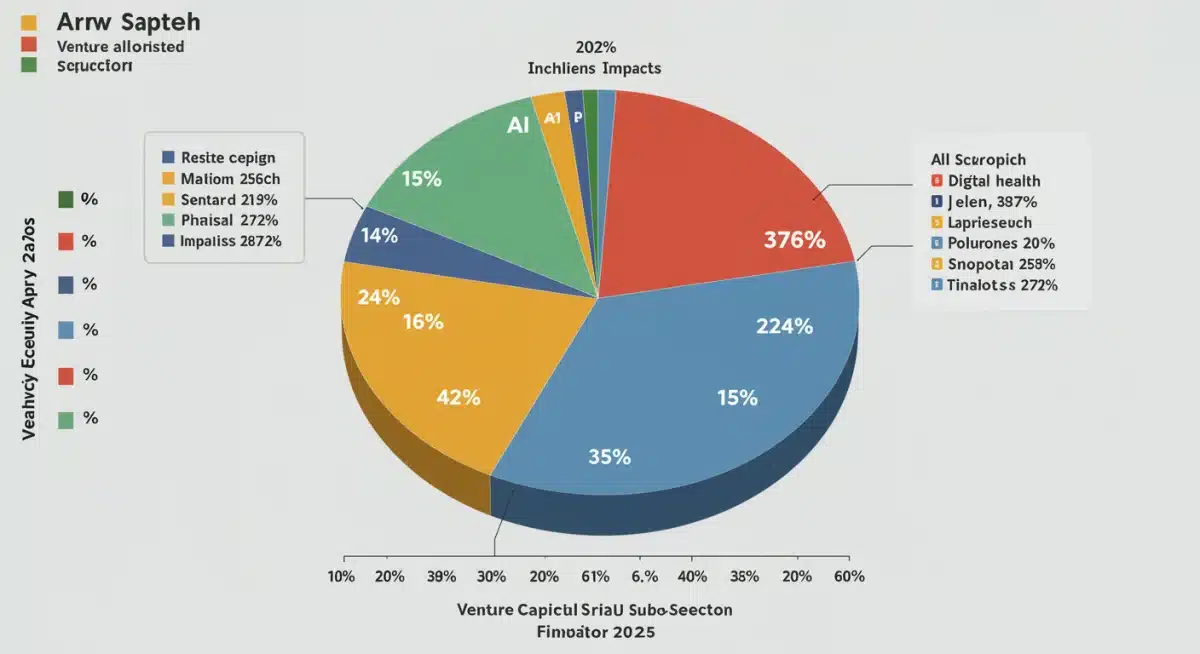
MedTech startup funding trends for 2025 indicate a concentrated venture capital focus on AI-driven solutions, personalized health platforms, and advanced diagnostics, representing the sector’s most impactful financial opportunities.
Understanding the intricate landscape of MedTech startup funding trends for 2025 is crucial for founders, investors, and industry observers alike. As the healthcare sector continues its rapid evolution, driven by technological advancements and shifting patient needs, venture capital remains a powerful catalyst. This article delves into where the top 15% of venture capital investments are likely to flow, highlighting the financial impact and transformative potential of these areas.
The AI Revolution in Diagnostics and Therapeutics
Artificial intelligence is no longer a futuristic concept; it’s a present-day driving force transforming healthcare. In 2025, AI’s role in diagnostics and therapeutics is expected to solidify, attracting significant venture capital. Investors are particularly keen on solutions that offer tangible improvements in accuracy, efficiency, and personalized patient care.
The ability of AI to analyze vast datasets, identify subtle patterns, and predict disease progression is unparalleled. This capability is leading to breakthroughs in early disease detection and the development of highly targeted therapies. Startups leveraging AI for these purposes are seeing substantial interest.
Precision Medicine Platforms
Precision medicine, powered by AI, is moving beyond genomics to integrate various data points, including proteomics, metabolomics, and real-world evidence. This holistic approach allows for highly individualized treatment plans.
- Genomic-driven AI: Companies using AI to interpret complex genomic data for personalized drug selection.
- Predictive analytics: AI models forecasting patient responses to treatments, optimizing dosage and reducing adverse effects.
- Multi-modal data integration: Platforms combining clinical, imaging, and molecular data for comprehensive patient profiles.
The financial impact here is immense, promising reduced healthcare costs through more effective treatments and fewer trial-and-error approaches. Venture capitalists are looking for scalable platforms that can demonstrate clear clinical utility and a strong path to market adoption.
Digital Health and Remote Patient Monitoring
The pandemic accelerated the adoption of digital health solutions, and this momentum is not slowing down. In 2025, digital health, particularly remote patient monitoring (RPM), will continue to be a hotbed for investment. These technologies address critical needs for accessibility, convenience, and continuous care, especially in underserved areas.
RPM solutions enable healthcare providers to monitor patients’ vital signs, activity levels, and medication adherence from a distance, facilitating proactive interventions and reducing hospital readmissions. This not only improves patient outcomes but also drives down healthcare expenditures.
Telehealth Beyond Video Calls
While video consultations remain a core component, telehealth is evolving. The focus is now on integrated platforms that offer comprehensive virtual care experiences, incorporating AI-powered chatbots, virtual reality for therapy, and advanced remote diagnostics.
- Integrated virtual care platforms: Solutions combining telemedicine, RPM, and digital therapeutics.
- AI-powered virtual assistants: Chatbots providing initial symptom assessment and guiding patients to appropriate care.
- VR/AR for therapy and training: Innovative uses of immersive technologies for mental health, rehabilitation, and surgical training.
Investors are seeking companies that can demonstrate robust data security, user-friendly interfaces, and seamless integration with existing healthcare systems. The scalability of these platforms and their ability to reach a broad patient base are key factors in attracting capital.
Revolutionizing Medical Devices with Connectivity and AI
Traditional medical devices are undergoing a significant transformation, becoming smarter, more connected, and increasingly integrated with artificial intelligence. In 2025, venture capital will heavily favor MedTech startups that are innovating in this space, particularly those developing next-generation connected devices and robotic surgical systems.
These advanced devices promise enhanced precision, improved patient safety, and greater operational efficiency in clinical settings. The financial impact stems from their ability to streamline procedures, reduce complications, and ultimately lower the overall cost of care.
Smart Wearables and Implantables
The market for smart wearables and implantable devices is expanding rapidly. These devices provide continuous, real-time health data, enabling proactive health management and early detection of anomalies.
- Continuous glucose monitors (CGMs): Beyond diabetes, new applications for metabolic health monitoring.
- Smart patches and sensors: Wearable devices for monitoring vital signs, sleep patterns, and cardiac activity.
- Bio-integrated sensors: Implantable devices providing long-term, high-fidelity physiological data.
The convergence of miniaturization, advanced sensor technology, and AI-driven data analysis is making these devices indispensable. Venture capitalists are looking for devices with proven accuracy, regulatory compliance, and a clear value proposition for both patients and healthcare providers.
The Rise of Personalized and Preventative Healthcare
A fundamental shift is occurring in healthcare, moving from a reactive, disease-focused model to a proactive, preventative, and personalized approach. This paradigm shift is creating fertile ground for MedTech innovation and attracting significant venture capital investment in 2025. Startups offering solutions that empower individuals to take a more active role in their health journey are poised for substantial growth.
Preventative healthcare aims to mitigate risks before diseases manifest, while personalized approaches tailor interventions to an individual’s unique biological and lifestyle factors. These areas promise not only improved public health but also significant long-term financial savings by reducing the incidence of chronic conditions.
Genomic Insights and Lifestyle Interventions
Integrating genomic data with lifestyle factors, such as diet, exercise, and environmental exposures, allows for highly personalized health recommendations. Venture capitalists are keen on platforms that effectively synthesize this complex information into actionable insights.
- Nutrition and wellness platforms: AI-driven apps offering personalized dietary and exercise plans based on genetic predispositions.
- Preventative screening tools: Advanced diagnostics for early detection of disease markers before symptoms appear.
- Behavioral health solutions: Digital therapeutics focused on mental well-being and chronic disease management through behavior modification.
The financial impact here is twofold: reducing the burden of chronic diseases and fostering a healthier, more productive population. Investors are seeking companies with strong scientific backing, clear ethical guidelines for data handling, and a compelling user experience that encourages sustained engagement.
Biotech-MedTech Convergence: Advanced Therapies and Diagnostics
The lines between biotechnology and MedTech are increasingly blurring, leading to a powerful convergence that is fueling innovation in advanced therapies and diagnostics. In 2025, venture capital will be particularly drawn to startups operating at this intersection, where biological insights are translated into sophisticated technological solutions. This convergence is driving the development of highly effective treatments and diagnostic tools that were once considered impossible.
This area holds immense financial promise, as it addresses unmet medical needs with novel approaches. The integration of biological understanding with engineering prowess allows for the creation of therapies that are more targeted, less invasive, and ultimately more efficacious.
Cell and Gene Therapy Delivery Systems
While cell and gene therapies hold incredible promise, their effective and safe delivery remains a significant challenge. MedTech innovations are crucial for overcoming these hurdles, from advanced viral vectors to novel ex-vivo processing tools.
- Microfluidic devices: For precise cell manipulation and high-throughput screening in gene therapy development.
- Smart delivery systems: Devices that ensure targeted and controlled release of therapeutic agents within the body.
- Bioprinting for regenerative medicine: Creating functional tissues and organs for transplantation and drug testing.
Investors are seeking companies that can demonstrate robust intellectual property, a clear regulatory pathway, and the potential for broad application across various disease areas. The ability to enhance the safety and efficacy of these complex therapies is a major draw.
Regulatory Landscape and Market Access Strategies
While technological innovation is paramount, success in the MedTech sector is equally dependent on navigating the complex regulatory landscape and developing effective market access strategies. In 2025, venture capitalists are keenly aware of these challenges and will prioritize startups that demonstrate a clear understanding and strategic approach to these non-technical hurdles.
Regulatory approval is a critical gatekeeper for bringing MedTech innovations to patients, and a well-defined strategy for market penetration is essential for commercial success. Companies that can articulate a clear path through these processes are inherently more attractive to investors, as it de-risks their investment.
Navigating FDA Approval and Reimbursement
For US-based MedTech startups, securing FDA approval is a rigorous process. Beyond approval, obtaining favorable reimbursement codes and coverage from insurers is crucial for widespread adoption and financial viability.
- Early regulatory engagement: Companies proactively engaging with the FDA to clarify pathways and requirements.
- Evidence generation for value: Robust clinical trials demonstrating not only efficacy but also economic value to payers.
- Strategic partnerships: Collaborations with established healthcare providers and payers to facilitate market entry and adoption.
Venture capital firms often look for management teams with prior experience in regulatory affairs and health economics. A well-articulated strategy for navigating these complexities, coupled with a strong value proposition for all stakeholders, will significantly enhance a startup’s funding prospects.
| Key Investment Area | Financial Impact & Focus |
|---|---|
| AI in Diagnostics/Therapeutics | Improved accuracy, efficiency, personalized patient care, and reduced costs. |
| Digital Health & RPM | Enhanced accessibility, continuous care, proactive interventions, and lower readmissions. |
| Connected Medical Devices | Greater precision, patient safety, operational efficiency, and streamlined procedures. |
| Personalized & Preventative Care | Reduced chronic disease burden, improved public health, and long-term cost savings. |
Frequently Asked Questions About MedTech Funding
The primary drivers include advancements in AI and machine learning, the growing demand for personalized and preventative healthcare, and the continued expansion of digital health solutions, all aimed at improving patient outcomes and healthcare efficiency.
Top sub-sectors attracting venture capital include AI-driven diagnostics and therapeutics, integrated digital health platforms, remote patient monitoring, smart medical devices, and solutions at the biotech-MedTech convergence.
Regulatory strategy is critically important. Investors prioritize startups with clear pathways for FDA approval and well-defined market access and reimbursement strategies, as these significantly de-risk the investment and ensure commercial viability.
AI’s role is pivotal, driving financial impact through increased diagnostic accuracy, more efficient drug discovery, personalized treatment plans, and reduced operational costs, leading to higher returns on investment and improved healthcare economics.
Yes, digital health and telehealth remain robust investment areas. The focus is shifting towards comprehensive, integrated platforms that offer more than just video calls, incorporating AI, remote monitoring, and personalized virtual care experiences.
Conclusion
The MedTech landscape in 2025 is characterized by dynamic innovation, with venture capital strategically flowing into areas promising significant financial returns and transformative healthcare impact. The top 15% of investments are concentrated in AI-driven solutions, comprehensive digital health platforms, advanced connected devices, and personalized preventative care. Success for MedTech startups hinges not only on groundbreaking technology but also on robust regulatory strategies and clear paths to market access. As the industry continues to evolve, these trends underscore a future where technology and biology converge to deliver more accessible, efficient, and personalized patient care.