Telehealth’s AI Revolution: 5 Key Technologies Reshaping Patient Care in the US by 2026

The healthcare industry is in a perpetual state of evolution, constantly seeking innovative solutions to enhance patient care, improve accessibility, and streamline operations. In the United States, this drive for innovation has found a powerful ally in telehealth, a sector that has rapidly expanded, especially in recent years. But the true ‘revolution’ in telehealth is not just about virtual consultations; it’s about the integration of advanced artificial intelligence (AI) technologies that are fundamentally reshaping how healthcare is delivered and experienced. By 2026, we anticipate a profound transformation, with five key AI technologies leading the charge, promising a future where healthcare is more personalized, efficient, and accessible than ever before. This article will delve into these pivotal technologies, exploring their impact and the exciting prospects they hold for the future of patient care in the US.
The convergence of telehealth and AI is creating a synergy that transcends geographical barriers and time constraints, bringing specialized medical expertise directly to patients’ homes. This paradigm shift is not merely a convenience; it’s a critical advancement in addressing healthcare disparities, managing chronic conditions, and providing proactive care. The potential for AI to analyze vast datasets, identify patterns, and offer predictive insights is unparalleled, making it an indispensable tool in the modern healthcare arsenal. As we look towards 2026, the influence of these AI technologies will only grow, establishing new benchmarks for quality, efficiency, and patient engagement in telehealth.
1. Predictive Analytics for Proactive Care
One of the most impactful applications of AI in telehealth is predictive analytics. This technology leverages machine learning algorithms to analyze historical patient data, electronic health records (EHRs), demographic information, and even real-time physiological data from wearable devices. The goal is to identify individuals at high risk for developing certain conditions or experiencing adverse health events before they occur. Imagine a system that can flag a patient as being at high risk for a readmission based on their discharge summary, medication adherence, and socio-economic factors. This proactive approach allows healthcare providers to intervene early, offering personalized recommendations, scheduling preventive appointments, or initiating remote monitoring programs.
In the context of telehealth, predictive analytics empowers clinicians to move beyond reactive treatment to truly proactive care. For instance, AI algorithms can predict flare-ups for patients with chronic conditions like diabetes or heart disease, prompting a telehealth consultation to adjust medication or lifestyle recommendations. This not only improves patient outcomes but also significantly reduces the burden on emergency services and inpatient facilities. The ability to forecast health trajectories means that resources can be allocated more efficiently, and care plans can be tailored with greater precision, leading to a more sustainable and effective healthcare system. By 2026, the integration of predictive analytics will be a cornerstone of telehealth strategies, allowing for a more personalized and preventive approach to health management across the US.
The benefits extend beyond individual patient care. At a population level, predictive analytics can identify trends in disease outbreaks, anticipate resource needs during public health crises, and inform policy decisions. This comprehensive view allows for a more robust and responsive healthcare infrastructure. As data collection methods become more sophisticated and AI models more refined, the accuracy and utility of predictive analytics will continue to improve, making it an indispensable tool for public health initiatives and individual patient management in the telehealth ecosystem.
2. AI-Powered Diagnostic Tools and Decision Support
The diagnostic process in medicine is often complex and time-consuming, requiring extensive training and experience. AI-powered diagnostic tools are revolutionizing this area by assisting clinicians in making more accurate and timely diagnoses. These tools can analyze medical images (X-rays, MRIs, CT scans), pathology slides, and even genomic data with remarkable speed and precision, often identifying subtle patterns that might be missed by the human eye. In a telehealth setting, this means that specialists can review complex cases remotely, supported by AI insights, leading to faster diagnoses and treatment plans, especially in underserved areas where access to specialized expertise is limited.
Beyond image analysis, AI also plays a crucial role in clinical decision support systems (CDSS). These systems integrate patient data with vast medical knowledge bases, offering evidence-based recommendations for diagnosis, treatment options, and medication management. For telehealth providers, CDSS can act as an intelligent assistant, ensuring that best practices are followed, potential drug interactions are flagged, and personalized treatment pathways are considered. This not only enhances the quality of care but also reduces the likelihood of medical errors, fostering greater patient safety and trust in telehealth services.
By 2026, the integration of AI-powered diagnostic tools and decision support systems will be seamlessly embedded within telehealth platforms. This will empower general practitioners to handle a broader range of conditions with confidence, knowing they have expert AI assistance at their fingertips. For patients, it means quicker access to accurate diagnoses and optimized treatment plans, regardless of their geographical location. The ability of AI to process and interpret vast amounts of medical information will bridge knowledge gaps and standardize care delivery, making high-quality healthcare more equitable across the US.
3. Virtual Assistants and Chatbots for Patient Engagement
Patient engagement is a critical component of effective healthcare, but it often faces challenges due to limited resources and communication barriers. Virtual assistants and AI-powered chatbots are emerging as powerful solutions to address these issues in telehealth. These intelligent systems can handle a wide array of patient interactions, from answering frequently asked questions about symptoms and conditions to scheduling appointments, providing medication reminders, and offering post-consultation follow-ups. They operate 24/7, providing instant support and information, thereby improving patient satisfaction and reducing the workload on human staff.
For telehealth, virtual assistants can act as the first point of contact for patients, triaging their symptoms and directing them to the most appropriate level of care, whether it’s a virtual consultation with a doctor, a specialist referral, or advice for self-care. This intelligent routing ensures that patients receive timely and relevant assistance, optimizing the use of healthcare resources. Furthermore, these chatbots can deliver personalized health education, explain complex medical terms, and guide patients through their treatment plans, fostering greater understanding and adherence. The conversational AI capabilities of these tools are becoming increasingly sophisticated, allowing for more natural and empathetic interactions.
By 2026, virtual assistants and chatbots will be indispensable in enhancing patient engagement within telehealth. They will not only streamline administrative tasks but also empower patients with readily accessible, accurate health information and personalized support. This constant availability of information and guidance will lead to more informed patients who are actively involved in managing their health, ultimately contributing to better health outcomes and a more efficient telehealth ecosystem. The seamless integration of these AI tools will transform the patient journey, making it more intuitive and supportive.
4. Remote Patient Monitoring (RPM) with AI Integration
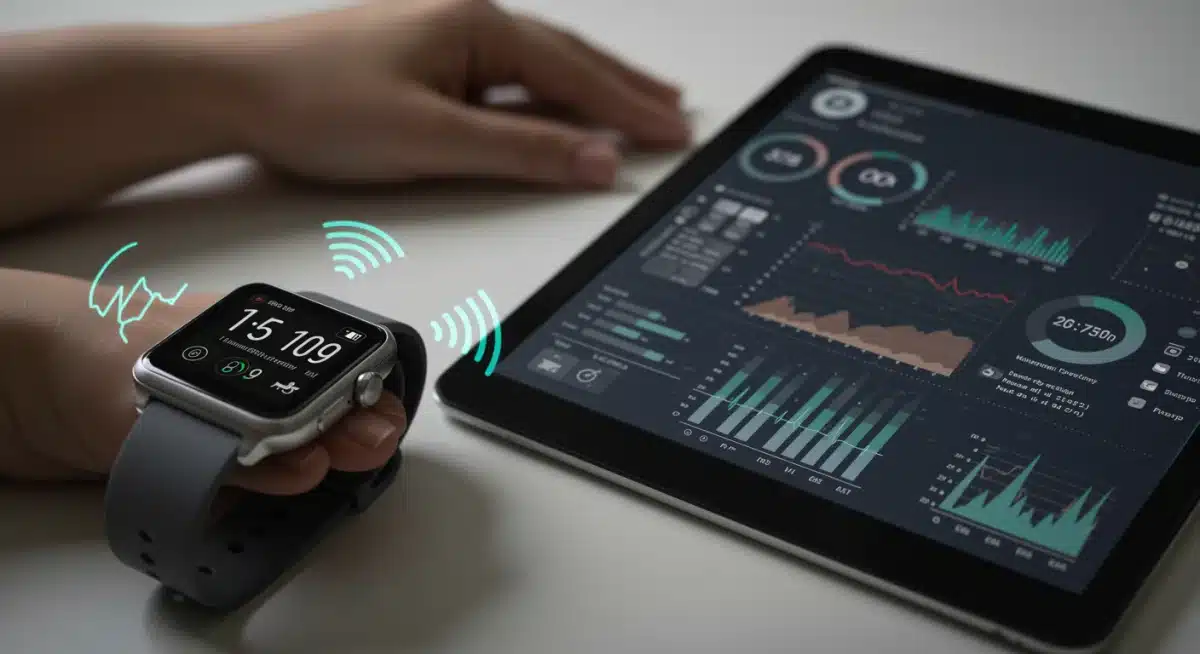
Remote Patient Monitoring (RPM) has been a cornerstone of telehealth for some time, allowing healthcare providers to continuously track patients’ vital signs and other health metrics from a distance. The integration of AI takes RPM to an entirely new level. Instead of simply collecting data, AI algorithms can analyze this continuous stream of information in real-time, identifying subtle deviations from baseline, predicting potential health crises, and even detecting patterns indicative of worsening conditions before they become critical. This proactive monitoring is particularly valuable for managing chronic diseases, post-operative care, and elder care.
Imagine a patient with heart failure whose wearable device continuously monitors their heart rate, blood pressure, and oxygen saturation. An AI system can analyze these readings, along with activity levels and sleep patterns, to detect early signs of decompensation. If a concerning trend is identified, the AI can automatically alert the care team, prompting a timely telehealth intervention. This capability not only prevents hospital readmissions but also provides patients with a greater sense of security and enables them to manage their conditions more effectively from the comfort of their homes.
By 2026, AI-integrated RPM will be a standard component of comprehensive telehealth programs across the US. It will enable healthcare providers to offer highly personalized and continuous care, moving beyond episodic treatment to ongoing health management. The ability of AI to distill complex physiological data into actionable insights will empower clinicians to make more informed decisions and intervene proactively, significantly improving patient outcomes and reducing healthcare costs associated with acute events. This technological advancement is set to redefine how chronic conditions are managed, offering a more sustainable and patient-centric approach to long-term health.
5. Personalized Treatment Plans and Drug Discovery
The traditional ‘one-size-fits-all’ approach to medicine is slowly giving way to personalized treatment plans, and AI is a key driver of this transformation, especially within telehealth. AI algorithms can analyze a patient’s unique genetic makeup, lifestyle, medical history, and even their microbiome data to recommend highly individualized treatment strategies. This level of personalization extends to medication choices, dosages, and even lifestyle interventions, maximizing efficacy and minimizing adverse effects. In a telehealth context, AI can help clinicians synthesize this vast amount of personal data to create bespoke care plans that are delivered and monitored remotely.
Beyond individual patient care, AI is also accelerating the pace of drug discovery and development, which will invariably impact the treatments available through telehealth. AI can sift through massive chemical and biological databases, identify potential drug candidates, predict their efficacy and toxicity, and even design novel molecules. This significantly reduces the time and cost associated with bringing new therapies to market. As more targeted and effective drugs become available, AI can further assist in matching the right patient to the right treatment, ensuring optimal outcomes.

By 2026, personalized treatment plans, informed by AI, will be a hallmark of advanced telehealth services. This will allow for a more precise and effective approach to managing complex diseases, offering patients therapies that are specifically designed for their biological profile. The synergy between AI-driven drug discovery and personalized treatment planning will lead to a new era of precision medicine delivered virtually, transforming the landscape of chronic disease management and specialized care in the US. This evolution promises not just better treatments, but treatments that are truly tailored to the individual, reflecting a profound shift in healthcare philosophy.
Challenges and Ethical Considerations
While the promise of AI in telehealth is immense, it’s crucial to acknowledge the challenges and ethical considerations that accompany this technological revolution. Data privacy and security are paramount. The vast amounts of sensitive patient data processed by AI systems necessitate robust cybersecurity measures and strict adherence to regulations like HIPAA. Ensuring the integrity and confidentiality of this information is non-negotiable.
Another significant concern is algorithmic bias. AI models are only as unbiased as the data they are trained on. If historical data reflects existing healthcare disparities or biases, the AI might perpetuate or even amplify these inequities. Developers and healthcare providers must work diligently to ensure that AI algorithms are fair, equitable, and representative of diverse patient populations. Regular auditing and validation of AI models are essential to mitigate these risks and ensure that the benefits of AI are accessible to all.
The role of human oversight also remains critical. AI tools are designed to augment, not replace, human clinicians. The ethical responsibility for patient care ultimately rests with healthcare professionals. Therefore, training healthcare providers to effectively utilize and interpret AI-generated insights, while maintaining a critical eye, is crucial. Striking the right balance between automation and human judgment will be key to successful AI integration in telehealth.
Furthermore, the regulatory landscape for AI in healthcare is still evolving. Clear guidelines and frameworks are needed to ensure the safe and effective deployment of these technologies. Collaboration between policymakers, technology developers, and healthcare stakeholders will be vital in establishing standards that foster innovation while safeguarding patient interests. Addressing these challenges proactively will ensure that the telehealth AI revolution unfolds responsibly and ethically.
The Future Outlook: Beyond 2026
As we look beyond 2026, the trajectory of telehealth AI technologies points towards even more sophisticated and integrated systems. We can anticipate further advancements in natural language processing (NLP) for more nuanced patient-AI interactions, enhanced computer vision for even more precise diagnostic capabilities, and the widespread adoption of explainable AI (XAI) to provide greater transparency into how AI models arrive at their conclusions. This increased transparency will build trust among clinicians and patients, facilitating broader acceptance and adoption.
The continuous evolution of IoT (Internet of Things) devices will also play a pivotal role, providing an even richer stream of real-world data for AI analysis. Imagine smart homes equipped with sensors that can monitor a patient’s gait, sleep patterns, and daily activities, flagging subtle changes that might indicate a health decline. This ambient assisted living, powered by AI, will allow for unobtrusive and continuous health monitoring, enabling proactive interventions before critical events occur. The integration of these technologies will create a truly holistic and preventative healthcare ecosystem.
Moreover, the development of federated learning approaches will allow AI models to learn from decentralized patient data across multiple institutions without compromising privacy. This collaborative learning will lead to more robust and generalizable AI models, accelerating research and development in precision medicine. The future of telehealth, driven by AI, is one where healthcare is not just accessible and efficient, but also deeply personalized, predictive, and preventive, empowering individuals to take a more active role in their health management and significantly improving population health outcomes across the US.
Conclusion
The revolution in telehealth, powered by advanced AI technologies, is not a distant dream; it’s a rapidly unfolding reality. By 2026, predictive analytics, AI-powered diagnostic tools, virtual assistants, AI-integrated remote patient monitoring, and personalized treatment plans will have fundamentally reshaped patient care in the US. These innovations promise a future where healthcare is more accessible, efficient, and tailored to individual needs, addressing long-standing challenges in the healthcare system.
While challenges related to data privacy, algorithmic bias, and ethical oversight remain, the proactive engagement of stakeholders across technology, healthcare, and policy will ensure that these advancements are deployed responsibly. The synergy between telehealth and AI is creating a new paradigm of care, one that empowers both patients and providers, fosters proactive health management, and ultimately leads to better health outcomes for millions. The journey ahead is exciting, and the impact of Telehealth AI Technologies will undoubtedly be transformative, setting a new standard for healthcare delivery in the digital age.