2025 FDA AI Regulations: A 3-Month Action Plan for MedTech Startups

MedTech startups must proactively prepare for the impending 2025 FDA AI regulations, necessitating a strategic 3-month action plan to ensure compliance, foster innovation, and secure market entry for AI-driven medical devices.
Navigating 2025 FDA Regulations for AI in Medical Devices: A 3-Month Action Plan for Startups is not just a regulatory hurdle but a strategic imperative. The landscape of artificial intelligence in healthcare is rapidly evolving, bringing both immense opportunities and significant compliance challenges for emerging MedTech companies. Understanding and anticipating these regulatory shifts is crucial for market entry and sustained success.
Understanding the Evolving FDA Landscape for AI/ML
The U.S. Food and Drug Administration (FDA) is continuously refining its approach to artificial intelligence and machine learning (AI/ML) in medical devices. These evolving guidelines aim to ensure the safety, effectiveness, and transparency of AI-powered health technologies. For startups, comprehending the FDA’s perspective on software as a medical device (SaMD) and predetermined change control plans (PCCPs) is foundational to developing compliant products.
The FDA recognizes the unique characteristics of AI/ML, particularly their adaptive capabilities. This has led to a focus on a total product lifecycle (TPLC) approach, emphasizing continuous learning and monitoring rather than a one-time approval. Startups must build their development processes with this iterative regulatory framework in mind, ensuring their algorithms are robust and their data management practices are impeccable.
Key FDA Initiatives and Guidance Documents
The FDA has published several key documents outlining its stance on AI/ML. These are essential reading for any MedTech startup looking to enter the U.S. market.
- Proposed Regulatory Framework for Modifications to AI/ML-Based SaMD: This framework introduces the concept of PCCPs, allowing for planned algorithm changes without requiring a new 510(k) submission every time.
- Good Machine Learning Practice (GMLP) Principles: These principles, developed in collaboration with international regulators, provide a set of best practices for the development, validation, and monitoring of AI/ML algorithms.
- Clinical Decision Support (CDS) Software Guidance: This guidance clarifies which CDS software falls under FDA regulation, helping startups determine the regulatory pathway for their specific AI solutions.
Staying updated on these documents and participating in relevant industry discussions can provide invaluable insights. The FDA’s digital health center of excellence (DHCoE) is another resource offering guidance and fostering innovation in digital health technologies.
In conclusion, the FDA’s regulatory landscape for AI/ML is dynamic and complex, but it is also designed to foster innovation responsibly. Startups that invest time in understanding these foundational principles will be better positioned to navigate the approval process efficiently and effectively.
Month 1: Foundation and Gap Analysis
The first month of your 3-month action plan should be dedicated to establishing a strong regulatory foundation and conducting a thorough gap analysis. This involves a deep dive into your current product development processes, quality management system (QMS), and data governance against the backdrop of anticipated 2025 FDA AI Regulations.
Begin by assembling a dedicated regulatory compliance team, which may include internal experts, external consultants, or a combination of both. This team will be responsible for interpreting the regulations, identifying relevant requirements, and overseeing the implementation of necessary changes. Early engagement with regulatory experts can save significant time and resources in the long run.
Internal Audit and Current State Assessment
Conduct a comprehensive internal audit of your existing AI/ML development pipeline. This includes examining your data acquisition, annotation, model training, validation, and deployment procedures. Compare these practices against the latest FDA guidance, particularly the GMLP principles.
- Data Governance: Assess your data collection, storage, privacy, and security protocols. Ensure compliance with HIPAA and other relevant data protection laws.
- Algorithm Transparency: Evaluate the explainability and interpretability of your AI models. Can you clearly articulate how your algorithm arrives at its conclusions?
- Validation Strategies: Review your current validation methods. Are they robust enough to demonstrate the safety and effectiveness of your AI/ML device in diverse clinical populations?
The goal is to pinpoint areas where your current operations deviate from or fall short of the expected FDA standards. Document these gaps meticulously, as they will form the basis of your action plan for the subsequent months. This initial phase is critical for setting realistic expectations and prioritizing future efforts.
Furthermore, engage with your engineering and data science teams to understand their current workflows and any potential challenges they foresee in adapting to new regulatory requirements. Their practical insights will be invaluable in crafting a feasible and effective compliance strategy. This foundational month lays the groundwork for a successful regulatory journey.
Month 2: Strategy Development and System Implementation
With a clear understanding of your current state and identified gaps, month two shifts focus to developing a robust compliance strategy and implementing necessary system changes. This is where theoretical understanding translates into practical action, preparing your MedTech startup for the intricate demands of the 2025 FDA AI Regulations.
Prioritize the gaps identified in Month 1. For each gap, outline specific, actionable steps, assign responsibilities, and set realistic timelines. This phase often involves significant modifications to your quality management system (QMS) to embed AI-specific controls and processes.
Enhancing Quality Management Systems for AI
Your QMS needs to be updated to specifically address the unique aspects of AI/ML medical devices. This includes establishing procedures for:
- Software Development Life Cycle (SDLC): Incorporate robust controls for AI/ML model development, including version control, documentation of training data, and a clear change management process.
- Risk Management: Develop AI-specific risk assessment methodologies, considering potential biases in data, model drift, and failure modes unique to adaptive algorithms.
- Post-Market Surveillance: Design systems for continuous monitoring of AI performance in real-world settings, including mechanisms for detecting performance degradation or unintended consequences.
Consider adopting a predetermined change control plan (PCCP) early in your development process. This forward-thinking approach can streamline future modifications to your AI algorithm, saving time and resources post-market. A well-defined PCCP demonstrates to the FDA that you have a proactive strategy for managing the evolving nature of AI.
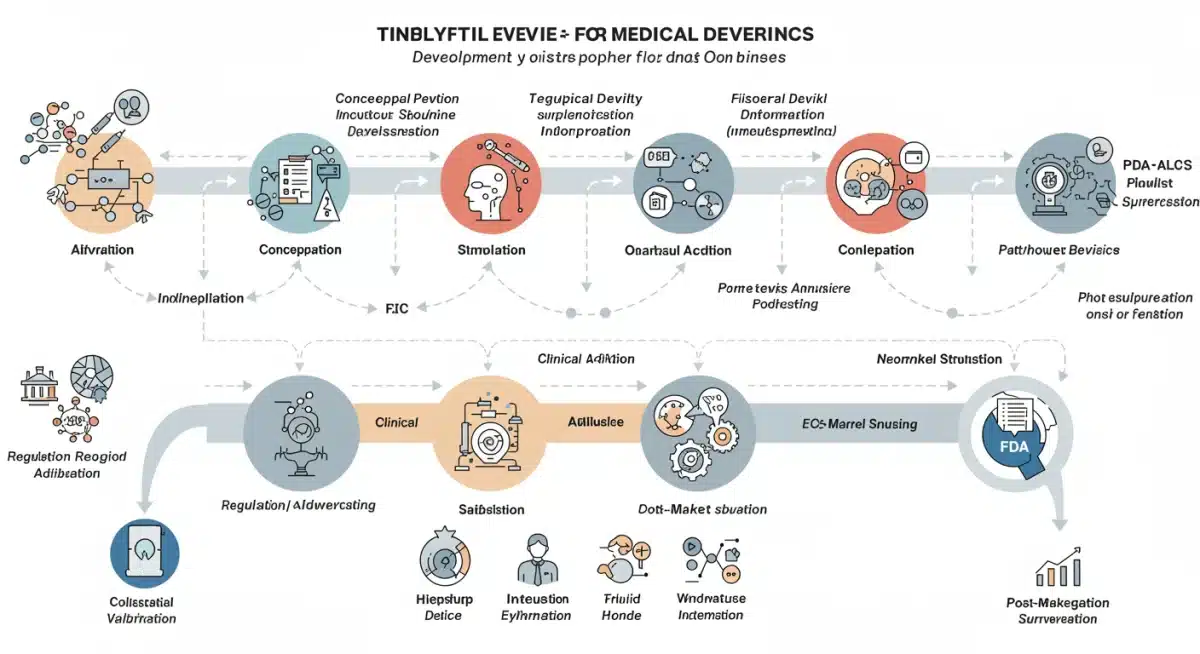

Beyond internal systems, begin to draft key regulatory documentation. This includes detailed descriptions of your AI/ML algorithm, its intended use, validation results, and a comprehensive risk analysis. The clearer and more organized your documentation, the smoother the regulatory review process will be. This month is about building the infrastructure and documentation that will support your regulatory submission.
Month 3: Validation, Documentation, and Pre-Submission Activities
The final month of your action plan focuses on rigorous validation, comprehensive documentation, and strategic pre-submission engagement with the FDA. This is the culmination of your efforts, ensuring your MedTech startup is fully prepared to meet the demands of the 2025 FDA AI Regulations.
Intensify your validation efforts. Your AI/ML model must demonstrate its safety and effectiveness through robust testing, including both internal validation and, where appropriate, independent external validation. Pay particular attention to performance metrics relevant to your device’s intended use and ensure your validation datasets are representative and free from bias.
Preparing for Regulatory Submission
Complete all necessary documentation required for your specific regulatory pathway (e.g., 510(k), De Novo, PMA). This includes:
- Performance Data: Present clear and comprehensive data demonstrating the accuracy, reliability, and clinical utility of your AI/ML device.
- Risk Management File: Detail all identified risks, their mitigation strategies, and residual risks.
- Labeling and Instructions for Use (IFU): Ensure your labeling accurately reflects the capabilities and limitations of your AI device, providing clear guidance for users.
Consider scheduling a pre-submission meeting with the FDA. This informal meeting allows you to present your device and proposed regulatory strategy, receive feedback directly from FDA reviewers, and clarify any ambiguities. A successful pre-submission can significantly de-risk the formal submission process and potentially shorten review times.
During this meeting, be prepared to discuss your AI/ML model’s architecture, training data, validation methods, and your plans for post-market surveillance. The FDA values transparency and a proactive approach to managing the evolving nature of AI. This final month is about polishing your product and presentation, ensuring a compelling and compliant submission.
Best Practices for AI/ML Device Development
Beyond the immediate 3-month plan, adopting best practices for AI/ML device development is crucial for long-term success and continuous compliance with the 2025 FDA AI Regulations. These practices embed regulatory considerations into the very fabric of your development process, fostering a culture of quality and safety.
One key best practice is to embrace a human-centered design approach. While AI offers immense capabilities, ensuring that the technology seamlessly integrates into clinical workflows and genuinely benefits both patients and healthcare providers is paramount. Involve clinicians and end-users throughout the development cycle to gather feedback and refine your device’s functionality and usability.
Ethical Considerations and Bias Mitigation
The ethical implications of AI in healthcare are profound and warrant careful consideration. Startups must actively work to mitigate bias in their AI algorithms, particularly those related to demographic factors like race, gender, and socioeconomic status. Biased algorithms can lead to health inequities and undermine trust in your product.
- Diverse Data Sets: Ensure your training data is representative of the target patient population to prevent biased outcomes.
- Transparency and Explainability: Strive for models that are not only accurate but also interpretable, allowing clinicians to understand the rationale behind AI-generated recommendations.
- Regular Audits: Conduct periodic audits of your AI model’s performance to detect and address any emerging biases or performance degradation.
Furthermore, establish robust cybersecurity measures to protect patient data and prevent unauthorized access or manipulation of your AI device. Data integrity and patient privacy are non-negotiable in healthcare technology. Maintaining these best practices will not only aid in regulatory compliance but also build trust and credibility in the market.
Post-Market Surveillance and Continuous Improvement
Compliance with 2025 FDA AI Regulations doesn’t end with market clearance; it extends throughout the entire product lifecycle. Post-market surveillance (PMS) is particularly critical for AI/ML medical devices due to their adaptive nature and potential for performance changes over time. Startups must establish robust systems for continuous monitoring and improvement.
Implement real-world performance monitoring to track your AI’s accuracy, reliability, and impact on patient outcomes. This data is invaluable for identifying potential issues, validating the benefits of your device, and informing future updates or modifications. The FDA expects manufacturers to have a proactive approach to managing model drift and ensuring ongoing safety and effectiveness.
Adapting to Regulatory Changes and Feedback
The regulatory landscape for AI in medical devices is still evolving. Startups must remain agile and prepared to adapt to new FDA guidance or changes in regulatory policy. This involves:
- Staying Informed: Regularly monitor FDA announcements, workshops, and publications related to AI/ML.
- Engaging with Regulatory Bodies: Participate in industry forums and engage with the FDA to provide feedback and stay abreast of upcoming changes.
- Internal Review Cycles: Establish regular internal reviews of your compliance strategies and QMS to ensure they remain aligned with current regulations and best practices.
Furthermore, establishing a clear feedback loop from users and clinicians is vital. Real-world usage can reveal insights into device performance, usability, and potential unintended consequences that may not have been apparent during pre-market testing. This continuous feedback should inform your improvement cycles and any necessary adjustments to your AI algorithm or device. A strong PMS program demonstrates a commitment to patient safety and quality, which are core tenets of FDA oversight.
Strategic Partnerships and Expert Consultation
For MedTech startups, especially those navigating the complexities of 2025 FDA AI Regulations, strategic partnerships and expert consultation are not luxuries but necessities. The regulatory journey for AI-powered medical devices is often intricate, requiring specialized knowledge that may not always be available in-house.
Engaging with regulatory consultants who possess deep expertise in AI/ML and FDA requirements can provide invaluable guidance. These experts can help interpret complex regulations, assist in developing a robust regulatory strategy, and review your documentation before submission, significantly increasing your chances of a smooth approval process. Their insights can save you from costly mistakes and delays.
Leveraging Academic and Industry Collaborations
Collaborating with academic institutions or other industry players can also offer substantial benefits. Academic partners can provide access to diverse datasets for training and validation, specialized research capabilities, and clinical expertise. Industry collaborations might involve sharing best practices, co-developing technologies, or even navigating regulatory pathways together.
- Clinical Validation Studies: Partner with medical centers to conduct rigorous clinical trials that generate the evidence needed for FDA submission.
- Data Sharing Agreements: Explore secure and compliant data sharing agreements to enhance your AI model’s robustness and generalizability.
- Joint Ventures: Consider joint ventures or strategic alliances that can provide access to complementary expertise, resources, or market channels.
Beyond direct regulatory assistance, these partnerships can foster innovation, accelerate product development, and strengthen your overall market position. Networking within the MedTech ecosystem allows startups to learn from others’ experiences, share challenges, and collectively advocate for a regulatory environment that supports responsible innovation. Strategic alliances are a powerful tool for startups looking to thrive in a highly regulated and rapidly evolving sector.
| Key Action | Brief Description |
|---|---|
| Month 1: Gap Analysis | Assess current AI development and QMS against 2025 FDA guidelines, identifying compliance discrepancies. |
| Month 2: Strategy & Implementation | Develop and implement specific changes to QMS and processes to close identified regulatory gaps. |
| Month 3: Validation & Submission Prep | Conduct rigorous validation, finalize documentation, and prepare for FDA pre-submission activities. |
Frequently Asked Questions About 2025 FDA AI Regulations
The primary goals are to ensure the safety and effectiveness of AI/ML-driven medical devices, promote transparency in algorithm development, and establish a predictable regulatory pathway for adaptive AI, fostering responsible innovation while protecting public health.
They will require more rigorous validation, robust quality management systems tailored for AI, and potentially predetermined change control plans. Developers will need to demonstrate transparency in their AI models and address potential biases proactively throughout the product lifecycle.
A PCCP allows manufacturers to make planned modifications to their AI algorithms post-market without requiring a new FDA submission for each change. It’s crucial for adaptive AI, enabling continuous improvement while maintaining regulatory oversight and ensuring device safety and effectiveness.
Robust data governance is critical for FDA AI compliance. It ensures data quality, privacy, security, and representativeness, which are essential for training unbiased, effective, and safe AI models. Poor data governance can lead to regulatory non-compliance and compromised device performance.
Yes, pre-submission meetings with the FDA are highly recommended. They provide an opportunity to discuss your device and regulatory strategy, receive feedback, and clarify requirements. This proactive engagement can streamline the formal review process and help avoid potential delays or rejections.
Conclusion
Navigating the 2025 FDA AI Regulations for AI in Medical Devices: A 3-Month Action Plan for Startups is a significant undertaking, yet it presents a clear roadmap for success. By diligently focusing on foundational understanding, strategic implementation, and thorough validation, MedTech startups can transform regulatory challenges into opportunities for innovation and market leadership. Proactive engagement with regulatory guidelines and continuous commitment to quality will not only ensure compliance but also build trust in the transformative potential of AI in healthcare.