US Federal AI Guidelines: Navigating MedTech Innovation for 2026

The convergence of Artificial Intelligence (AI) and medical technology (MedTech) is ushering in an era of unprecedented innovation, promising to revolutionize diagnostics, treatment, and patient care. However, this transformative potential comes with a growing need for robust regulatory frameworks to ensure safety, efficacy, and ethical deployment. The United States, a global leader in both technological advancement and healthcare regulation, is at the forefront of this effort, with new US Federal AI Guidelines poised to significantly impact the MedTech industry by 2026.
Understanding these upcoming changes is not merely an exercise in compliance; it is a strategic imperative for every stakeholder in the MedTech ecosystem. From startups pioneering novel AI algorithms to established pharmaceutical companies integrating AI into drug discovery, the implications are far-reaching. This comprehensive guide delves into the specifics of these new guidelines, offering insights into what MedTech companies can expect, how to prepare, and the opportunities and challenges that lie ahead.
The Accelerating Pace of AI in MedTech: A Brief Overview
Before dissecting the guidelines, it’s crucial to appreciate the rapid evolution of AI in MedTech. AI applications are no longer theoretical; they are tangible, impactful tools. Machine learning algorithms are excelling at image recognition, aiding radiologists in detecting subtle anomalies in scans. Natural Language Processing (NLP) is transforming electronic health records (EHRs) into actionable insights, improving clinical decision-making. Predictive analytics is identifying at-risk patients, enabling proactive interventions. Robotics, powered by AI, is enhancing surgical precision and rehabilitation outcomes.
This explosive growth has naturally drawn the attention of regulatory bodies. While the benefits are clear, concerns regarding data privacy, algorithmic bias, transparency, and accountability have also escalated. The existing regulatory landscape, primarily designed for traditional medical devices, often struggles to adequately address the unique characteristics of AI, particularly its adaptive and sometimes opaque nature. This gap is precisely what the new US Federal AI Guidelines aim to bridge, ensuring that innovation proceeds responsibly.
Key Drivers Behind the New US Federal AI Guidelines for MedTech
Several factors are propelling the development and implementation of these comprehensive US Federal AI Guidelines. Foremost among them is the need to maintain public trust. As AI becomes more embedded in critical healthcare decisions, patients and providers must have confidence in its reliability and fairness. Unregulated or poorly regulated AI could lead to adverse events, erode trust, and hinder adoption.
Another significant driver is the complexity of AI itself. Unlike static software, many AI models, especially those employing machine learning, can learn and adapt over time. This ‘black box’ phenomenon, where the internal workings of an algorithm are difficult to interpret, poses unique challenges for traditional validation and oversight. The guidelines seek to establish mechanisms for evaluating and monitoring these dynamic systems throughout their lifecycle.
Furthermore, the global nature of MedTech and AI development necessitates a degree of harmonization, or at least clear national standards. As other countries and international bodies develop their own AI regulations, the US aims to provide a clear framework that supports both domestic innovation and international collaboration, while safeguarding its citizens. The competitive landscape also plays a role; by providing clear rules, the US hopes to foster a predictable environment that encourages investment and leadership in AI-powered MedTech.
Understanding the Scope: What Do the US Federal AI Guidelines Cover?
The upcoming US Federal AI Guidelines are expected to be broad in scope, addressing various facets of AI development and deployment in the MedTech sector. While specific details are still emerging and subject to finalization, several key areas are anticipated to be central to the framework. These include, but are not limited to:
1. Definition and Classification of AI/ML-based Medical Devices
One of the foundational aspects of any regulatory framework is clear definitions. The guidelines are expected to provide precise definitions for what constitutes an AI/ML-based medical device, potentially categorizing them based on risk level, intended use, and the degree of human oversight. This classification will be crucial for determining the appropriate regulatory pathway and the intensity of scrutiny.
2. Algorithmic Transparency and Explainability
Addressing the ‘black box’ problem, the guidelines will likely emphasize the importance of algorithmic transparency and explainability. MedTech companies may be required to provide detailed documentation on how their AI algorithms are developed, trained, and how they arrive at their conclusions. This could involve mandates for explainable AI (XAI) techniques, allowing for a better understanding of the factors influencing an AI’s output, particularly in high-risk applications.
3. Data Governance and Bias Mitigation
AI models are only as good as the data they are trained on. The guidelines are expected to place significant emphasis on data governance, including data quality, integrity, and representativeness. Crucially, they will likely mandate strategies for identifying and mitigating algorithmic bias, ensuring that AI-powered devices perform equitably across diverse patient populations and do not perpetuate or exacerbate existing health disparities. This will involve rigorous testing and validation with diverse datasets.
4. Validation and Performance Monitoring Throughout the Lifecycle
Unlike traditional medical devices that are largely static after approval, many AI/ML models can adapt post-deployment. The new US Federal AI Guidelines will likely introduce requirements for continuous performance monitoring, real-world data collection, and robust post-market surveillance. This ‘total product lifecycle’ approach will ensure that devices remain safe and effective as they learn and evolve, potentially requiring mechanisms for re-validation or re-submission if significant changes occur.
5. Cybersecurity and Data Privacy
Given the sensitive nature of health data, robust cybersecurity measures are paramount. The guidelines will undoubtedly reinforce and expand upon existing requirements for protecting patient data, especially with the increased interconnectedness and data processing capabilities of AI systems. Compliance with HIPAA and other privacy regulations will remain critical, with potential new stipulations specific to AI’s unique vulnerabilities.
6. Human Oversight and Accountability
While AI offers incredible capabilities, the guidelines are expected to reinforce the principle of human oversight. This means clearly defining the roles and responsibilities of healthcare professionals in using AI-powered devices, ensuring that AI acts as an aid to clinical judgment, not a replacement. Establishing clear lines of accountability for adverse events linked to AI is also a key component.
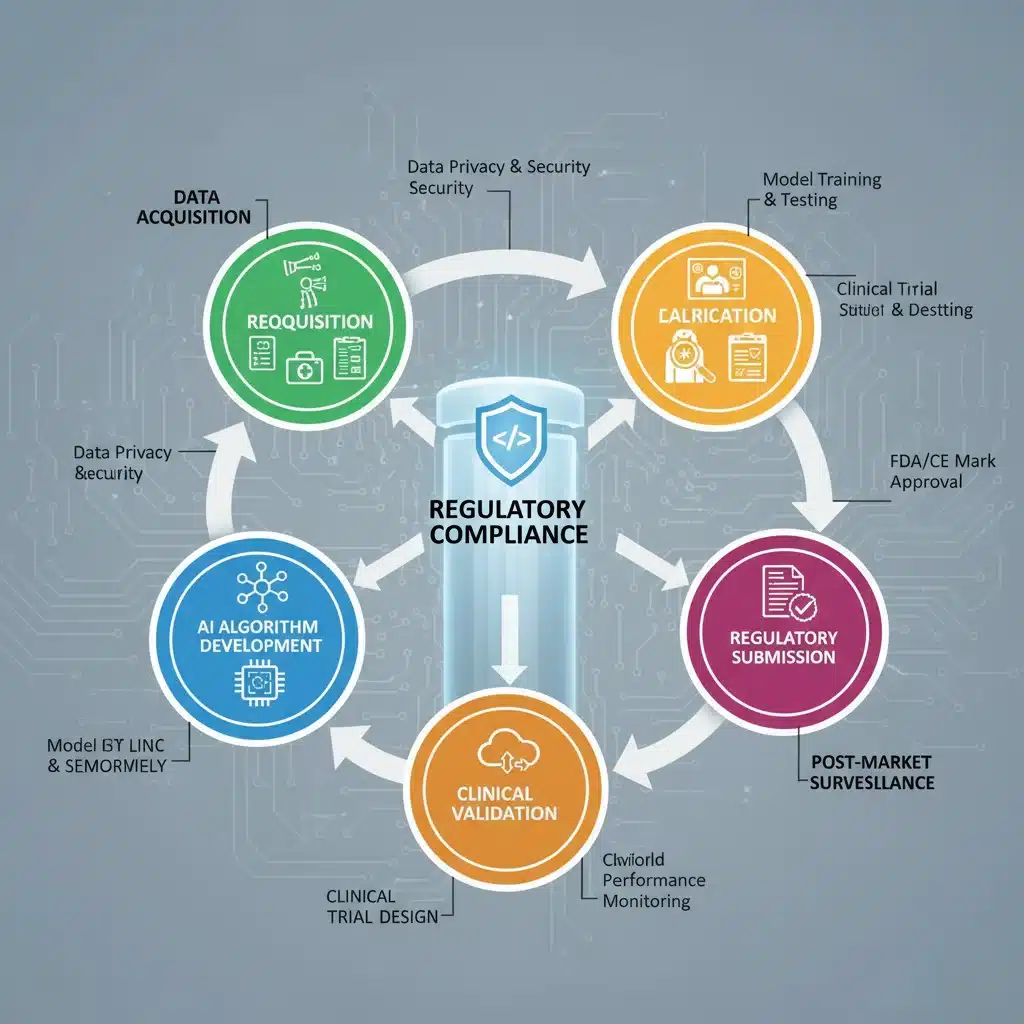
Preparing for 2026: Actionable Steps for MedTech Companies
The 2026 deadline might seem distant, but the complexity of these guidelines necessitates proactive preparation. MedTech companies cannot afford to wait; early engagement and strategic planning will be critical for a smooth transition and competitive advantage. Here are actionable steps companies should consider:
1. Establish an Internal AI Governance Framework
Companies should begin by developing an internal AI governance framework that aligns with anticipated federal guidelines. This includes establishing policies for data collection, algorithm development, bias mitigation, and ethical AI use. A dedicated cross-functional team, comprising regulatory affairs, R&D, legal, and clinical experts, should lead this initiative.
2. Invest in Data Infrastructure and Management
High-quality, well-managed data is the bedrock of effective and compliant AI. Companies need to invest in robust data infrastructure, including secure storage, data curation tools, and processes for ensuring data integrity and representativeness. This includes developing strategies for synthetic data generation where real-world data is scarce or sensitive.
3. Prioritize Explainable AI (XAI) and Interpretability
Moving beyond simply achieving high accuracy, MedTech developers must now focus on building AI models that are inherently more explainable. This involves exploring XAI techniques, documenting model architecture, and providing clear rationales for AI-driven recommendations. This will be crucial for regulatory submissions and building clinician trust.
4. Enhance Validation and Testing Protocols
Existing validation protocols may not suffice for adaptive AI models. Companies must develop advanced testing methodologies that account for model variability, drift, and performance across diverse patient subgroups. This includes robust pre-market validation and a plan for continuous post-market monitoring and re-validation.
5. Strengthen Cybersecurity and Privacy Measures
Review and bolster cybersecurity protocols, particularly for AI systems that handle vast amounts of sensitive patient data. Implement privacy-by-design principles throughout the AI development lifecycle. Regular audits and penetration testing will be essential to identify and mitigate vulnerabilities.
6. Engage with Regulatory Bodies and Industry Consortia
Proactive engagement with the FDA and other relevant federal agencies is highly advisable. Participating in industry consortia and pilot programs can provide valuable insights into evolving expectations and allow companies to contribute to the shaping of best practices. Staying informed through official channels and industry events is paramount.
7. Foster a Culture of Ethical AI Development
Beyond compliance, companies should cultivate an organizational culture that prioritizes ethical AI development. This includes training employees on AI ethics, bias awareness, and responsible innovation. Integrating ethical considerations into every stage of the product lifecycle, from conception to deployment, is vital.
Challenges and Opportunities for MedTech Innovation
While the new US Federal AI Guidelines present compliance challenges, they also unlock significant opportunities for MedTech innovation.
Challenges:
- Increased Development Costs: Meeting stringent validation, transparency, and bias mitigation requirements may increase R&D costs.
- Longer Time-to-Market: The complexity of regulatory submissions for AI/ML devices could extend approval timelines.
- Talent Gap: A shortage of professionals with expertise in both AI and regulatory affairs could pose recruitment challenges.
- Evolving Standards: The dynamic nature of AI means guidelines may continue to evolve, requiring continuous adaptation from companies.
- Data Access and Sharing: Obtaining diverse and high-quality datasets for training and validation can be difficult due to privacy concerns and data silos.
Opportunities:
- Enhanced Patient Safety and Outcomes: Well-regulated AI will lead to safer, more effective medical devices, ultimately improving patient care.
- Increased Market Trust: A clear regulatory framework fosters confidence among clinicians, patients, and investors, accelerating AI adoption.
- Competitive Advantage: Companies that successfully navigate and embrace these guidelines will gain a significant competitive edge in the market.
- Innovation Catalyst: The need for explainability and bias mitigation can drive innovation in AI methodologies, leading to more robust and ethical algorithms.
- Global Leadership: A strong US regulatory framework can position the nation as a leader in responsible AI development in healthcare, influencing international standards.

The Role of the FDA in Shaping US Federal AI Guidelines
The U.S. Food and Drug Administration (FDA) has been a pivotal player in developing the US Federal AI Guidelines for MedTech. The agency has consistently emphasized a risk-based approach, focusing on the safety and effectiveness of AI/ML-enabled medical devices. Their work, including various discussion papers, guidance documents, and pilot programs (such as the Artificial Intelligence/Machine Learning (AI/ML)-Based Software as a Medical Device (SaMD) Action Plan), provides a strong indication of the direction these federal guidelines will take.
The FDA’s vision includes fostering responsible innovation while ensuring public health. They recognize the unique challenges posed by continuously learning algorithms and are exploring regulatory pathways that can accommodate these adaptive systems. This involves moving towards a framework that allows for pre-specified updates to AI models without requiring entirely new submissions, provided the changes fall within a defined ‘predetermined change control plan.’
Collaboration between the FDA, industry, academia, and international regulatory bodies is crucial. The agency actively seeks input from stakeholders to refine its approach, ensuring that the guidelines are practical, enforceable, and supportive of beneficial innovation. MedTech companies should closely monitor FDA communications and participate in public comment periods to stay abreast of the latest developments and contribute to the regulatory dialogue.
Beyond 2026: The Future of AI in Regulated MedTech
The US Federal AI Guidelines for 2026 are not an endpoint but rather a significant milestone in an ongoing journey. The field of AI is constantly evolving, and regulatory frameworks must be agile enough to adapt. Looking beyond 2026, we can anticipate several trends:
- Increased Focus on Real-World Performance: Greater emphasis will be placed on real-world evidence (RWE) to monitor AI device performance, identify unintended biases, and inform post-market updates.
- International Harmonization: As AI becomes globally ubiquitous, there will be continued efforts towards international harmonization of regulatory standards, facilitating global market access for compliant devices.
- Specialized AI Regulations: As AI applications become more specialized (e.g., in drug discovery, personalized medicine, mental health), we might see more tailored guidelines addressing the unique risks and benefits within those specific domains.
- Ethical AI by Design: Ethical considerations will move from being an add-on to an integral part of the AI development process, with ‘ethics by design’ becoming a standard practice.
- Emergence of AI Trust Frameworks: Beyond mere compliance, companies may adopt broader AI trust frameworks, encompassing not just regulatory requirements but also societal expectations for fairness, accountability, and transparency.
Conclusion: Navigating the New Era of AI-Powered MedTech
The new US Federal AI Guidelines for MedTech in 2026 represent a critical juncture for the industry. While challenging, these guidelines are essential for fostering responsible innovation, ensuring patient safety, and building trust in AI-powered healthcare solutions. MedTech companies that proactively embrace these changes, invest in robust data governance, prioritize explainability and bias mitigation, and engage constructively with regulatory bodies will not only achieve compliance but also position themselves as leaders in this transformative era.
The future of MedTech is undeniably intertwined with AI. By understanding and adapting to the evolving regulatory landscape, companies can unlock the full potential of artificial intelligence to deliver groundbreaking solutions that improve health outcomes for millions worldwide. The journey to 2026 is an opportunity to shape a safer, more equitable, and more innovative future for healthcare.