Value-Based Care MedTech Development 2026: A Deep Dive

The Impact of Value-Based Care on MedTech Startup Product Development in 2026: A Deep Dive
The healthcare industry is in a perpetual state of evolution, driven by technological advancements, demographic shifts, and changing economic models. Among the most transformative forces is the accelerating transition from traditional fee-for-service (FFS) models to value-based care (VBC). This paradigm shift is not merely an administrative tweak; it represents a fundamental reorientation of healthcare delivery, payment, and, crucially, product development, especially within the dynamic MedTech startup ecosystem. As we cast our gaze towards 2026, the influence of MedTech Value-Based Care becomes not just apparent, but foundational for any startup aiming to succeed.
For decades, healthcare thrived on a volume-driven approach, where providers were reimbursed based on the quantity of services rendered. This often led to fragmented care, escalating costs, and a reactive rather than proactive approach to patient health. Value-based care, conversely, incentivizes quality over quantity, rewarding providers for achieving better patient outcomes, improving population health, and reducing the per capita cost of healthcare. This shift places a premium on efficiency, prevention, and integrated care pathways.
MedTech startups, inherently agile and innovation-focused, are uniquely positioned to either capitalize on or be disrupted by this transition. The traditional MedTech development cycle, often focused on creating standalone devices with superior technical specifications, is no longer sufficient. Success in the VBC era demands a holistic approach, where products and services are designed with an explicit understanding of their contribution to patient outcomes, cost reduction, and enhanced care coordination. This article will delve deep into the multifaceted impact of value-based care on MedTech startup product development in 2026, exploring the challenges, opportunities, and strategic imperatives for navigating this new landscape.
Understanding the Core Tenets of Value-Based Care and Its MedTech Implications
At its heart, value-based care seeks to answer a critical question: how can we deliver the best possible health outcomes at the lowest possible cost? This simple yet profound inquiry has ripple effects across the entire healthcare value chain. For MedTech startups, it means shifting focus from merely selling a device to demonstrating the tangible value that device brings to the patient, provider, and payer.
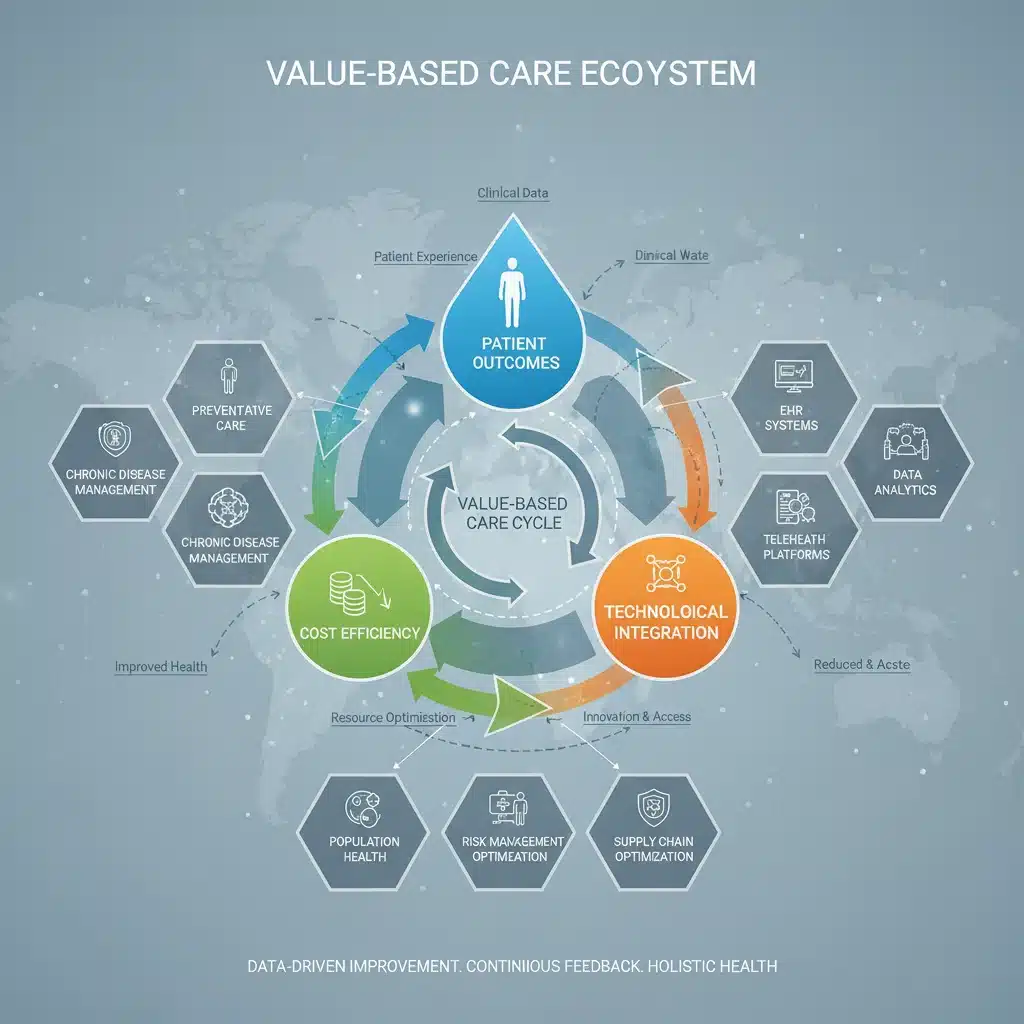
Key tenets of VBC include:
- Outcome-Oriented Care: Reimbursement is tied to measurable health improvements, such as reduced readmissions, better chronic disease management, or enhanced quality of life.
- Cost Efficiency: Emphasis on reducing unnecessary procedures, hospital stays, and administrative overhead.
- Population Health Management: Proactive strategies to manage the health of defined patient populations, often leveraging data analytics and preventative interventions.
- Care Coordination and Integration: Seamless communication and collaboration among different providers, specialties, and care settings.
- Patient Engagement: Empowering patients to actively participate in their own health management through education, tools, and shared decision-making.
The implications for MedTech Value-Based Care are significant. Devices and digital solutions must now be designed not just for clinical efficacy, but also for their ability to generate data that proves value, facilitate care coordination, reduce costs, and engage patients. This necessitates a fundamental reimagining of product roadmaps and business models.
Shifting Product Development Paradigms for MedTech Startups
In the FFS world, a MedTech startup might focus on developing a revolutionary surgical tool that performs a procedure faster or with greater precision. While still valuable, in a VBC environment, the questions extend beyond technical superiority: Does this tool reduce post-operative complications? Does it shorten hospital stays? Does it integrate with existing electronic health records (EHRs) to track outcomes? Can its use be justified by a clear return on investment (ROI) for the healthcare system?
For 2026, MedTech startups must embrace a new product development paradigm characterized by:
1. Data-Driven Design and Evidence Generation
The currency of value-based care is data. MedTech products must be designed from the ground up to collect, analyze, and present data that unequivocally demonstrates their impact on patient outcomes and cost. This means incorporating sensors, connectivity, and robust data analytics capabilities into devices. Startups must be prepared to conduct rigorous real-world evidence (RWE) studies, not just traditional randomized controlled trials (RCTs), to prove their value proposition to payers and providers.
2. Interoperability and Ecosystem Integration
Fragmented care is anathema to VBC. MedTech solutions need to seamlessly integrate with existing healthcare IT infrastructure, including EHRs, patient portals, and other digital health platforms. This requires adherence to interoperability standards and a collaborative approach with other technology vendors. Startups that build walled gardens will find themselves at a significant disadvantage.
3. Patient-Centricity and Engagement Tools
Engaged patients are healthier patients. MedTech products should empower individuals to take a more active role in managing their health. This can include user-friendly interfaces, remote monitoring capabilities, educational content, and tools for self-management. Think beyond the clinic; consider how devices can support patients in their homes and communities.
4. Focus on Prevention and Early Intervention
Preventing illness is inherently more cost-effective than treating it. MedTech Value-Based Care encourages the development of diagnostic tools, monitoring devices, and digital therapeutics that facilitate early detection, risk stratification, and preventative interventions. This shifts the focus upstream in the care continuum.
5. Outcome-Based Business Models
Traditional sales models, where a device is sold as a one-time transaction, are being challenged. Startups may need to explore outcome-based pricing models, where reimbursement is tied to the achievement of specific clinical or financial outcomes. This requires a strong partnership with providers and a willingness to share risk and reward.
Challenges and Opportunities for MedTech Startups in 2026
While the transition to VBC presents significant hurdles, it also unlocks unprecedented opportunities for agile MedTech startups.
Challenges:
- Regulatory Complexity: Navigating evolving regulatory frameworks that increasingly demand evidence of real-world value, not just safety and efficacy.
- Reimbursement Uncertainty: The shift to VBC models can create ambiguity around how new technologies will be reimbursed, requiring startups to build strong economic value propositions.
- Data Integration and Security: The challenge of securely integrating data from diverse sources while complying with privacy regulations like HIPAA.
- Provider Adoption: Overcoming clinician resistance to new workflows and technologies, especially if they perceive added administrative burden without clear benefits.
- Capital Intensity: Developing and proving the value of complex MedTech solutions often requires substantial upfront investment.
Opportunities:
- New Market Segments: Emergence of new markets for preventative health, remote monitoring, personalized medicine, and digital therapeutics.
- Strategic Partnerships: Increased demand for collaborations between MedTech startups, pharmaceutical companies, payers, and large health systems to create integrated solutions.
- Competitive Advantage: Startups that successfully demonstrate clear value and outcomes will gain a significant competitive edge over those clinging to FFS models.
- Investor Interest: Growing investor appetite for MedTech companies that align with VBC principles and can prove tangible ROI.
- Global Expansion: VBC models are gaining traction globally, opening doors for international market entry for well-aligned MedTech solutions.
The landscape of MedTech Value-Based Care in 2026 will heavily favor those who can adapt quickly and strategically. The window for traditional, FFS-only product development is rapidly closing.
Key Technologies Driving Value-Based MedTech Innovation
Several technological advancements are acting as accelerants for value-based MedTech innovation:
Artificial Intelligence (AI) and Machine Learning (ML)
AI and ML are pivotal for analyzing vast datasets to identify at-risk patients, predict disease progression, optimize treatment pathways, and personalize care. From diagnostic assistance to predictive analytics for hospital readmissions, AI/ML can enhance decision-making and efficiency, directly impacting VBC metrics.
Internet of Medical Things (IoMT)
IoMT devices, including wearables, remote sensors, and connected medical equipment, enable continuous patient monitoring outside traditional clinical settings. This provides rich, real-time data for preventative care, chronic disease management, and early intervention, all critical for improving outcomes and reducing costs in a VBC framework.
Telemedicine and Remote Care Platforms
The accelerated adoption of telemedicine has demonstrated its potential to expand access to care, reduce travel burden for patients, and lower administrative costs. MedTech startups developing integrated telemedicine platforms, remote diagnostic tools, and virtual rehabilitation solutions are directly contributing to VBC goals by enhancing access and efficiency.
Blockchain Technology
While still nascent in healthcare, blockchain offers potential for secure, immutable record-keeping and enhanced interoperability. It could streamline data sharing, improve supply chain transparency for medical devices, and even facilitate secure patient consent management, all contributing to a more efficient and trustworthy VBC ecosystem.
Precision Medicine and Genomics
Tailoring treatments to an individual’s genetic makeup and other biological characteristics promises more effective interventions and reduced trial-and-error. MedTech diagnostics and therapeutic devices that enable precision medicine align perfectly with VBC’s focus on optimal outcomes for each patient.
Strategic Imperatives for MedTech Startups by 2026
To thrive in the 2026 MedTech Value-Based Care landscape, startups must adopt several strategic imperatives:
1. Build a Strong Value Proposition from Day One
Every product or service developed must have a clear, quantifiable value proposition that addresses specific VBC goals. This means understanding the pain points of providers, payers, and patients in a VBC model and designing solutions that directly alleviate them. Avoid building technology for technology’s sake; focus on solving real-world problems with measurable impact.
2. Cultivate Strategic Partnerships
Collaboration is key. MedTech startups should actively seek partnerships with health systems, insurance companies, established medical device manufacturers, and even pharmaceutical companies. These alliances can provide access to clinical expertise, distribution channels, data, and critical market insights, accelerating adoption and proving value.
3. Prioritize Interoperability and Data Security
Design products with open APIs and adhere to industry standards for data exchange. Invest heavily in robust cybersecurity measures to protect sensitive patient information. Trust and seamless integration will be non-negotiable for widespread adoption.
4. Embrace Agile Development with a VBC Lens
Iterate rapidly, gather feedback from providers and patients, and continuously refine products based on real-world performance data. This agile approach, when guided by VBC principles, ensures that products evolve to meet the dynamic needs of a value-driven healthcare system.
5. Invest in Health Economics and Outcomes Research (HEOR)
Proving the economic and clinical value of a MedTech solution is paramount. Startups need to invest in HEOR expertise early in their development cycle to generate the evidence required for successful market access and reimbursement in a VBC environment. This means understanding health policy and payer perspectives.
6. Focus on User Experience (UX) for All Stakeholders
While clinical efficacy is crucial, the usability of MedTech devices for clinicians and patients is equally important. An intuitive, easy-to-use device will see higher adoption rates and better adherence, directly contributing to improved outcomes and efficiency, which are central to VBC.

Case Studies and Future Outlook
Consider companies that have already begun to pivot towards MedTech Value-Based Care. For instance, remote patient monitoring (RPM) companies that provide platforms for chronic disease management are seeing significant growth. Their value proposition is clear: by monitoring patients at home, they can prevent acute exacerbations, reduce hospital readmissions, and improve overall quality of life, all while lowering costs. Similarly, digital therapeutics (DTx) that deliver evidence-based therapeutic interventions through software are gaining traction, often demonstrating clinical outcomes comparable to traditional treatments, but with greater accessibility and scalability.
Looking ahead to 2026, we can anticipate several trends:
- Consolidation and Partnerships: Larger MedTech companies will increasingly acquire or partner with innovative startups that have proven VBC-aligned solutions.
- Increased Payer Influence: Payers will play an even more dominant role in dictating which technologies are adopted, based on their ability to demonstrate value and cost savings.
- Regulatory Harmonization: Efforts to streamline regulatory pathways for digital health and AI-powered medical devices will continue, albeit slowly, to foster innovation while ensuring patient safety and efficacy.
- Global Adoption: As healthcare systems worldwide grapple with rising costs and an aging population, VBC models will proliferate, creating global opportunities for MedTech startups.
- Ethical AI and Data Governance: Increased scrutiny on the ethical implications of AI in healthcare and the responsible use of patient data will necessitate robust governance frameworks for MedTech solutions.
Conclusion
The era of value-based care is not a distant future; it is the present reality shaping the trajectory of the MedTech industry. For startups, 2026 represents a critical juncture where adaptability, strategic foresight, and a deep understanding of VBC principles will determine success. The focus must shift from merely creating technically superior devices to developing holistic solutions that demonstrably improve patient outcomes, enhance care efficiency, and reduce overall healthcare costs. Those MedTech startups that embrace data-driven design, foster interoperability, prioritize patient engagement, and build strong partnerships will not only survive but thrive, leading the charge in delivering truly valuable healthcare innovations for generations to come. The journey is complex, but the rewards—in terms of both business success and societal impact—are immeasurable for those who master the art of MedTech Value-Based Care.