CMS Guidelines January 2025: AI Reimbursement in US Clinics

The January 2025 CMS guidelines are set to significantly reshape how US clinics receive reimbursement for artificial intelligence (AI) technologies, influencing adoption rates and clinical integration strategies across the healthcare landscape. Understanding these changes is crucial for sustainable innovation.
The landscape of healthcare in the United States is continuously evolving, with technological advancements like artificial intelligence (AI) promising revolutionary changes. However, the true impact of these innovations hinges on clear and supportive regulatory frameworks. This article delves into the Recent Updates: Understanding the Impact of the January 2025 CMS Guidelines on AI Reimbursement in US Clinics, offering a comprehensive look at what these pivotal changes mean for providers, developers, and patients alike. It’s a critical moment for understanding how AI will be funded and integrated into routine medical care, shaping the future of clinical practice.
The Shifting Landscape of AI in Healthcare Reimbursement
The integration of artificial intelligence into clinical practice has long been heralded as a transformative force, capable of enhancing diagnostic accuracy, streamlining workflows, and personalizing patient care. Yet, the path to widespread adoption has been fraught with challenges, not least among them the complexities of reimbursement. Historically, the Centers for Medicare & Medicaid Services (CMS) has grappled with how to appropriately value and pay for AI-driven services, often relying on existing codes that don’t fully capture AI’s unique contributions. The January 2025 guidelines represent a significant pivot, aiming to provide more specific pathways for AI reimbursement.
These forthcoming guidelines are not merely incremental adjustments; they signify a foundational shift in how CMS views and values AI technologies. The goal appears to be fostering innovation while ensuring patient safety and clinical efficacy. This balance is delicate, requiring nuanced policy that can adapt to rapid technological advancements. Clinics across the US are keenly awaiting these updates, as they will directly influence investment decisions, technology adoption strategies, and ultimately, the scope of services they can offer.
Historical Context of AI Reimbursement Challenges
Before 2025, AI technologies often struggled to fit within traditional reimbursement structures. Existing CPT codes were designed for human-performed services, making it difficult to assign value to autonomous or semi-autonomous AI functions. This led to a patchwork of approaches, with some AI services bundled into existing procedure codes, others requiring special review, and many simply not reimbursed at all. This ambiguity created a significant barrier to entry for innovative AI solutions.
- Lack of Specific Codes: Many AI applications lacked dedicated CPT or HCPCS codes, forcing providers to use unlisted codes or rely on existing codes that didn’t fully represent the AI service.
- Demonstrating Value: Proving the cost-effectiveness and clinical superiority of AI tools to payers, especially CMS, was a continuous uphill battle.
- Regulatory Uncertainty: The absence of clear guidelines created an environment of uncertainty, deterring both developers and clinics from fully committing to AI integration.
The January 2025 guidelines are expected to address these historical pain points by introducing more explicit definitions and coding mechanisms for AI-driven services. This clarity is paramount for clinics to confidently invest in and deploy AI, knowing that their efforts will be recognized and compensated. It paves the way for a more standardized and predictable reimbursement environment, which is essential for scaling AI solutions across the US healthcare system.
Key Provisions of the January 2025 CMS Guidelines
The eagerly anticipated January 2025 CMS guidelines are set to introduce several critical provisions that will redefine AI reimbursement. These provisions are designed to create a more structured and transparent process, moving away from the ad-hoc approaches of the past. Clinics must familiarize themselves with these changes to ensure compliance and maximize their potential for AI integration. The guidelines are expected to delineate specific categories of AI services that are eligible for reimbursement, differentiating between diagnostic, therapeutic, and administrative AI applications.
A significant focus will likely be on establishing clear criteria for clinical validation and evidence generation. CMS has consistently emphasized the need for robust data to support the efficacy and safety of new technologies. For AI, this means demonstrating not only technical performance but also improved patient outcomes and cost-effectiveness in real-world clinical settings. This rigorous approach aims to instill confidence in AI solutions among both providers and payers.
New Coding Structures for AI Services
One of the most impactful changes expected is the introduction of new or revised coding structures specifically for AI services. This could include new CPT codes, HCPCS codes, or modifiers that allow for precise identification and billing of AI-assisted procedures. Such specificity is vital for accurate data collection and for CMS to monitor the utilization and impact of AI across different clinical specialties.
- Dedicated CPT Codes: The creation of unique Current Procedural Terminology (CPT) codes for AI-powered diagnostics or interventions.
- HCPCS Level II Codes: New Healthcare Common Procedure Coding System (HCPCS) codes for AI software, algorithms, or devices.
- Payment Modifiers: Modifiers that can be appended to existing codes to indicate the use of AI, allowing for differential reimbursement.
These new coding structures will provide a much-needed framework for clinics to bill for AI services. Understanding how to correctly apply these codes will be crucial for revenue cycle management and avoiding claim denials. Training staff on these new coding protocols will be an immediate priority for many healthcare organizations, ensuring a smooth transition into the new reimbursement era.
Impact on US Clinics: Opportunities and Challenges
The January 2025 CMS guidelines will undoubtedly create a ripple effect across US clinics, presenting both substantial opportunities and considerable challenges. For clinics that have been hesitant to adopt AI due to reimbursement uncertainties, these guidelines could unlock significant investment and innovation. The potential for improved patient care, enhanced operational efficiency, and new revenue streams is immense. However, navigating the new regulatory landscape will require strategic planning and adaptation.
One of the primary opportunities lies in the ability to finally monetize AI services, making the business case for technology adoption much stronger. Clinics may find it easier to justify the upfront costs of AI software and hardware if there’s a clear pathway to reimbursement. This could accelerate the deployment of AI tools for tasks ranging from medical image analysis to predictive analytics for patient deterioration, ultimately benefiting patient outcomes and provider workload.
Navigating New Compliance Requirements
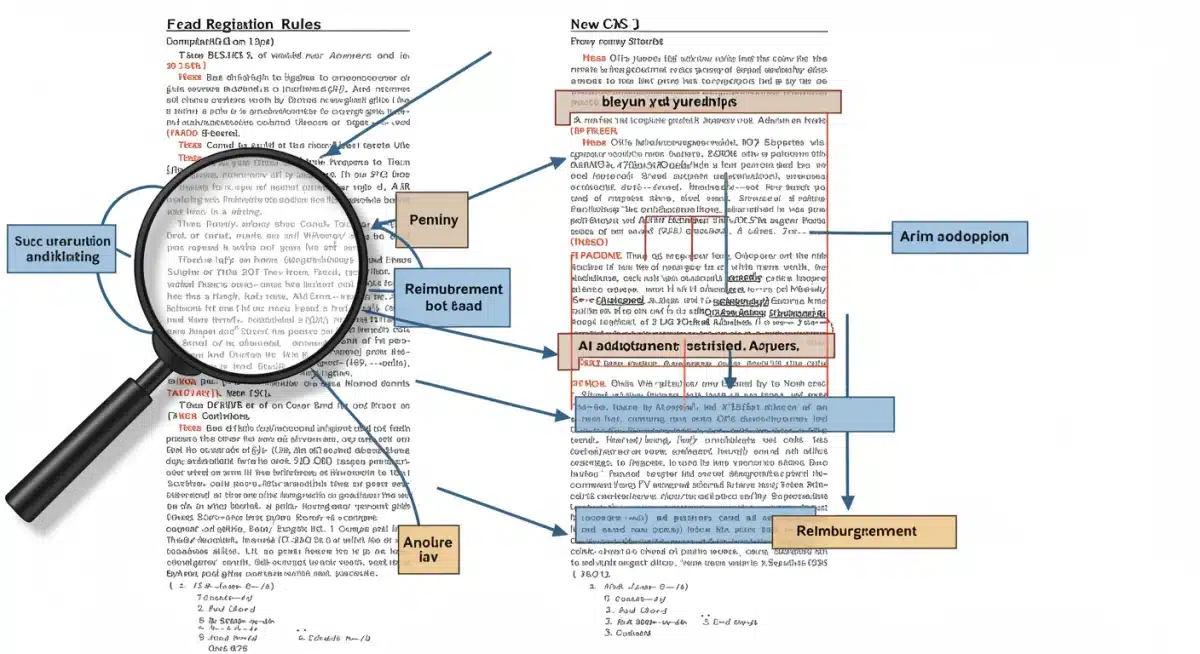
While the guidelines offer opportunities, they also introduce new compliance requirements that clinics must diligently address. These may include specific documentation standards, data privacy protocols (especially concerning AI’s use of patient data), and ongoing reporting obligations to demonstrate the continued efficacy and safety of AI tools. Clinics will need to invest in robust compliance programs to meet these evolving demands.
Challenges will also arise in terms of workforce development. Integrating AI effectively requires clinicians and support staff to be trained in its use, interpretation of its outputs, and understanding its limitations. This necessitates significant investment in education and upskilling programs. Furthermore, smaller clinics might struggle with the initial capital investment and the administrative burden of adhering to complex new reimbursement rules, potentially widening the gap between large health systems and independent practices.
Preparing for the 2025 CMS Guidelines: A Clinic’s Roadmap
As January 2025 draws nearer, US clinics must proactively prepare for the impending CMS guidelines to ensure a seamless transition and maximize the benefits of AI integration. Proactive planning is not just about compliance; it’s about strategically positioning the clinic to leverage AI for improved patient care and operational efficiency. Waiting until the last minute could result in missed opportunities and potential revenue loss.
The first step involves a thorough assessment of current AI capabilities and infrastructure. Clinics should identify existing AI tools, evaluate their current usage, and determine any gaps in technology or expertise. This assessment will inform future investment decisions and identify areas where new AI solutions could be most impactful within the new reimbursement framework. Understanding the clinic’s readiness for AI adoption is paramount.
Strategic Steps for Implementation
Strategic implementation will involve several key areas, from technology acquisition to staff training and financial planning. Clinics should consider forming an internal task force dedicated to understanding and implementing the new guidelines. This team can be responsible for interpreting the nuanced details of the CMS updates and translating them into actionable steps for the organization.
- Technology Assessment and Acquisition: Evaluate AI solutions that align with the new reimbursement codes and demonstrate strong clinical evidence.
- Staff Training and Education: Develop comprehensive training programs for clinicians, coders, and administrators on AI utilization, ethical considerations, and new billing procedures.
- Financial Modeling: Analyze the potential financial impact of AI adoption under the new guidelines, including expected reimbursement rates and investment costs.
- Compliance and Documentation: Establish clear protocols for documenting AI-assisted services to meet CMS requirements and support claims.
Furthermore, clinics should engage with AI vendors to understand how their products align with the new guidelines. Vendors play a crucial role in providing the necessary data and support for reimbursement claims. Establishing strong partnerships with technology providers will be key to successful AI integration and sustained reimbursement.
The Role of Data and Evidence in AI Reimbursement
Under the January 2025 CMS guidelines, the importance of data and evidence in securing AI reimbursement cannot be overstated. CMS is increasingly focused on value-based care, meaning that reimbursement is tied not just to the provision of a service but to its demonstrable impact on patient outcomes and overall healthcare costs. For AI technologies, this translates into a stringent requirement for robust clinical validation and real-world evidence.
Clinics utilizing AI will likely need to collect and report data demonstrating the effectiveness, safety, and efficiency of these tools. This could involve tracking patient outcomes, comparing AI-assisted diagnoses to traditional methods, and quantifying improvements in workflow or resource utilization. The ability to generate and analyze this data will be a critical competency for clinics seeking to maximize their reimbursement potential for AI services.
Generating and Submitting Clinical Evidence
The process of generating and submitting clinical evidence for AI reimbursement will become a standardized, yet rigorous, aspect of healthcare operations. AI developers and clinics alike will need to collaborate to produce the necessary documentation. This often involves prospective studies, retrospective analyses of real-world data, and transparent reporting of AI model performance.
- Clinical Trials: Participation in or referencing clinical trials demonstrating AI efficacy in specific patient populations.
- Real-World Evidence (RWE): Utilizing de-identified patient data from electronic health records to show AI’s performance in diverse clinical settings.
- Cost-Effectiveness Studies: Providing data that illustrates how AI reduces healthcare costs or improves resource allocation.
These evidence requirements will necessitate a strong emphasis on data governance, security, and interoperability within clinics. The ability to seamlessly integrate AI tools with existing electronic health record (EHR) systems and extract relevant data for reporting will be crucial. Clinics that invest in strong data infrastructure will be better positioned to meet these demands and secure ongoing reimbursement for their AI initiatives.
Future Outlook: Beyond January 2025
While the January 2025 CMS guidelines mark a pivotal moment for AI reimbursement in US clinics, they represent just one step in an ongoing evolution. The rapid pace of AI development means that regulatory frameworks will need to be flexible and adaptable to new innovations. Clinics should view these guidelines not as a static endpoint, but as a foundation upon which future policies will be built. Staying abreast of emerging technologies and potential future policy shifts will be essential for long-term strategic planning.
The healthcare industry can expect continuous dialogue between AI developers, clinicians, policymakers, and patient advocates to refine and expand AI reimbursement policies. As AI becomes more sophisticated and integrated into various aspects of care, the need for equally sophisticated reimbursement models will grow. This iterative process will involve learning from the initial implementation of the 2025 guidelines and making adjustments based on real-world experiences.
Anticipating Future Policy Evolutions
Future policy evolutions could include further differentiation of AI services, potentially linking reimbursement to advanced performance metrics or the degree of clinical autonomy of an AI system. There might also be a greater emphasis on AI accountability and liability, as these technologies become more embedded in critical decision-making processes. The ethical considerations surrounding AI in healthcare will also continue to shape regulatory discussions.
Clinics should foster a culture of continuous learning and adaptation regarding AI. This includes actively participating in industry forums, engaging with professional organizations, and providing feedback to regulatory bodies. By being proactive participants in the ongoing conversation, clinics can help shape future policies that are both supportive of innovation and protective of patient interests. The journey of AI integration in healthcare is a marathon, not a sprint, and effective navigation requires foresight and engagement.
| Key Point | Brief Description |
|---|---|
| New Reimbursement Codes | CMS introduces specific CPT/HCPCS codes for AI services, ending reliance on generic billing. |
| Increased Data Requirements | Clinics must provide robust clinical evidence and real-world data for AI efficacy and safety. |
| Strategic Planning Needed | Clinics must assess infrastructure, train staff, and model finances to adapt to new rules. |
| Future Policy Evolution | Guidelines are a starting point; continuous adaptation and refinement of AI reimbursement are expected. |
Frequently Asked Questions About AI Reimbursement
The main changes include the introduction of specific coding structures for AI services, clearer criteria for clinical validation, and an increased emphasis on real-world evidence. These updates aim to provide a more defined pathway for clinics to receive compensation for AI-driven care, moving away from previous ambiguities.
Small clinics may face challenges related to initial capital investment for AI technologies and the administrative burden of new compliance requirements. However, the clearer reimbursement pathways also present opportunities to adopt AI for efficiency and improved patient outcomes, provided they plan strategically and seek appropriate support.
Clinics will likely need to provide robust clinical evidence, including data from clinical trials or real-world evidence studies, demonstrating the AI’s efficacy, safety, and impact on patient outcomes. Cost-effectiveness studies showing how AI reduces overall healthcare costs may also be required for certain services.
Not necessarily. The guidelines are expected to delineate specific categories of eligible AI services, likely focusing on those with proven clinical utility and strong evidence. AI applications for diagnostic, therapeutic, and administrative tasks will be evaluated based on rigorous criteria set forth by CMS.
Clinics should conduct an internal assessment of their AI readiness, invest in staff training for new technologies and coding, develop a financial model for AI integration, and establish strong compliance and documentation protocols. Engaging with AI vendors and staying informed on specific CMS updates is also crucial.
Conclusion
The January 2025 CMS guidelines on AI reimbursement mark a transformative period for US clinics and the broader healthcare ecosystem. By providing clearer pathways for AI adoption and compensation, these updates are poised to accelerate the integration of innovative technologies into patient care. While challenges related to compliance, infrastructure, and workforce development will require careful navigation, the opportunities for enhancing clinical efficiency, improving diagnostic accuracy, and ultimately delivering better patient outcomes are immense. Clinics that proactively prepare and strategically adapt to these changes will be at the forefront of this new era of AI-driven healthcare, ensuring sustainable growth and continued innovation in the years to come.