Navigating FDA 510(k) Submissions for MedTech Startups: 2025 Guide

MedTech startups must master the intricacies of the FDA 510(k) submission process to achieve timely market clearance, requiring meticulous preparation and strategic regulatory navigation.
For MedTech startups, successfully navigating FDA 510(k) submissions is not merely a regulatory hurdle; it’s a critical strategic imperative for market entry and sustained growth. The landscape of medical device regulation is ever-evolving, and understanding the nuances of the 510(k) process in 2025 is paramount for achieving expedited clearance. This guide cuts through the complexity, offering practical, actionable insights to help your innovative solutions reach patients efficiently and compliantly.
Understanding the FDA 510(k) Landscape in 2025
The FDA 510(k) premarket notification pathway remains the most common route for medical device market clearance in the United States. However, the regulatory environment is not static. In 2025, MedTech startups face increased scrutiny, particularly regarding cybersecurity, software as a medical device (SaMD), and the integration of artificial intelligence (AI) into diagnostic and therapeutic tools. Proactive engagement with these evolving expectations is crucial.
Successful 510(k) navigation hinges on a deep understanding of predicate device selection and demonstrating substantial equivalence. This foundational step dictates the entire submission strategy, influencing everything from testing requirements to clinical data needs. An ill-chosen predicate can lead to significant delays and additional costs, making early strategic planning indispensable.
Key Regulatory Updates Affecting 510(k)
- Enhanced Cybersecurity Requirements: The FDA is increasingly focused on the cybersecurity of medical devices, requiring robust documentation on risk management, threat modeling, and post-market surveillance plans.
- AI/ML-Driven Device Guidance: New guidance documents are emerging for AI and machine learning-enabled medical devices, emphasizing transparency, bias mitigation, and continuous learning capabilities.
- Digital Health Integration: Devices integrating with digital health platforms or offering telehealth functionalities face specific considerations regarding data privacy, interoperability, and user interface validation.
Concluding this section, MedTech startups must recognize that the 2025 FDA 510(k) landscape is characterized by an emphasis on digital health, cybersecurity, and advanced technologies. Staying abreast of these developments and integrating them into your regulatory strategy from the outset is vital for efficient clearance.
Strategic Planning for Expedited Clearance
Expedited clearance is not a matter of luck but rather meticulous strategic planning and execution. It begins long before the actual submission, encompassing device design, quality system implementation, and early regulatory consultations. Startups often underestimate the time and resources required for comprehensive planning, leading to avoidable delays.
A robust quality management system (QMS) is the backbone of any successful 510(k) submission. Establishing an ISO 13485 compliant QMS from the early stages of development ensures that design controls, risk management, and documentation practices align with regulatory expectations. This proactive approach minimizes rework and strengthens the overall submission package.
Pre-Submission Meetings: A Critical Advantage
Engaging with the FDA through pre-submission (Pre-Sub) meetings offers invaluable benefits. These meetings allow startups to present their device concept, proposed testing plans, and regulatory strategy directly to FDA reviewers. Feedback received during these interactions can help refine your approach, identify potential issues early, and ultimately streamline the submission process.
- Clarify Regulatory Pathway: Confirm the appropriate regulatory classification and submission type for your device.
- Validate Testing Strategy: Gain FDA concurrence on your non-clinical and, if applicable, clinical testing protocols.
- Address Novel Features: Discuss unique aspects of your device, especially those involving new technologies like AI or complex software.
In summary, strategic planning, underpinned by a strong QMS and effective pre-submission engagement with the FDA, lays the groundwork for an expedited 510(k) clearance process. These foundational steps are non-negotiable for MedTech startups aiming for efficiency.
Crafting a Robust 510(k) Submission Package
The 510(k) submission package is a comprehensive dossier that must meticulously demonstrate substantial equivalence to a legally marketed predicate device. This requires not only technical proficiency but also exceptional organizational skills and clear, concise communication. Any ambiguity or missing information can trigger requests for additional information (AI letters), significantly prolonging the review timeline.
Central to the submission is the detailed comparison to the predicate device. This involves a thorough analysis of intended use, technological characteristics, and performance data. The burden of proof lies with the applicant to show that any differences do not raise new questions of safety or effectiveness.
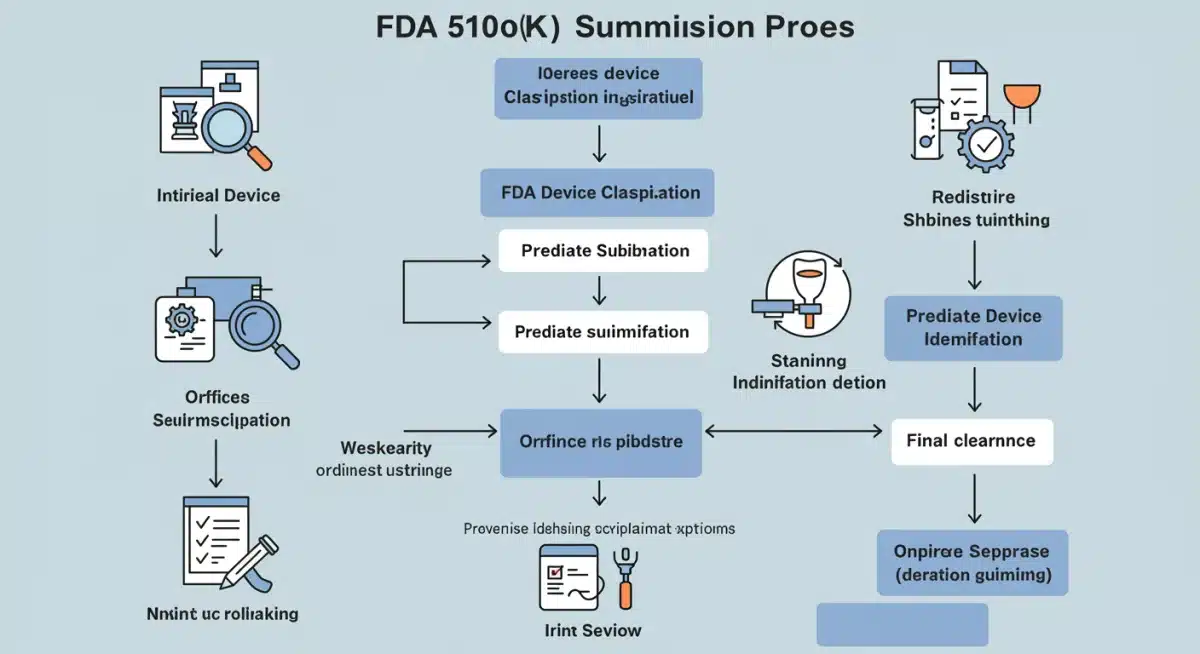
Essential Components of the 510(k) Submission
A well-structured 510(k) submission typically includes administrative information, device description, comparison to predicate, performance data (bench, animal, clinical if needed), labeling, and a comprehensive summary. Each section requires careful attention to detail.
- Device Description: Provide a clear and detailed overview of your device’s function, design, materials, and operating principles.
- Performance Data: Present robust data from non-clinical testing (e.g., biocompatibility, electrical safety, EMC) and, if necessary, clinical studies, to support safety and effectiveness.
- Labeling: Ensure all labeling, including instructions for use, promotional materials, and device labels, aligns with regulatory requirements and accurately reflects the device’s intended use.
Ultimately, a robust 510(k) submission package is characterized by its completeness, clarity, and the strength of its supporting data. Investing time in meticulous preparation and internal review before submission can prevent costly delays and accelerate clearance.
Navigating the FDA Review Process
Once submitted, your 510(k) application enters the FDA’s review cycle. Understanding this process and anticipating potential challenges is key to effective navigation. The FDA aims to provide a substantive review within 90 calendar days, but this timeline can be extended if the agency issues an Additional Information (AI) request.
Responding to AI requests promptly and comprehensively is critical. Each response should directly address the FDA’s questions, providing clear explanations and supporting documentation. Inadequate or delayed responses can lead to further AI requests or even refusal to accept the submission.
Effective Communication with the FDA
Maintaining open and professional communication with your assigned FDA reviewer is paramount. Be responsive to inquiries, proactively seek clarification when needed, and be prepared to justify your device’s safety and effectiveness. Regulatory consultants can often facilitate this communication, leveraging their experience with FDA interactions.
- Timely Responses: Prioritize responding to FDA requests within the stipulated timeframe, usually 180 days.
- Clear Explanations: Provide concise, well-supported answers to all questions, avoiding jargon where possible.
- Documentation: Ensure all additional information submitted is properly referenced and integrated into your existing submission.
In conclusion, successful navigation of the FDA review process demands patience, meticulous attention to detail, and a commitment to clear and timely communication. Proactive management of AI requests is particularly important for maintaining momentum toward clearance.
Post-Market Obligations and Continued Compliance
Achieving 510(k) clearance is a significant milestone, but it marks the beginning, not the end, of your regulatory journey. MedTech startups must understand and fulfill their post-market obligations to maintain compliance and ensure ongoing patient safety. Failure to adhere to these requirements can result in severe penalties, including recalls and injunctions.
Post-market surveillance involves monitoring device performance, reporting adverse events, and addressing any emerging safety concerns. This continuous feedback loop is essential for identifying potential issues, improving device design, and demonstrating a commitment to public health.
Maintaining Compliance: Key Post-Market Activities
Ongoing compliance extends beyond adverse event reporting to encompass quality system maintenance, labeling updates, and change control. Any significant modifications to a cleared device may necessitate a new 510(k) submission or a Letter to File, depending on the nature and impact of the change.
- Adverse Event Reporting: Establish robust systems for collecting, evaluating, and reporting adverse events in accordance with FDA regulations (e.g., MDRs).
- Quality System Audits: Regularly audit your QMS to ensure continued adherence to ISO 13485 and FDA’s Quality System Regulation (21 CFR Part 820).
- Labeling and Promotional Review: Continuously review and update labeling and promotional materials to ensure they accurately reflect the cleared device and its intended use.
To summarize, post-market obligations are an integral part of the MedTech lifecycle. By establishing strong systems for surveillance, reporting, and quality management, startups can ensure long-term compliance and build trust with both regulators and patients.
Leveraging Technology and Expert Partnerships
In 2025, MedTech startups have unprecedented access to tools and expertise that can significantly streamline their 510(k) journey. Leveraging regulatory software, AI-powered documentation tools, and seasoned consultants can provide a competitive edge, reducing both time to market and compliance risks. These resources help navigate the complexities of documentation, data management, and strategic decision-making.
Regulatory technology (RegTech) platforms are becoming increasingly sophisticated, offering solutions for document management, submission tracking, and even AI-assisted review of regulatory texts. These tools can automate mundane tasks, minimize human error, and ensure consistency across large submission packages.
The Value of Regulatory Consultants
Partnering with experienced regulatory consultants can be a game-changer for startups, especially those with limited in-house regulatory expertise. Consultants bring a wealth of knowledge regarding FDA expectations, common pitfalls, and best practices for expedited clearance. They can provide strategic guidance, review documentation, and even act as your liaison with the FDA.
- Strategic Guidance: Consultants help define the optimal regulatory pathway and predicate selection.
- Document Review: They meticulously review submission documents to ensure completeness, accuracy, and compliance.
- FDA Liaison: Consultants can facilitate communication with the FDA, addressing questions and managing interactions efficiently.
In conclusion, embracing technology and forging strategic partnerships with regulatory experts are powerful strategies for MedTech startups. These resources not only enhance efficiency but also significantly de-risk the challenging process of FDA 510(k) submissions, paving the way for faster market entry.
| Key Aspect | Brief Description |
|---|---|
| Predicate Device Selection | Crucial first step; dictates submission strategy and necessary data for substantial equivalence. |
| Pre-Submission Meetings | Direct engagement with FDA for feedback on strategy, testing, and novel features, reducing future delays. |
| Quality Management System | Foundational for compliance; ISO 13485 alignment ensures robust design controls and documentation. |
| Post-Market Surveillance | Ongoing monitoring, adverse event reporting, and compliance to ensure continued safety and effectiveness. |
Frequently Asked Questions About FDA 510(k) Submissions
The main goal of a 510(k) submission is to demonstrate that a medical device is substantially equivalent to a legally marketed predicate device. This means showing it is as safe and effective, without raising new concerns about safety or effectiveness compared to the predicate device.
While the FDA aims to complete 510(k) reviews within 90 calendar days, this timeline can vary significantly. Delays often occur due to requests for additional information (AI letters) from the FDA, which pause the review clock until a comprehensive response is submitted by the applicant.
No, a clinical study is not always required for a 510(k) submission. Many devices can demonstrate substantial equivalence through non-clinical performance testing (e.g., bench testing, biocompatibility). Clinical data is typically requested if significant differences exist from the predicate or if the device introduces novel technology.
Post-market non-compliance can lead to severe consequences, including FDA warning letters, mandatory recalls, injunctions, and even civil or criminal penalties. Maintaining a robust quality management system and diligently adhering to post-market surveillance requirements are crucial to avoid these issues.
MedTech startups should proactively monitor FDA guidance documents, particularly those related to cybersecurity, AI/ML, and digital health. Engaging in pre-submission meetings, implementing a strong QMS, and seeking expert regulatory counsel are also vital for adapting to evolving 2025 FDA expectations.
Conclusion
Successfully navigating the FDA 510(k) submission process in 2025 is a complex yet achievable endeavor for MedTech startups. By embracing a proactive approach, meticulously planning each stage, and leveraging both internal expertise and external partnerships, companies can significantly improve their chances of expedited clearance. Understanding the evolving regulatory landscape, particularly concerning digital health and AI, is not just about compliance; it’s about strategic market advantage. The journey from innovative concept to patient care is challenging, but with the right preparation and guidance, MedTech startups can confidently bring their life-changing technologies to the market.